Due to the increased COVID-19 infection rate in our area, the TE board has decided to change the format of High Holiday services this year. While we would very much like to gather in person, the Jewish value of Pikuach Nefesh, safeguarding life, inspires us toward caution as we strive to protect the health of our community.
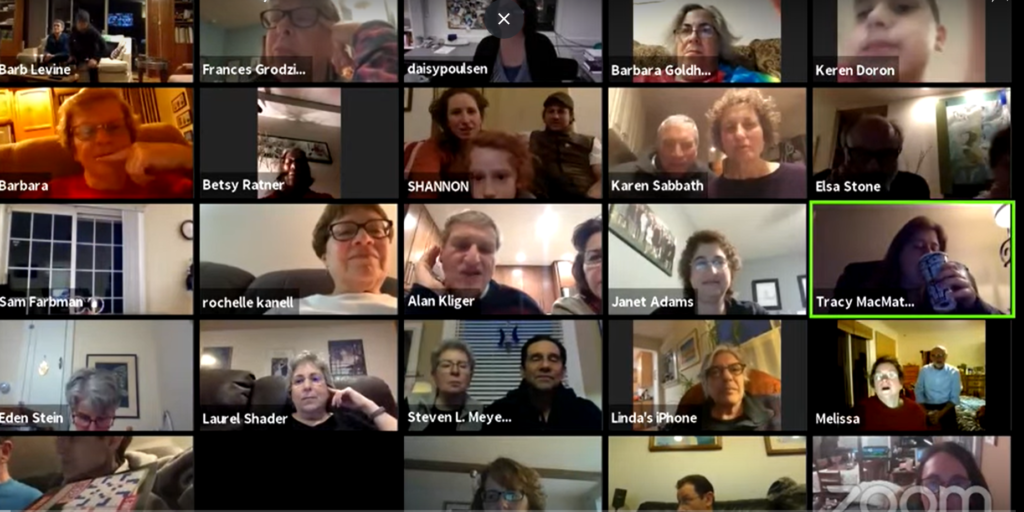
High Holiday Services on Erev and Day 1 of Rosh Hashanah and all Yom Kippur services will be held virtually on both Zoom and YouTube, as we did last year. The service on Day 2 of Rosh Hashanah and the TE Rosh Hashanah family celebration, which we expect to be smaller gatherings, will be held in person outside, weather permitting. Family units will be required to maintain social distance during and after the services, and masks will be required. The outdoor services will be live-streamed. We will also meet in person on the first day of Rosh Hashanah at 4pm for Tashlich at Wright’s Pond in Orange. In case of inclement weather, we will notify you of a change to virtual services.
We are of course disappointed that we will miss out on much of our special season of gathering, prayer, music, food, and above all, community. We know that nothing can replace the sense of celebrating our Holy Days together. Yet we can use the available technology to maintain our traditions and our connections with each other. High Holy Days will look different at TE this year, but this will not change the nature of the Holy Days, or of our sacred community.
Our Board of Directors has made a decision to use this opportunity to practice our true hospitality and welcoming spirit. Our High Holy Day services will be open to all this year. If you are not a member of Temple Emanuel, but would like to join us for High Holy Days this year, please use this form to register in advance.
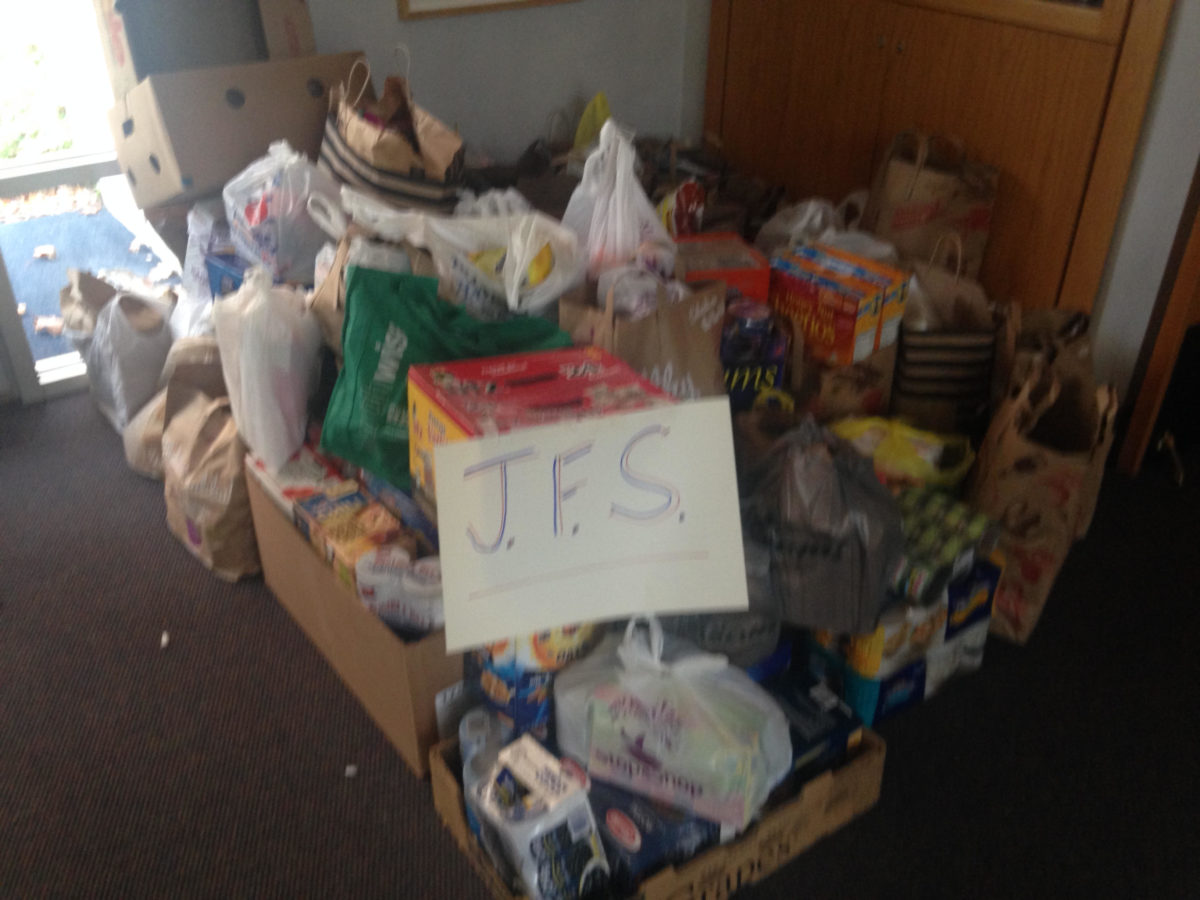
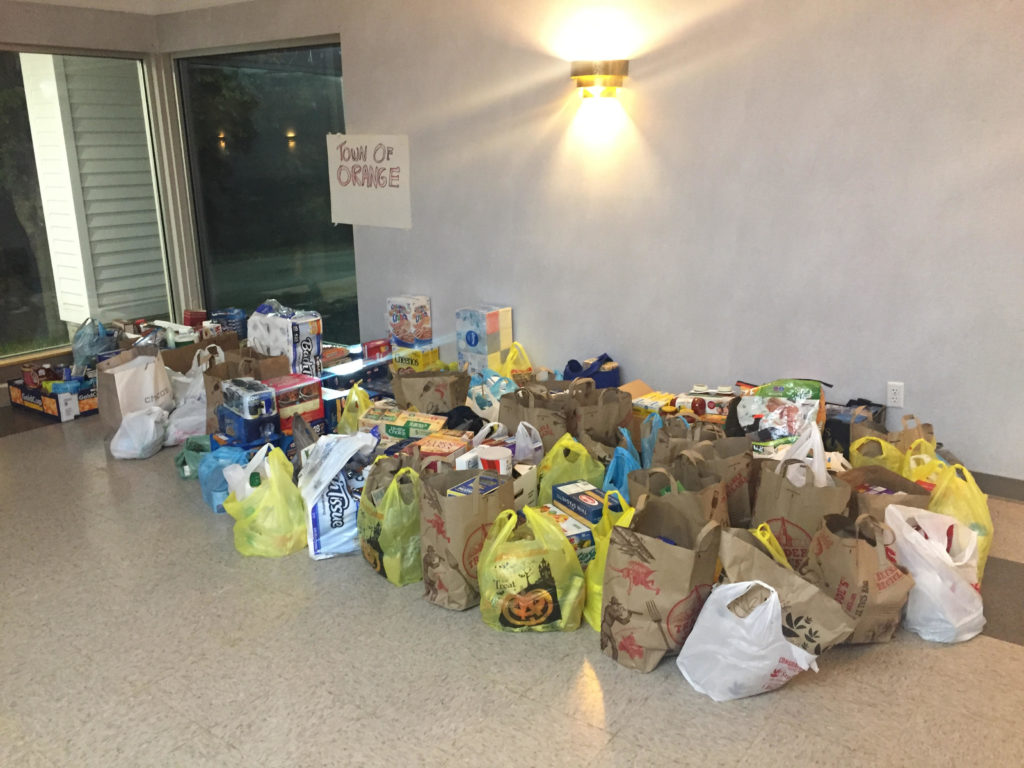
For the 28th consecutive year, T.E. will again be holding its High Holy Days Food Drive, donating much-needed food to the food pantries of both Jewish Family Service and the Town of Orange. Unfortunately, due to Covid restrictions, we will once again be employing a hybrid model, giving congregants a variety of choices or options as to how they would like to participate. 1. For folks who would prefer to donate actual tangible food items, you can give your food donation to the T.E. “Honey Bee” when they come to your house to deliver your honey and calendar. Important: Please make sure that the cans and boxes are labeled, unopened, undamaged, and that the expiration dates are pretty far away. And for transportation safety, no glass jars, please. 2. For folks who would prefer to donate by check to the JFS Food Pantry, you can give your check to the T.E. “Honey Bee” when they come to your house to deliver your honey and calendar. Checks should be made out to JFS Food Pantry and please make sure you write Temple Emanuel on the memo line as that’s how we’ll be credited. If you prefer to mail your check directly to JFS instead, please mail it to: JFS Food Pantry,c/o JFS of Greater New Haven, 1440 Whalley Ave., New Haven, CT 06515. 3. For folks who would prefer to donate by check to the Town of Orange Food Pantry, you can give your check to the T.E. “Honey Bee” when they come to your house to deliver your honey and calendar. Checks should be made out to Treasurer, Town of Orange, and please make sure you write both Food Pantry and Temple Emanuel on the memo line as that’s how we’ll be credited. If you prefer to mail your check directly to Orange instead, please mail it to: Denise Stein, c/o Orange Food Pantry, 525 Orange Center Road, Orange, CT 06477. Please be as generous as you’ve always been in the past. This has certainly been a tough year. Thank you! Will Sherman, Coordinator, Food Drive
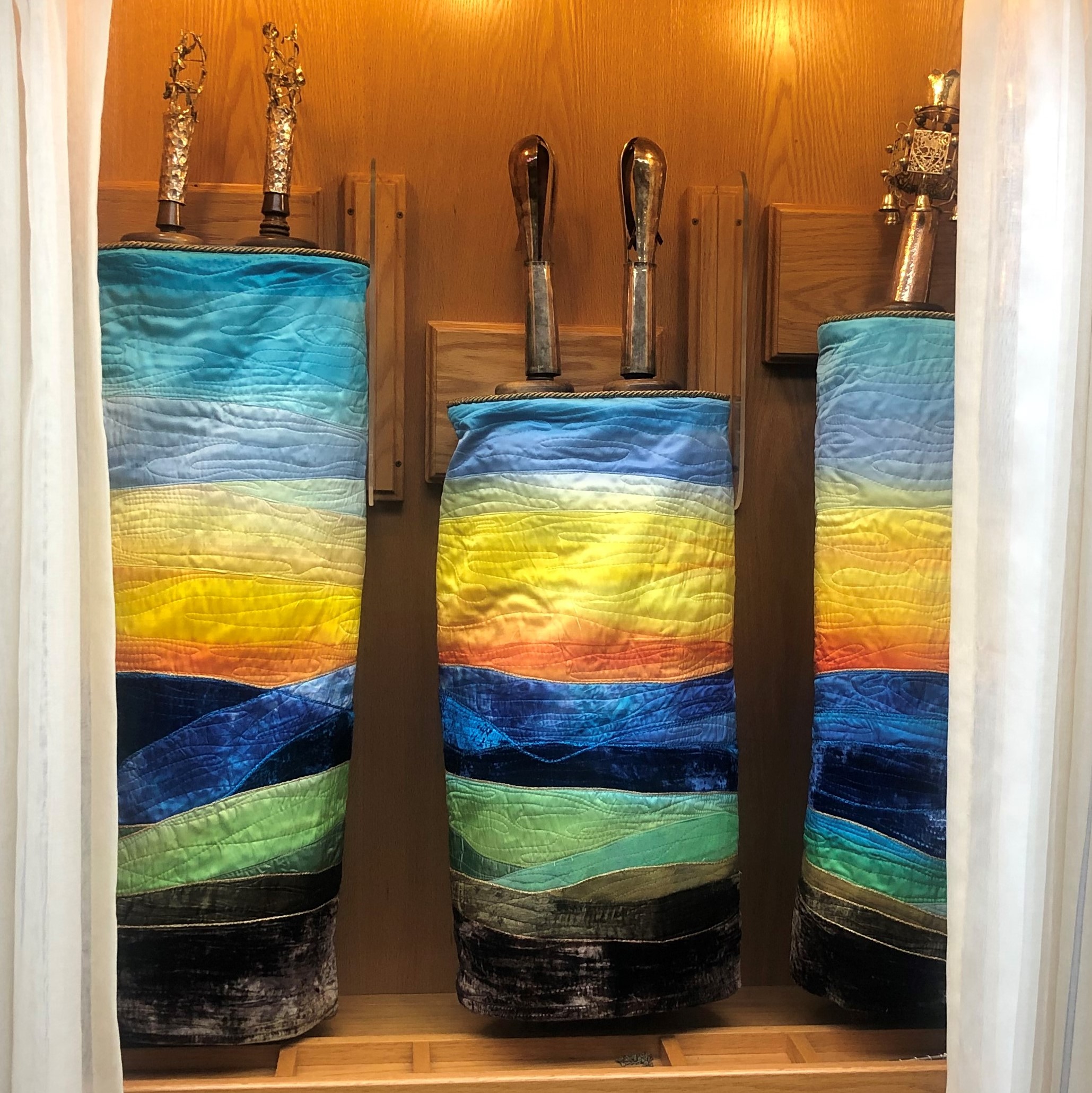
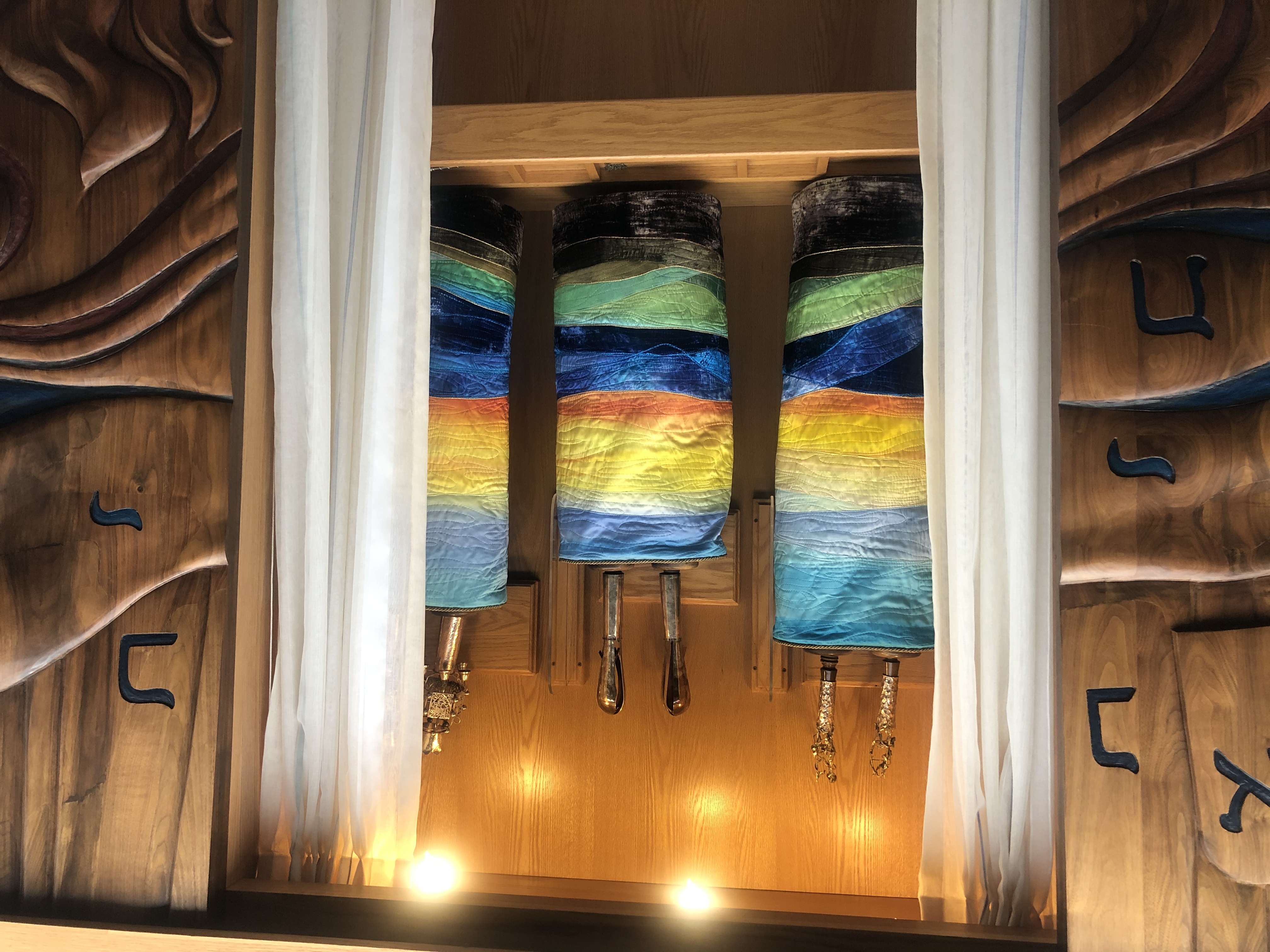
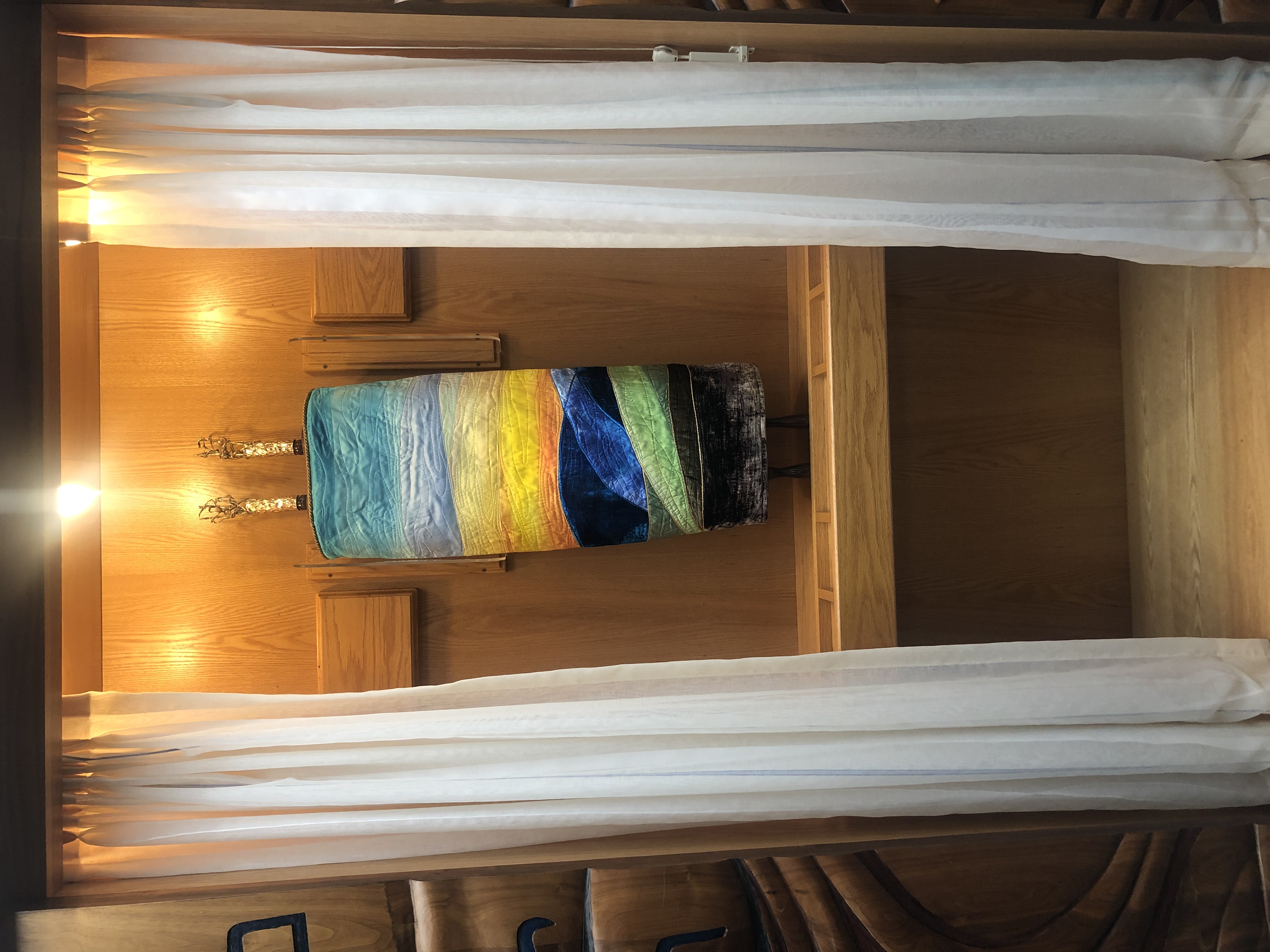
During the discussion about repairing the Holocaust Torah, it became clear that the Torah mantles we were using had seen better days. They were about 28 years old and literally falling apart. Several members of the Board had seen the work of Jeanette Kuvin Oren at the Biennial meeting and were very impressed with her work. She lives in Woodbridge, and is an artist who creates all kinds of Judaic art, including (but not only) challah covers, matzoh covers and Torah mantles. After we saw her work online, the Aesthetics Committee asked Jeanette if she would be willing to design mantles for our Torahs. She has created Torah mantles for synagogues, large and small, all over the US. Her Torah mantles are made of fabrics she dyes herself, pieced together into a design and then quilted. We talked to her about having a design that represented nature with flowing water, sunlight and greenery. She designed quilted covers for TE that are a combination of beautiful colors and textures including velvet, sparkly and silky fabrics. The three mantles flow from one to the other, but can stand alone in their design. A few genrous TE families came forward and offered to donate two of the three mantles. A wonderful addition to Temple Emanuel!
We have lived through a pandemic. No, we are not yet done with Covid-19 – it will continue to affect the world and our lives for some time yet, but at least as I write this column, the CT vaccination rates continue to rise, and the infection transmission rate allows us to begin to go about our normal lives with far fewer restrictions. Our leadership is looking carefully at the rapidly changing situation and is adjusting our procedures and policies on a regular basis. There is a very good possibility that we will be able to enjoy the High Holy Days in a much more familiar way this September, which fills my heart with joy and excitement (as well as makes me a little anxious, to be sure).
As we begin to re-enter the world once again, we begin to ‘breath out’ ever so slowly. The last 15 months have not been easy, and we all had to learn to give up so much of our lives, so many things that we take for granted on a daily basis. In synagogue life, we have successfully transferred most of what we did completely online, trying to keep the sense of community, of Jewish practice and of belonging – despite the obvious challenges. All of us cannot wait to say ‘good riddance’ to having to be alone at home, instead of singing together on Shabbat in the beautiful TE sanctuary. The anticipation of High Holy Days in our sanctuary is palpable! And yet, I also know that this past year we have developed new skills, as well as new understanding of what Jewish ritual is, and how to incorporate it into our lives. As we rush to resume the normalcy we so crave, let us not forget some of the positive things we have created for ourselves and our families in this difficult year of the pandemic.
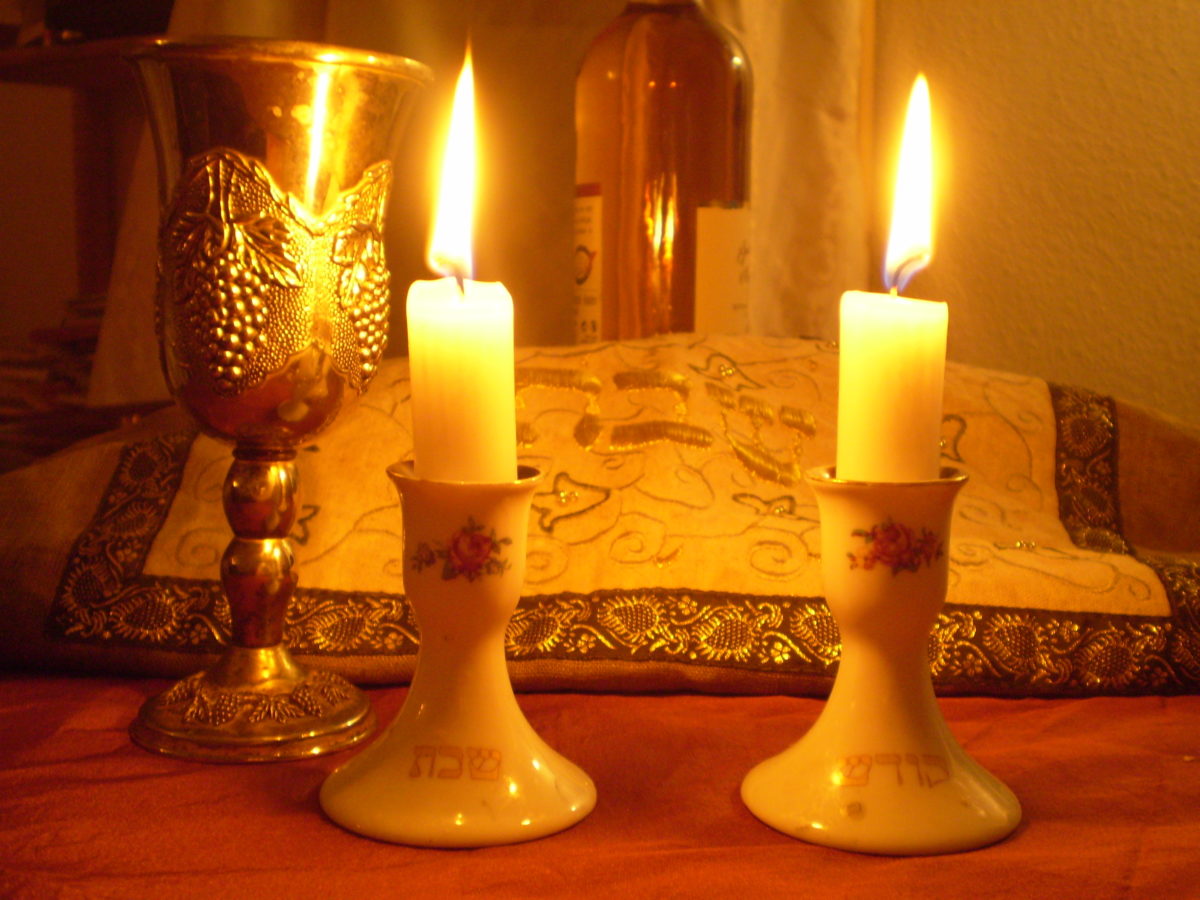
We couldn’t come together in our sanctuary to light the shabbat candles – and so many families have begun to do so at home. Some of our older members don’t feel quite comfortable driving at night, but were able to come and join Shabbat services regularly throughout the year using zoom. Many of us have reimagined the use of our home space, not only to include a place to work, but also to create a space to pray and to mark sacred occasions. A number of people developed new routines, checking in on each other on a regular basis. Some of our students showed better results with Hebrew learning when working online with less distraction – these are but few examples of creativity that emerged from the disruption.
Nor is this kind of transformation really new. My teacher, Rabbi Lionel Blue z’l, suggested that following the destruction of the Temple in Jerusalem by the Romans, the focus of Judaism has shifted from the splendor and formality of the Temple in Jerusalem into every Jewish home: ‘The father became a priest, the mother a priestess, and the dining room table an altar… The candles, the clothes, the white of the tablecloth brought the holiness and mystery of tremendous events into the surroundings of daily life. In the world of rabbinic Judaism, the synagogue emphasized doing and knowing, but the home was concerned with being, with memory, and experience.’[1]
As we prepare to return to the world of the synagogue that we have all missed so much, let us retain some of that Jewish holiness we have managed to bring back into our homes, our mikdash mei’at, or ‘small sanctuary’. As we figure out when and how we will be able to share big meals at TE, let us reach out to a few friends – old or new – and invite them into our homes for a small Shabbat or Festival meal. Above all, let us remember to cherish the good things we have figured out this year, even as we once again embrace the world we have missed so much.
[1] Blue, Lionel ‘To heaven with Scribes and Pharisees: the Jewish Path to God’, 1975:38
What a joyous feeling to listen to thirty TE members sing together unmasked outside on a warm Shabbat evening, feeling the sun on my face and hearing the harmonies I have missed for fifteen months. As difficult as it has been to experience the isolation and fear of the COVID pandemic, the opening up process provides its own challenges.
It has been delightful to begin seeing many of you in person – at services, B’nei Mitzvot, listening sessions and at meetings. The pandemic has gone on too long and I have become tired of virtual meetings, virtual performances, and asking yet one more person to unmute themselves. I know that I will not stop using Zoom in my life. It has been wonderful to participate in Zoom calls with my siblings who live in California and Philadelphia, and we will certainly continue doing this post pandemic. But most of the time virtual connections are not as satisfying as in person connections.
At Temple Emanuel, we won’t stop using technology to bring us together. It is wonderful to have the opportunity to stream Shabbat services if you are ill, find yourself away from the area on Shabbat, or prefer not to drive in the dark or in the bad weather. We have been able to connect with members who have moved away from the area and now join us for services regularly. Yet as the number of COVID cases in our community diminishes and the vaccinated numbers rise, it has become safer to re-engage in person. Members who have come to services at TE over the past month have voiced how special it has felt to be together again.
We continued to have B’nei Mitzvot services throughout the pandemic – first on Zoom with the Bat Mitzvah at home in the backyard, then with small gatherings of family inside the sanctuary, and more recently with gatherings of friends and family on the lawn at TE. Each one of these services required special planning. Thanks to the board members that gave time on a Shabbat morning to help with set up, security, and clean up. We are a true community that supports each other through life events.
I appreciate everyone who has written me and come to Zoom and in person listening sessions to participate in our discussion of how to re-open and how to make High Holy Day services meaningful and safe. Your input has been very valuable. As we contemplate being together in the sanctuary during the holidays, we encourage all members who are able to get the COVID vaccine, to protect themselves and the health of others in our community. We are hopeful that if the community infection rate continues to fall and COVID variants don’t change the rate of illness, we can join together in person this year. The TE board is monitoring COVID rates closely and will continue to communicate our plans as we know them.
Each of us needs to find our own way to feel comfortable in this process as we gather together again in person. Let’s respect each other’s choices, as we navigate this next stage of the pandemic, hopefully the last stage. Looking forward to seeing all of you in person, soon.
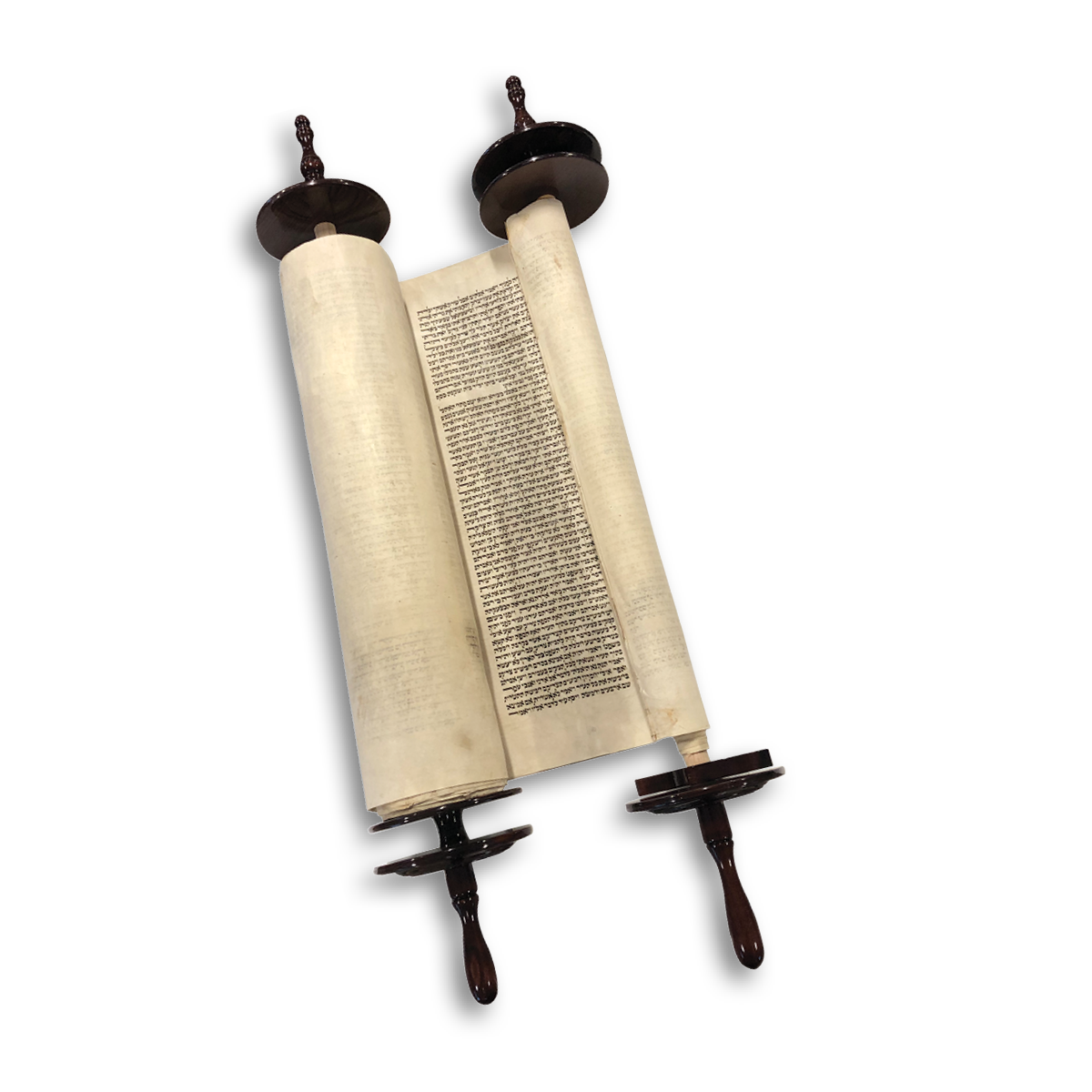
The Memorial Torah Scroll #1178 from Horazdovice is now proudly back in Temple Emanuel Ark!
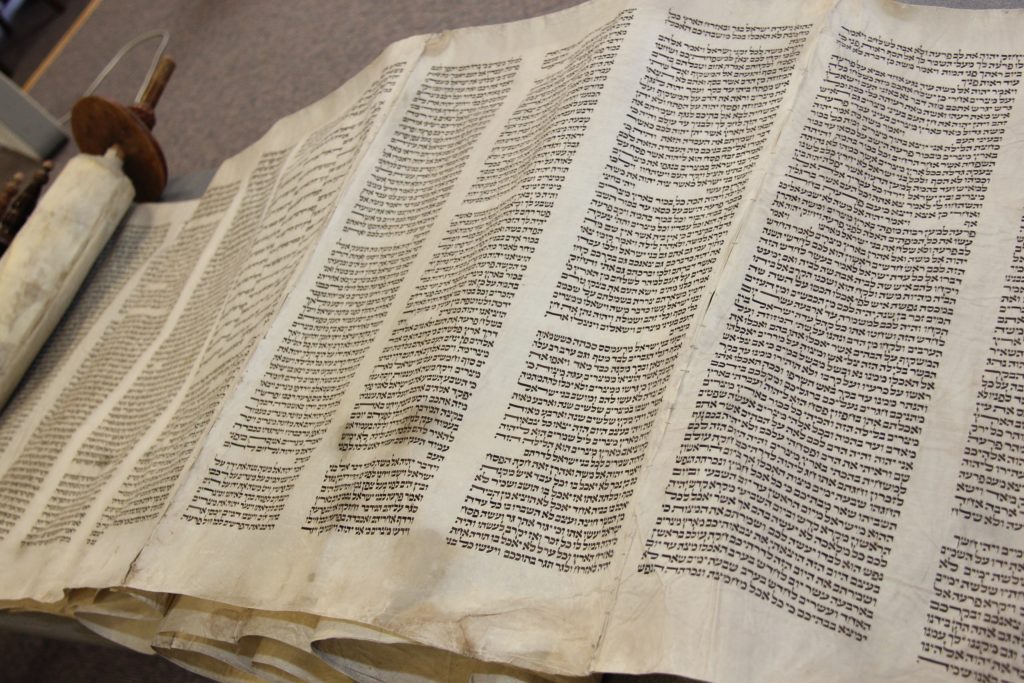
Temple Emanuel houses in our Ark the Holocaust Memorial Scroll #1178, a scroll that belonged to the destroyed Jewish community of Horazdovice, Czechoslovakia, a community that perished in the flames of the Holocaust. This scroll is one of several hundred Czech Torah scrolls that survived the Holocaust, eventually coming to the Westminster Synagogue in London, and from there distributed to Jewish communities around the world. A young Temple Emanuel of Greater New Haven was fortunate to receive the Horazdovice Torah back in 1967.
The Horazdovice Torah at Temple Emanuel
This scroll was part of every Bar and Bat Mitzvah at Temple Emanuel from 1967 – 2007. A deeply meaningful Torah, this Holocaust scroll brought our community into the direct line of European Jews who were murdered by the Nazis and could not themselves perpetuate the Jewish people. As we read from and touched this sacred scroll, we carried out the laws and commandments of our faith, and we remembered and honored the Jews of Horazdovice whose voices were stilled. In 2007, the scroll was retired from service because it was damaged, fragile and deemed non-kosher. We placed the scroll in a case visible to all as we entered the synagogue, to preserve its meaning and connection to our history.
The Restoration of the Horazdovice Torah
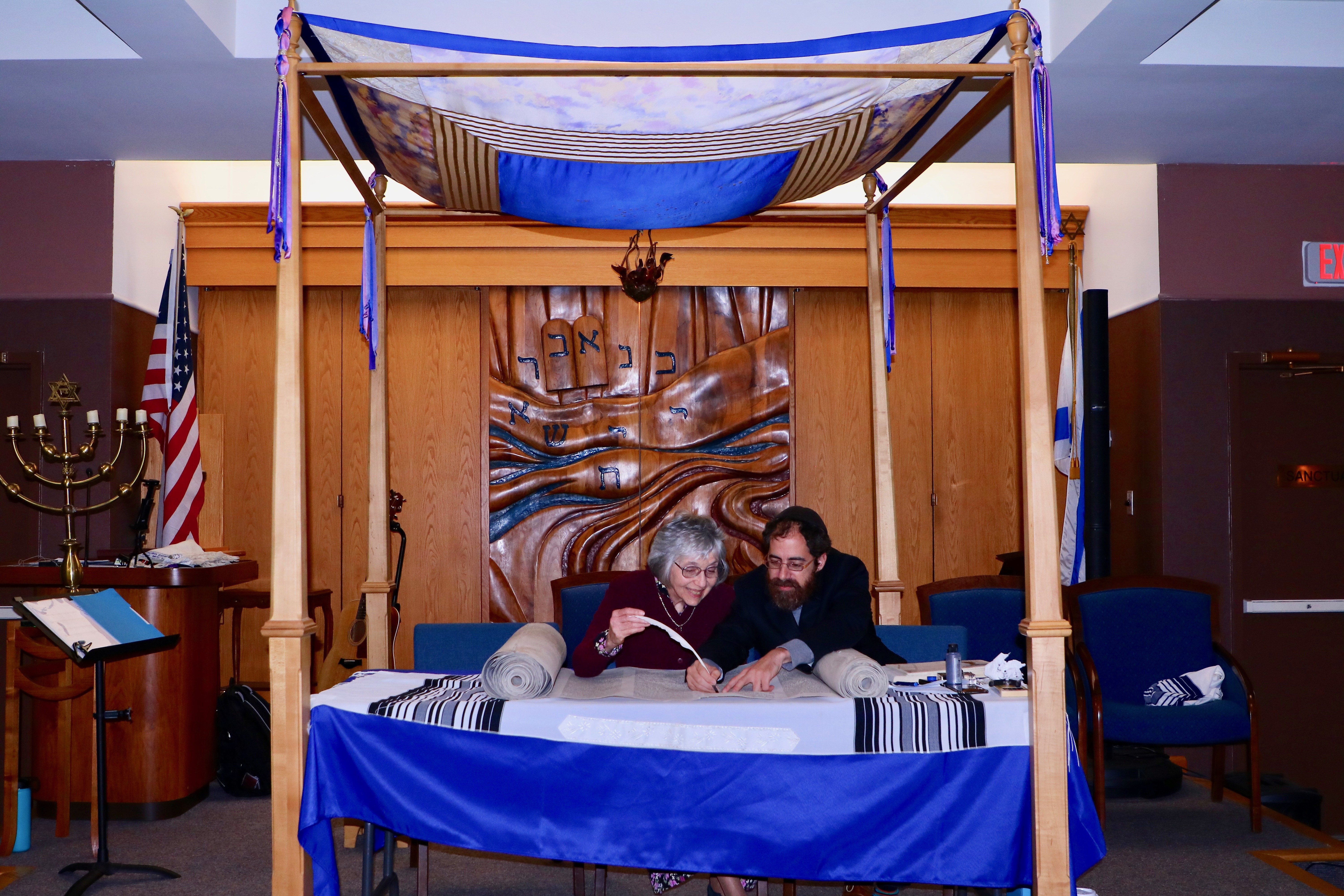
In 2019, a Torah scribe inspected our Torah scrolls, those in the Arc and also the Holocaust scroll in its display case. The scribe found that 2 of our scrolls in the ark required some repairs to remain kosher. To our great surprise and delight, he found that the Horazdovice Torah scroll could be repaired and once again be made kosher! Many TE members were excited that this wonderful and important scroll might again be made kosher, and be returned to our ark. TE students researched and presented information about the Horazdovice Torah and its history. Temple Emanuel members rallied support and contributed funds to not only restore and rededicate this scroll but also to repair the other TE Torah scrolls and establish a small fund to support the continued maintenance of our Torah scrolls, and mounted a successful campaign to raise the funds needed to restore and rededicate this important Torah scroll. Each TE family had the opportunity to write a letter in the Torah scroll with the scribe, a meaningful fulfillment of the mitzvah. The now-kosher scroll was re-dedicated and returned to the ark. This scroll, connecting us to the hundreds of years of Jewish life from the lost community of Horazdovice, brings Jewish practice and tradition to new generations of Jews at Temple Emanuel. This rededicated kosher scroll now is once again being used at Temple Emanuel for Bar and Bat Mitzvahs, and for special Torah services.
The Story of our Holocaust Torah Scroll
Our Holocaust Torah was first endangered when the Munich Agreement was signed on 29 September 1938. Britain and France agreed to Hitler’s demand to be given the German-speaking border regions of Czechoslovakia, and the Germans marched in. The Jews from about sixty congregations in the prosperous industrial and commercial towns in the Sudetenland had 2 or 3 days to flee to the interior, which was still a free and sovereign country. They left behind their synagogues, which were in German hands in time for the destruction of the Pogrom of November 1938, when synagogues across the expanded Germany, which now included the Sudetenland, were burned or vandalized and looted. In almost every case the ritual treasures of these Sudetenland synagogues were destroyed or lost.
In the remainder of Czechoslovakia, which included Prague, the synagogues and their swollen congregations were safe for the time being, and there was no program of destruction, even when the Germans invaded the rest of the country in March 1939. In 1940, the congregations were closed down, but the Jewish community administration was used by the Germans to execute their stream of decrees and instructions. In 1941 the first deportations started and the mass deportations of the Jews took place throughout 1942 and into January 1943.
The Nazis decided to liquidate the communal and private Jewish property in the towns, including the contents of the synagogues. In 1942 Dr Stein of the Juedische Kultusgemeinde in Prague wrote to all Jewish communities, instructing them to send the contents of their synagogues to the Jewish Museum in Prague. Thus the Torah Scrolls, gold and silver and ritual textiles were sent, along with thousands of books. The remaining Jews were deported in 1943 and 1944, but quite a number survived.
The inventory of the Prague Jewish Museum expanded by fourteen times as a result, and a large number of Jews were put to work by the Germans to sort, catalogue and put into storage all the items that had come from over one hundred congregations in Bohemia and Moravia. It needed over forty warehouses, many of them deserted Prague synagogues, to store all these treasures. When the task was eventually completed, the Jews who had been put to this work were themselves deported to the Terezin concentration camp and death. There were few survivors.
It was once accepted that the accumulation of this vast hoard of Judaica was intended by the Nazis to become their museum to the extinct Jewish race. There is, however, no evidence that any such museum was ever planned. The Prague Jewish Museum had been in existence since 1906, and was not created in order to house the Judaica collected in 1942. In 2012, the Prague Jewish Museum published “Ark of Memory” by Magda Veselska, a history of the museum that includes a clear explanation of how it was the Jews of Prague that worked before, during and after the war to protect a legacy that was threatened with destruction.
After the defeat of Germany, a free and independent Czechoslovakia emerged, but it was a country largely without Jews. Most of the surviving Jews in Prague and the rest of Bohemia and Moravia were from Slovakia and further east from Subcarpathian Ruthenia. Prague, which had had a Jewish population of 54,000 in 1940, was reduced to under 8,000 by 1947, and many of these were to leave. On 27 February 1948, after less than 3 years of post war freedom, the Communists staged a coup and took over the government of Czechoslovakia. The Prague Jewish Museum came under government control, and was staffed mainly by non-Jewish curators.
In 1958 the 18th century Michle Synagogue became the warehouse which housed hundreds of Torah Scrolls from the large Prague Jewish community and what was left from the smaller communities of Bohemia and Moravia. The collection did not include scrolls from Slovakia, which the Germans had put under a separate administration. Eric Estorick, an American living in London, was an art dealer who paid many visits to Prague in the early 1960’s. He got to know many Prague artists, whose work he exhibited at his Grosvenor Gallery. Being a frequent visitor to Prague, he came to the attention of the authorities. He was approached by officials from Artia, the state corporation that had responsibility for trade in works of art, and was asked if he would be interested in buying some Torah Scrolls. Unknown to him, the Israelis had been approached previously with a similar offer, but the negotiations had come to nothing. Estorick was taken to the Michle Synagogue where he was faced with wooden racks holding anything up to 2000 Scrolls. He was asked if he wanted to make an offer, and replied that he knew certain parties in London who might be interested.
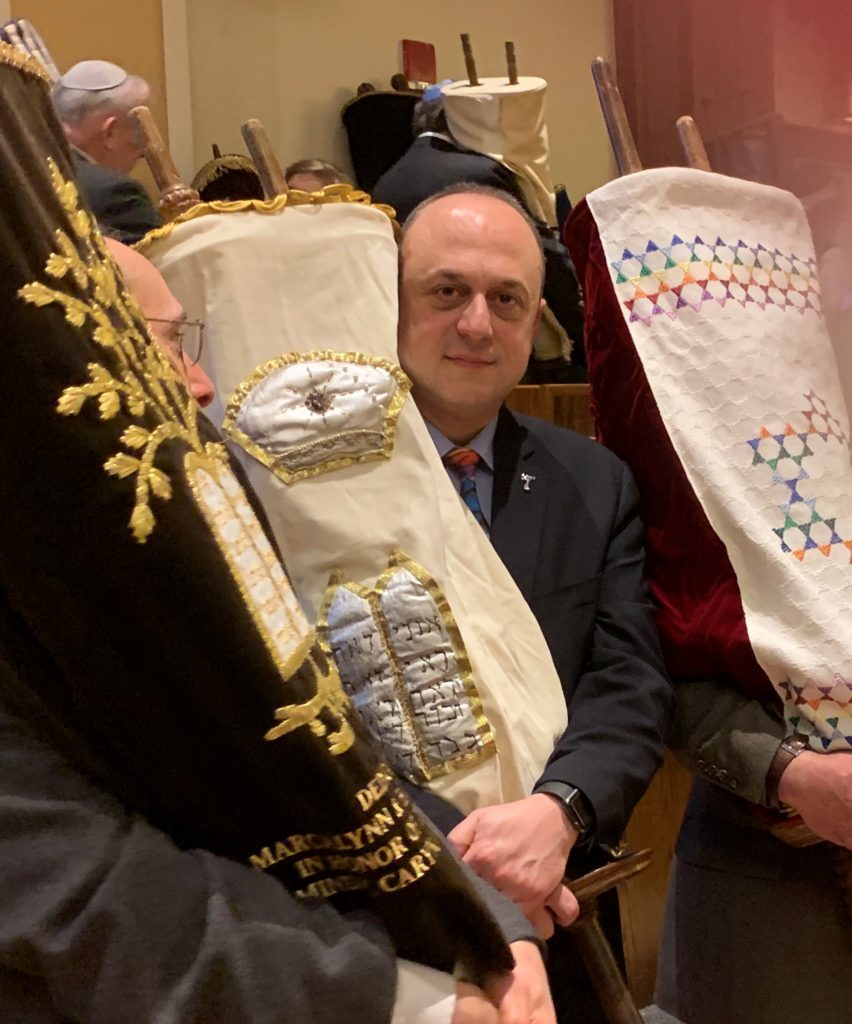
Rabbi Farbman carrying the MST#1178 scroll at a historic gathering of Holocaust Memorial Torah scrolls in New York
On his return to London, he contacted Ralph Yablon, a well-known philanthropist with a great interest in Jewish art, history and culture. Yablon became the benefactor who put up the money to buy the Scrolls. First, Chimen Abramsky, who was to become Professor of Hebrew Studies at the University of London, was asked to go to Prague for twelve days in November 1963 to examine the Scrolls and to report on their authenticity and condition. On his return to London, it was decided that Estorick should go to Prague and negotiate a deal, which he did. Two lorries laden with 1564 Scrolls arrived at the Westminster Synagogue on 7 February 1964. After months of sorting, examining and cataloguing each Scroll, the task of distributing them began, with the aim of getting the Scrolls back into the life of Jewish congregations across the world. The Memorial Scrolls Trust was established to carry out this task.
Each Memorial Scroll is a messenger from a community that was lost, but does not deserve to be forgotten. Temple Emanuel’s restored Horazdovice Scroll carries that message to our congregants and to our future.
One year ago I wrote my first Shofar column about the Coronavirus pandemic. Fear, anxiety and loss of control were prominent in my words, but so too was appreciation for a community that was coming together to support one another, whether by working in the TE gardens, supporting the final phase of the school expansion project, reaching out to members or donating to the COVID-19 Maimonides Response Fund at the Jewish Federation.
Two months ago I wrote about moving through Mitzrayim, the narrow space we think about during Pesach, looking to a time of less restriction and more openness. With this column I can see the change starting to arrive. Spring weather has enabled us to have outdoor services and gatherings. Vaccination rates are increasing, and social isolation is starting to reduce. Statewide restrictions on gatherings have lessened as rates of COVID-19 infections appear to be leveling off.
The TE board has been discussing next steps toward opening up our community while working to make sure all our members, including the most vulnerable, are safe. It is a complex time. There are still many cases of COVID-19 in our community and COVID variants are increasing in frequency. Yet rising rates of vaccination bring reduced risks to many of us. I was not surprised to hear varying viewpoints from board members as we discussed this issue, and the same is true as I talk with individual members informally.
The TE board is lucky to have among our members medical experts who work with COVID data on a daily basis, who can share with us current medical data to help inform our decision-making. But as we watch the numbers and wrestle with this issue, we need to hear from all of you as well. We need to hear all voices – those who want to meet in person and those that do not, those who want indoor services, those who want outdoor services and those who want virtual services. And while September is a long way off, we need to think about how we will observe the High Holy Days this year.
I invite all of you to share your views with me, with the TE board and with the TE community. How would you like to see us open up in the next few months? What would you feel comfortable with during the High Holy Days? As divisions grow in our country, it is all the more important that we listen to each other, that we work to understand each other and find common ground, as we make our way through this next phase. I look forward to the time when we will be meeting together, singing together and eating together, and looking back on the pandemic as a difficult time in our past.
We have scheduled two meetings, Thursday, May 13 at 7:30 pm on Zoomand Sunday, May 23 at 11 am outdoors (weather permitting) at TE. I look forward to hearing from all of you. If you can’t make either time, please send me an email or call me with your thoughts.
“Resilience is often described as a personal quality that predisposes individuals to bounce back in the face of loss. Resilient leaders, however, do more than bounce back—they bounce forward.” (Elle Allison, “The Resilient Leader”)
Over the years I have learnt great many things from my mentor, Rabbi Mark Winer. He was (and remains) a great mentor – he would always say: ‘learn from everything I do, especially from things YOU think I am doing wrong!’ Perhaps the most important lesson I have learned from Mark is how institutions should act in times of trouble: leading not from fear but with vision. While it is entirely understandable to respond to a crisis of any kind by circling the wagons and holding off on doing things that may cost money (holding back, cutting programs), it is often the wrong thing to do – if we lead with the vision we need to use the times of crisis to re-commit to the key elements of our work, improve and expand upon it. When the crisis is over, the renewed strength and resilience of the community will be the beneficiary of the forward thinking.
As we begin to emerge (please God!), slowly and carefully, from the physical, mental, financial and spiritual devastation of a pandemic, I am grateful to the leadership of TE and to all our members for not only supporting each other and our community at this time of trial, but also for continuing to be true to our vision and our mission of community building, Jewish learning and Tikkun Olam.
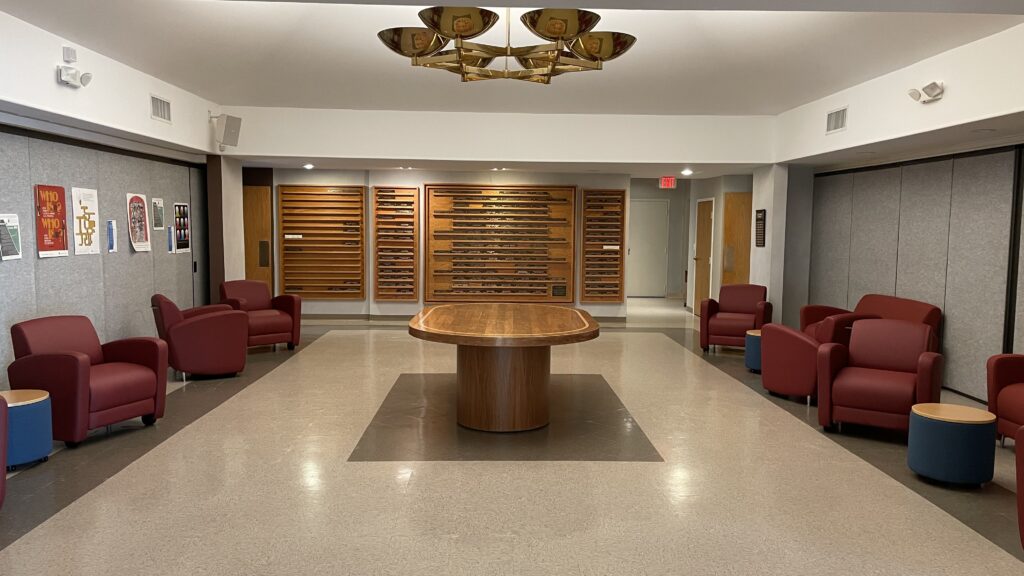
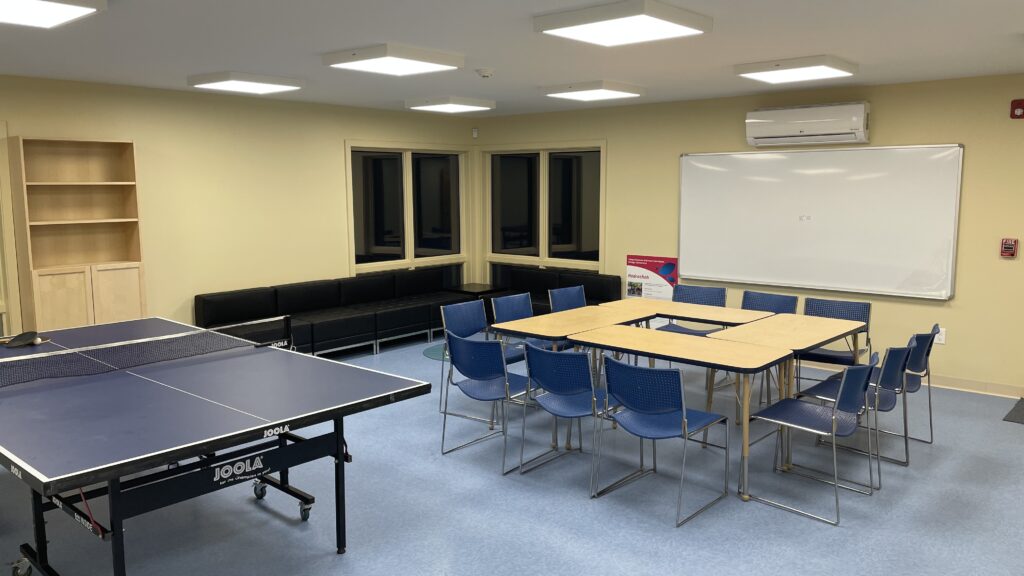
A few years ago we began to address the urgently growing need for space in our school, as well as our continued desire to transform spaces within TE to better reflect our welcoming nature, and to respond to the needs of our community. As we were about to begin the construction, the pandemic hit… We could have said ‘let’s wait and see’, and delay the project, but if we did so, we would have found ourselves today getting ready to re-enter the building with severe shortage of classroom space. Instead, today we are ready to ‘bounce forward’ – with two spacious new classrooms, with a welcoming Kiddush lounge and a redesigned lobby, that creates multiple spaces for TE members young and old (and everyone in-between:) to enjoy each other’s company at the oneg after the service or during Religious school.
None of this would be possible without the resilient leadership of our synagogue community, and without the crucial support of all of our members. I am grateful and honored to serve alongside TE leaders who engage in building and sustaining our community every day. Chazak, chazak v’nitchazek!
March brings spring along with the festival of Passover. Passover, with its Seder rituals and story of freedom is one of my favorite Jewish holidays. The story of our exodus from Egypt is a story I find very compelling, a story with an important message to teach, the importance of freedom for everyone throughout the world.
Mitzrayim, the Hebrew word for Egypt, is often translated as a narrow space, a place of limited opportunities and constricted choices. During the Seder we consider what it means to be personally liberated from Mitzrayim, and many Jews use this as an opportunity to reflect on what holds us back from fully living our lives. This year our limits are more tangible and less metaphorical. While we are not slaves, our lives have been severely restricted and constricted by the Covid pandemic. Some of us have gone through difficult illnesses and may even be enduring lasting physical effects. Some have experienced losses without being able to attend a funeral or spend last days with loved ones. Some folks are bored, greatly missing grandchildren and others they are close to. Yet other people I speak with are thriving in the calmer, slower paced lives that the pandemic has required.
While we haven’t been liberated from the Covid pandemic yet, we do see hopeful signs as case numbers decrease in our community, throughout the country and around the world, and the numbers of those vaccinated increases every day. We remember that when we were liberated from Egypt, we wandered in the desert for 40 years, as we learned how to transcend our limitations and live in freedom. As we start to find a way out of the narrow space of this pandemic, it will take us time to learn how we can live in this new reality.
With the arrival of warmer weather, I look forward to holding outdoor services and other events. The board of directors has started to discuss how we may be able to transition as the situation improves. We continue to place high priority on everyone’s health and safety while we understand the community’s need for more connection. Many thanks to Rabbi Farbman for continuing to provide stimulating services and events virtually, and to all of you who have been participating. Thanks as well to those who delivered Mishloach Manot/Purim bags to our members, making the personal connection so many of us crave.
I look forward to passing through this narrow space together, moving into a place of less restriction and more openness. I am hopeful that as spring brings us more sun and more warmth it will also bring us more freedom. Meanwhile, I will continue to enjoy seeing many of you on Zoom, at services, breakout rooms, meetings or TE programs.