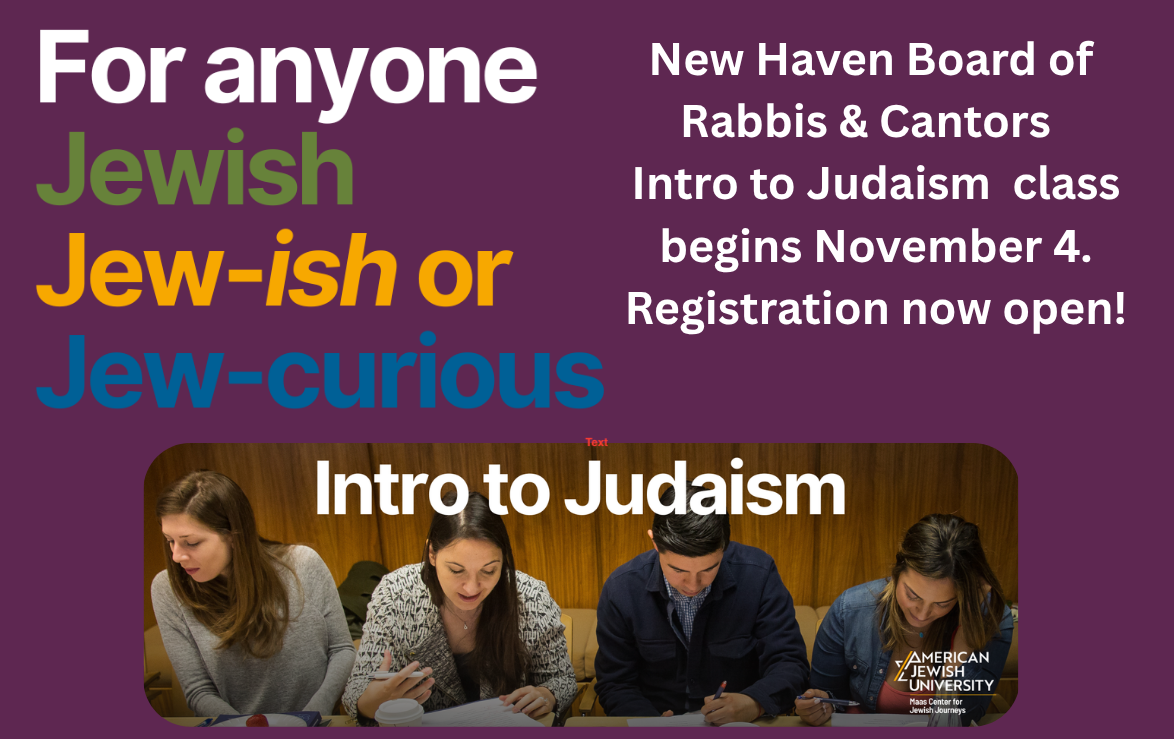
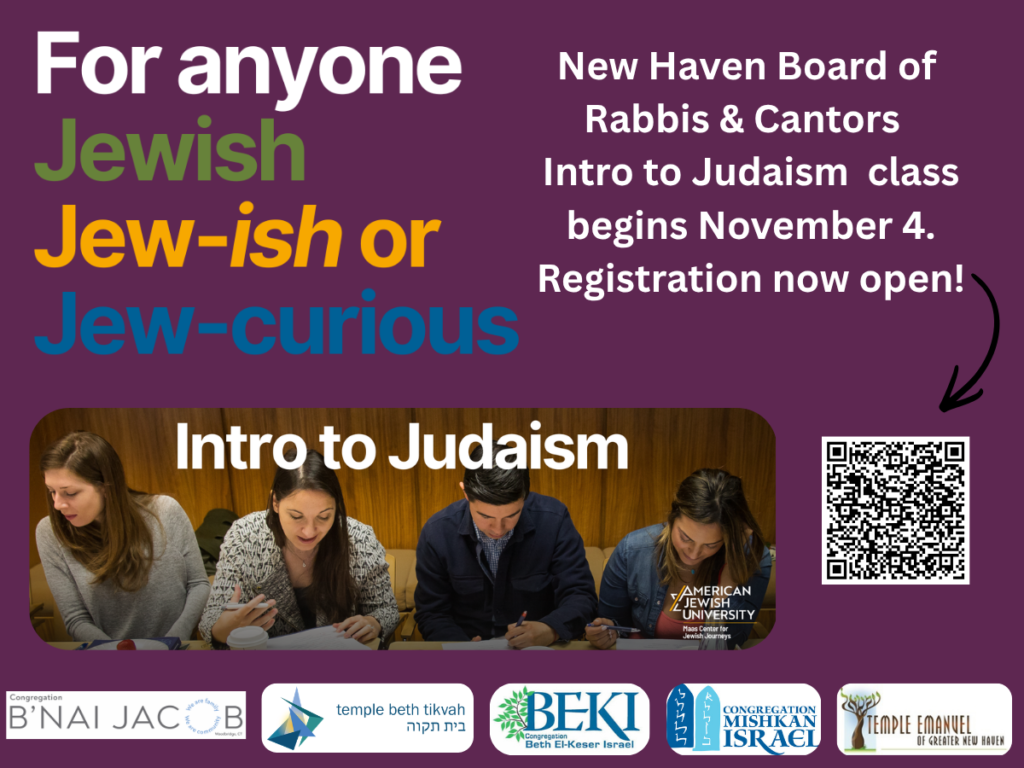
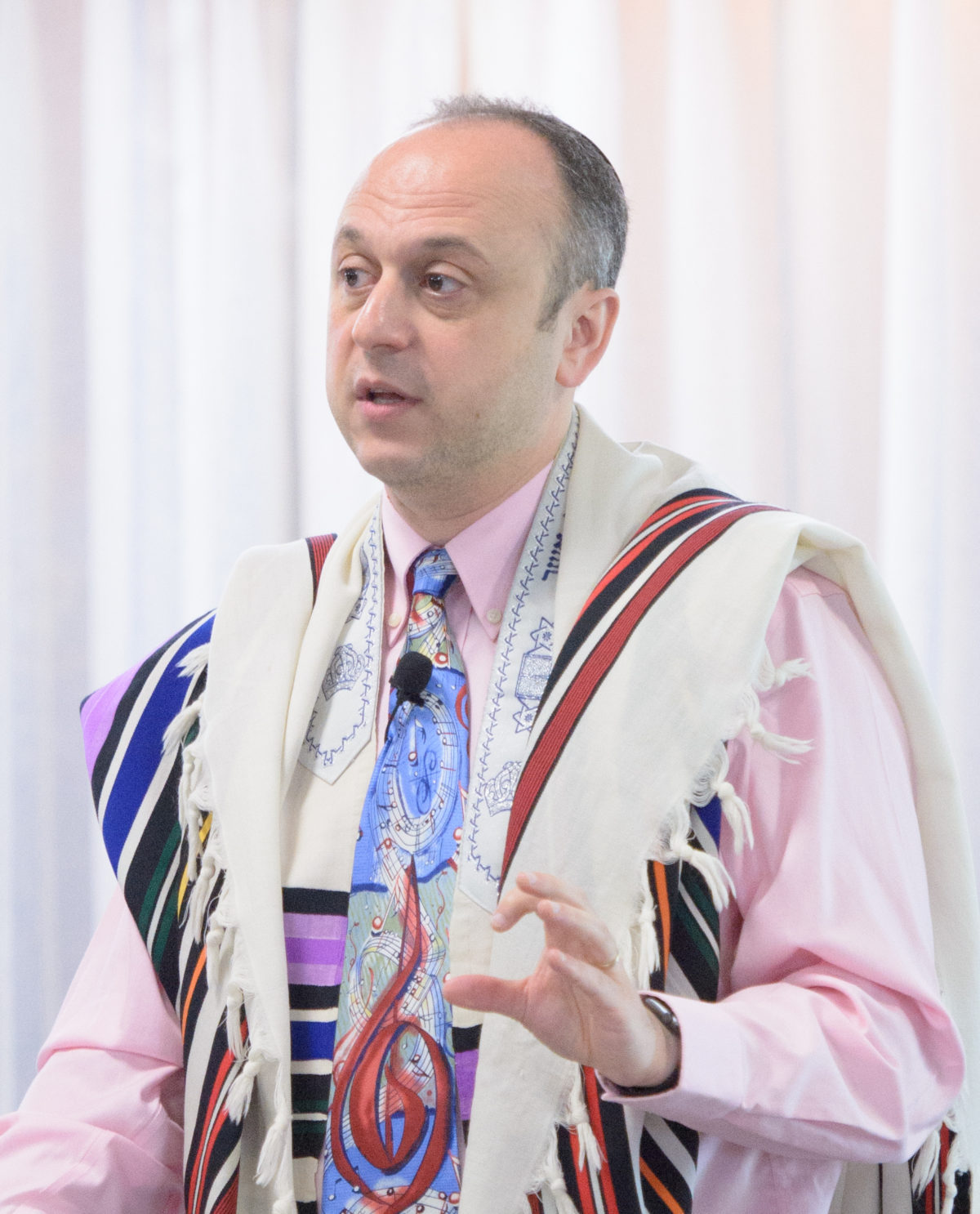
For anyone Jewish, Jew-ish or Jew-curious. The New Haven-wide Introduction to Judaism Program provides fundamental knowledge, practical skills, and clarifying insights into Jewish history and culture. Want to learn more? Please sign up today!
Not Jewish and want to explore Judaism? Please reach out to Rabbi Farbman before you register for the class!
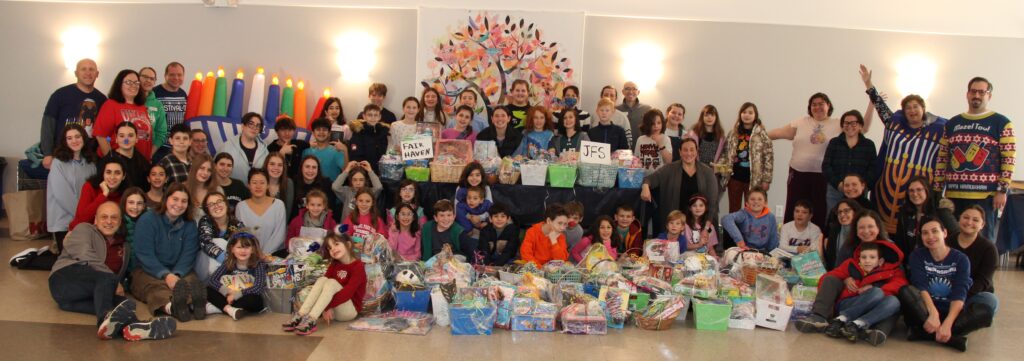
Hello from this year’s Co-Chairs of Temple Emanuel’s annual Chanukkah Basket Program!
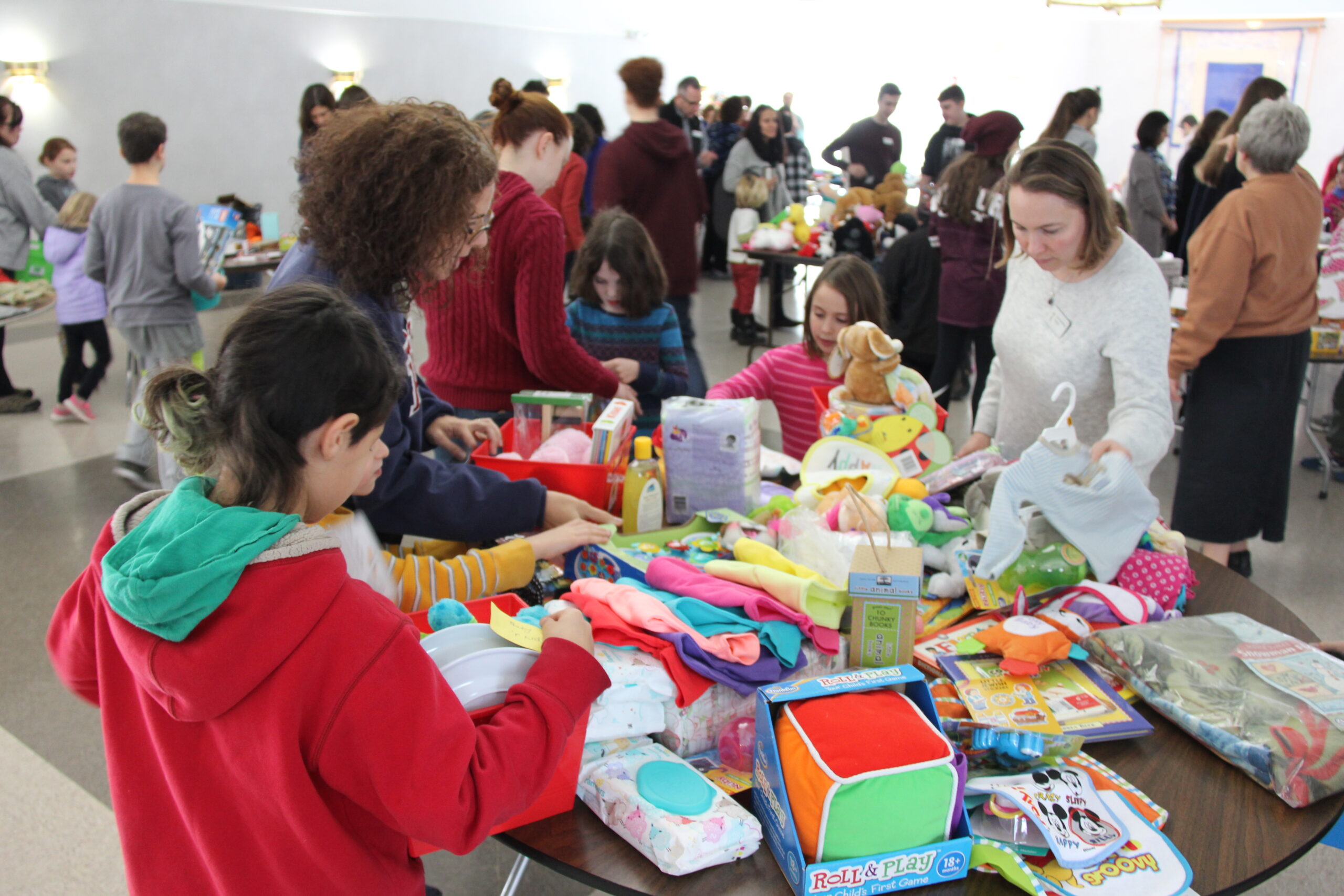
For those who are new to TE, the Chanukkah Basket Program is a wonderful tradition that Temple Emanuel has been doing for many years, bringing together people of all ages to give back to our community during the holiday season.
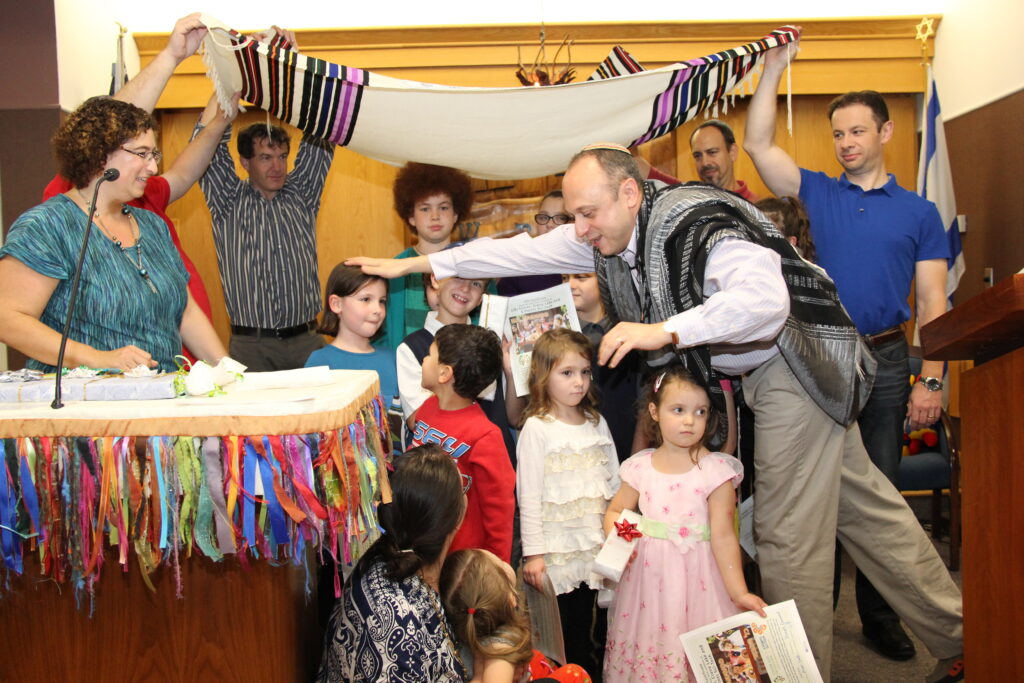
We are very excited about the program as it benefits so many families along with being a fun and worthwhile program for TE members of all ages. To make this year’s program successful, we need your help! TE Chanukkah Gift Giving program will be held Sunday, December 6th with the participation of our Hebrew school students.
We are collecting items for children, teens, and adults that will be packaged into gift baskets and distributed by Jewish Family Service, Fair Haven Community Health Center, JCARR and other local agencies. There is an even greater need this year for personal hygiene items for the Fellowship Place so please bring those in addition to other donations.
The following items have been requested:
Quality of items is more important than quantity. When you are choosing things please give things you would give to your own child.
Gift cards for teens: Target, Walmart, Dunkin’ Donuts, Amazon, etc.
Items for infants and toddlers such as diapers, rattles, pacifiers, bottles, bibs, wipes, towels/blankets, onesies, winter caps, soft books, ointments and lotions
Books for kids of all ages, NEW or VERY lightly used
Hats, mittens, scarves, and socks for kids of all ages
Trucks, cars, sports items, hair ribbons, nail polish
Art supplies, including crayons and coloring books
NEW toys for all ages, especially small sized, playing cards, small puzzles, board games
Personal care items
Adult socks, gloves, and personal care items
Small and medium size gift baskets and containers (any material)
Starting on Wednesday, October 28th, these items can be dropped off in the bin located in the lobby. Please bring donations whenever possible, the sooner the better but feel free to bring additional items on the morning of the program as well.
For members of Temple Emanuel of Greater New Haven, cleaning up trashhelps right some of the world’s wrongs
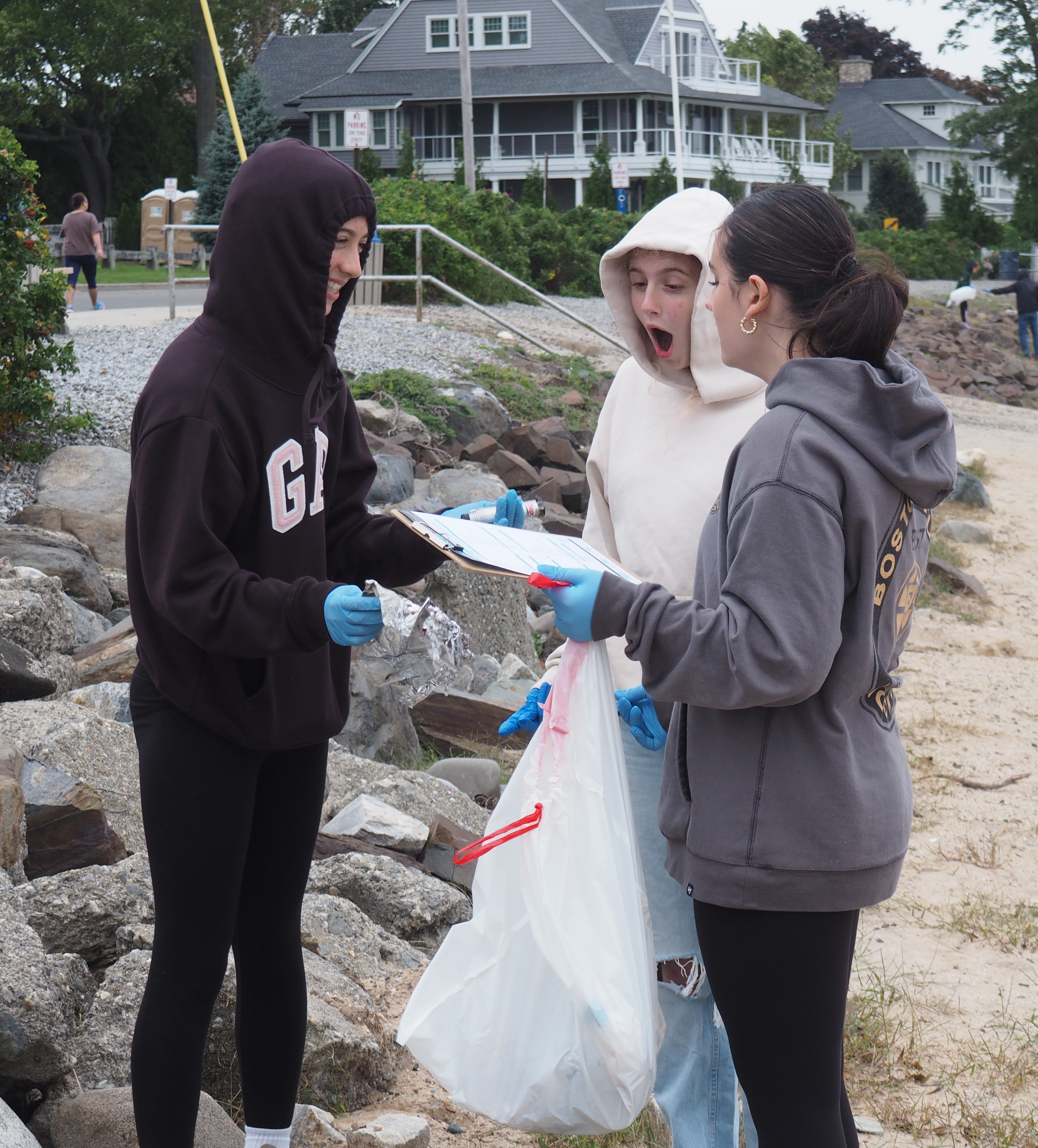
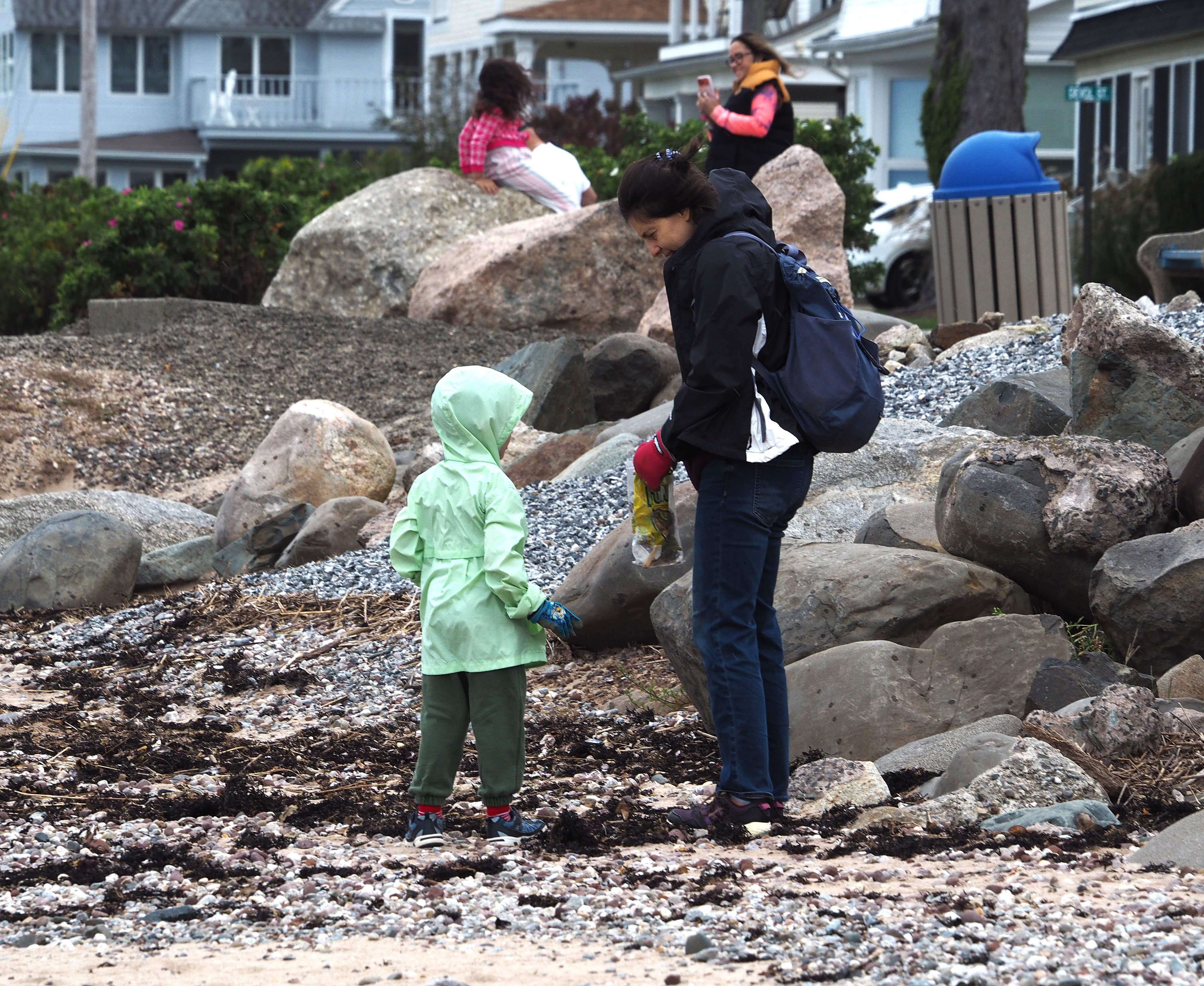
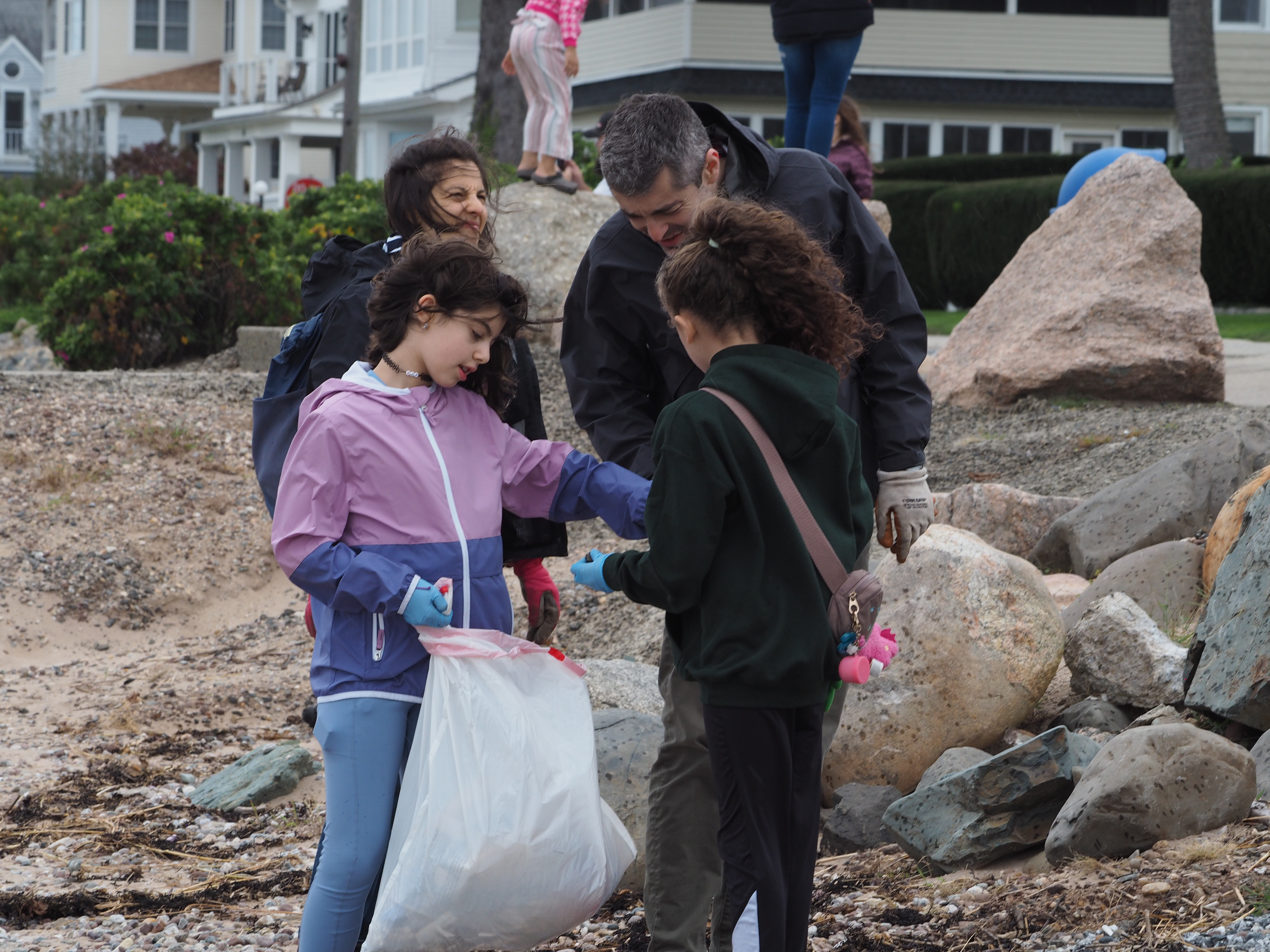
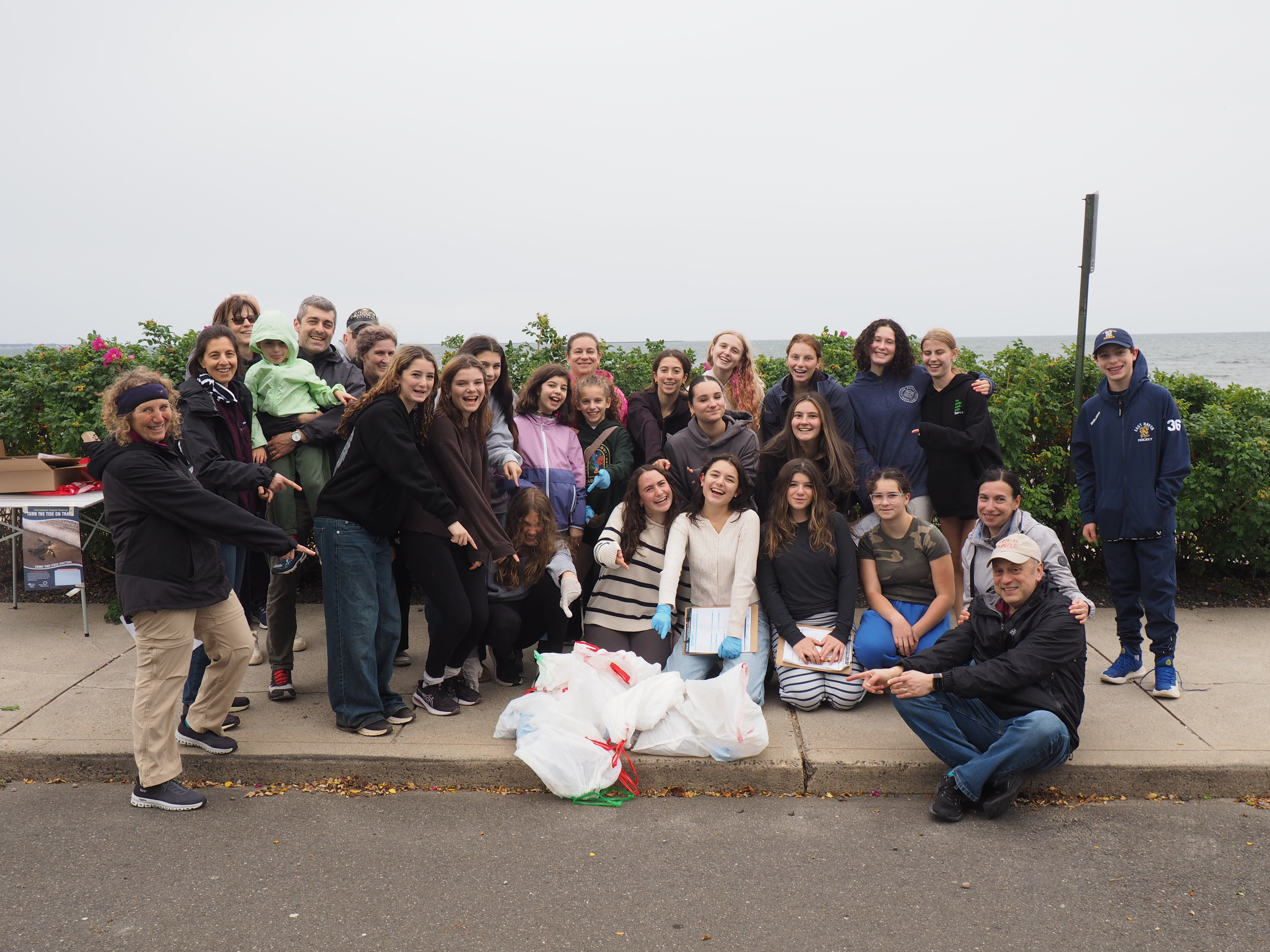
MILFORD, Conn. – About 30 people took advantage of a pause in the rain Oct. 4 to fan out across Woodmont Beach and gather cigarette butts, fishing string and other debris as part of a new tradition as Jews celebrate the beginning of their new year.
“We call it Reverse Tashlich,” said Dr. Karen Fenichel, who organized the event for Temple Emanuel of Greater New Haven. “Jews have a tradition called tashlich of throwing crumbs into the water to get rid of their sins. The water is supposed to carry their transgressions away. In Reverse Tashlich, we take mankind’s sins – all the pollution people create – out of the water. It’s a great time for entire families to spend some quality time on the beach doing something good for the community.”
It’s the fifth year Fenichel worked with the religious school at Temple Emanuel to assure that students as well as the adults were involved. In addition, she coordinates with Repair the Sea, an international Jewish environmental preservation group; Save the Sound, a regional group dedicated to protecting Long Island Sound; and the City of Milford’s Open Space Preservation office.
“We’re coming back to the beach to help clean up some of the sins of humanity, some that people might not notice but are leaving a mark on the world,” Rabbi Michael Farbman told the group before they spread out.
Kids and adults moved up and down the beach in groups, picking up trash, putting it in bags and documenting what was found. They looked for all sorts of trash. Cigarette butts were deemed particularly dangerous to wildlife because of the materials used to make them. The final talley included 176 of them.
In addition, the group found sunglasses, fireworks, bandaids, 106 food wrappers, bottles, drinking cups, a set of earphones, and much more.
“This is a season when we are thinking about our actions and their impact,” said Rabbi Michael Farbman. “This is a wonderful opportunity to combine our traditions with those of the rest of the world. It also makes you think about your own actions the next time you walk on the beach.”
“It’s a way for the TE Community to give back to the wider community,” added Lindsey Sussman, temple president. “It’s a recent tradition to make the world better from generation to generation.”
Adult Education Committee to Hold Two-Day Program On the History of Antisemitism
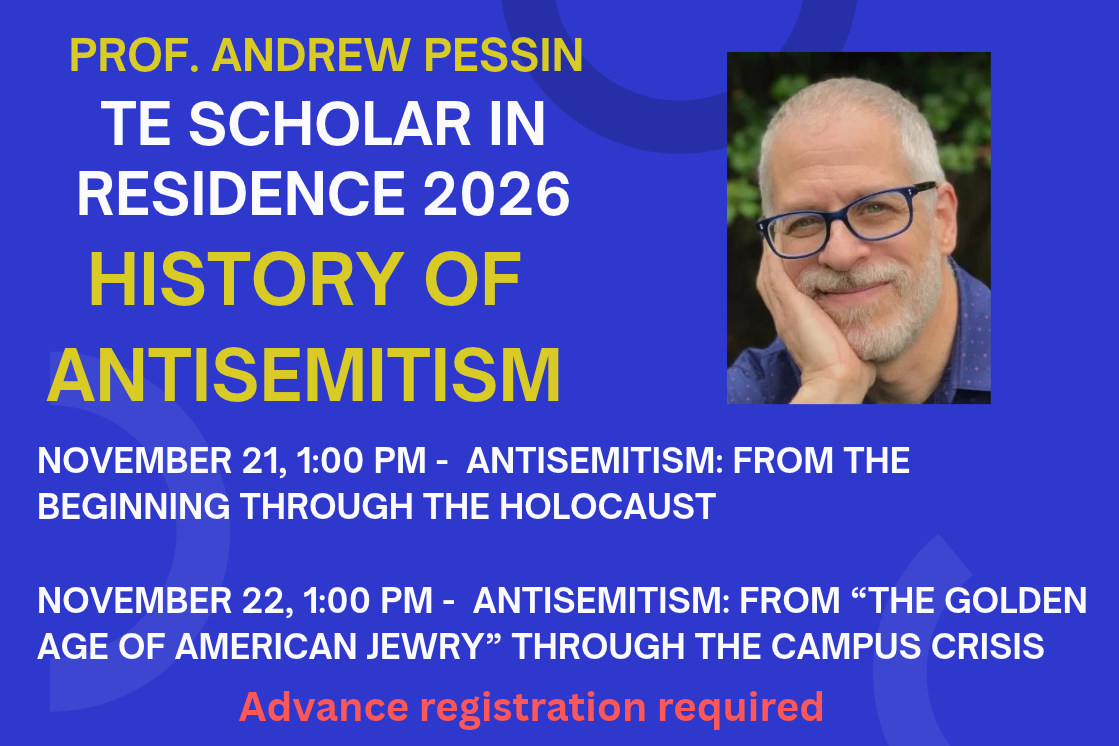
Prof. Andrew Pessin has been named Temple Emanuel’s Scholar in Residence speaker and scheduled to speak on November 21-22, 2026. He is a Professor of Philosophy at Connecticut College, having received his BA from Yale and PhD from Columbia University.
Professor Pessin’s awareness of the hostility toward Israel on college campuses has led him to write extensively on the history of Zionist thought and antisemitism. He is the author of numerous philosophy books and novels and has written on both contemporary and classic Jewish thinkers. He is the founder of the Institute for the Critical Study of Zionism.
The two-day program will bring sharp focus and clarity to the history of antisemitism from its inception through the holocaust to the present-day, exploring challenges to academic freedom, broader societal implications for Jewish education and the fight against bigotry in today’s world.
November 21 Antisemitism: From the Beginning Through the Holocaust
November 22 Antisemitism: From “The Golden Age of American Jewry” Through the Campus Crisis
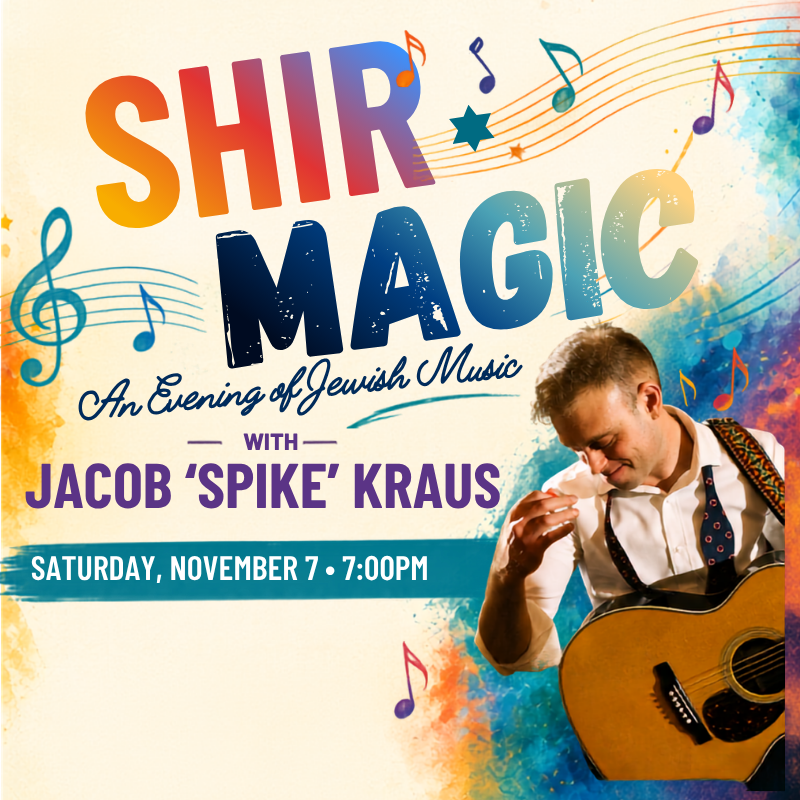
Join us for our annual Shir Magic concert, held in loving memory of Rabbi Jerry Brieger z”l, featuring the joyful and inspiring music of Jacob ‘Spike’ Kraus – with a special appearance by the Temple Emanuel Band!
Make it a Shabbat experience:
4:30 PM • PJ Havdalah for Families. A special Havdalah experience with Spike for families with young children. Free and open to everyone. Advance registration required for security purposes.
5:30 PM • Family-Friendly Dinner. $5 per person / $15 per family.
7:00 PM • Shir Magic Concert! Come sing, celebrate, and make some Shir Magic with us!
About our performer Jacob ‘Spike’ Kraus is one of the most joyful and creative forces in contemporary Jewish music. A singer-songwriter, music producer, educator, and innovator, his music is featured by Jewish Rock Radio and PJ Library.
I am so excited to share that we have finished our EasyShul implementation. EasyShul is our new membership database which makes it easier for all of us to connect and has features to help TE run more smoothly.
From an office perspective, EasyShul is the system that Sara, Lynn and our treasurers use to organize our TE membership. It also allows us to manage our school, share events and track prospective members. All of this helps the office run smoother and more efficiently.
For all of us, the EasyShul portal and app allow us to easily access a membership directory, make donations, view our calendar, sign up for events, and pay invoices. I am excited to see how EasyShul continues to help us connect and engage with each other.
Can I ask a favor? If you haven’t logged into EasyShul yet, please do. It’s very easy, you just go to https://tegnh.easyshul.com/. If you run into any challenges logging in just reach out and I’m happy to help (I even make house calls).
If you don’t like dealing with the 6 digit security code (EasyShul uses a security approach called OTP authentication which replaces passwords with single-use, time-sensitive codes) or just prefer the ease of an app, I highly recommend you download the EasyShul app on your phone.
Now a second favor… As of this writing 69% of TE households have logged into EasyShul which is really great considering we only launched it a few weeks ago. But, only 12 of us have added a picture in EasyShul. Can you do me, and all of us, a favor- log into EasyShul and add a picture of yourself to your profile. This makes it more personable when using the site, and it also helps those of us who remember faces and names but sometimes struggle putting the face and the name together
In our tradition, Rosh Hashanah and Yom Kippur are known as the most awe-inspiring and powerful Holy Days of the year. And in our modern reality, they continue to draw Jews together in a remarkable way. For many people, whether they are in the synagogue every week or only occasionally, coming together as a community on the Days of Awe remains an important and meaningful part of Jewish life.
For those who may not spend much time in synagogue during the year, the High Holy Days can sometimes feel like a lot to take in. There are unfamiliar prayers, plenty of Hebrew, long services, and traditions that may not always be immediately obvious. It is perhaps no surprise that bookstores and websites are filled with titles such as “How to Survive the High Holidays” and “Rosh Hashanah and Yom Kippur Survival Kit”! Somehow, this most profound experience of the Jewish year can also be one of the most challenging to navigate.
And yet, there is something wonderful about the way people return. Synagogues open up walls to social halls and bring in additional chairs, making room for everyone who wants to be part of the community. For so many Jews, hearing Kol Nidrei and Avinu Malkeinu, and experiencing the ancient sound of the shofar, remains one of the most important moments of the year. Whether we come every week or once a year, there is something deeply comforting about returning to these familiar words, melodies and rituals.
The Days of Awe, Yamim Noraim, are the ten days from Rosh Hashanah through Yom Kippur. They are a time for reflection and introspection—a time to conduct what the rabbis call heshbon hanefesh, an accounting of the soul. We are encouraged to seek forgiveness for the wrongs we have done: first from other people, our loved ones, our families and friends, as well as those we may have hurt without even realizing it, and then from God. We come together to pray the familiar words of supplication: slach lanu, mechal lanu, kaper lanu—forgive us, pardon us, grant us atonement.
But this process does not actually begin on Rosh Hashanah. It begins earlier, in the month of Elul that precedes the New Year.
The Selichot prayers, the “prayers of forgiveness,” are recited during the month of Elul, preparing us spiritually for the Days of Awe that lie ahead. In Sephardi tradition, Selichot are recited throughout the month of Elul, while in Ashkenazi tradition they begin at the end of Shabbat immediately preceding Rosh Hashanah. Traditionally, these penitential prayers were recited at midnight—a physical reminder that this is a time to pause, to look inward, and perhaps to see our lives and ourselves in a different light.
For many years now, the Reform congregations of Greater New Haven have come together for Selichot. It gives us a once-a-year opportunity to share worship with one another and to experience ourselves as part of a larger Jewish community and family. There is something especially meaningful about entering the High Holy Day season together. This year, our Selichot service will be hosted by Congregation Mishkan Israel in Hamden. On Saturday, September 5th at 7:00 pm, we will come together for a special evening to help set the mood for the upcoming Holy Days. Our keynote speaker will be authorMarjorie Ingall, whose recent book on the art of apology at home and at work offers a particularly fitting way to begin the High Holy Day season. I hope you will join us as we begin this journey toward the Days of Awe together.
Wishing you all Shanah Tovah U’Metukah—a sweet and happy New Year 5787 ahead! I can’t wait to see you all in our sanctuary this High Holy Day season!
*Excerpts of this article appeared in the September 2011 Shofar
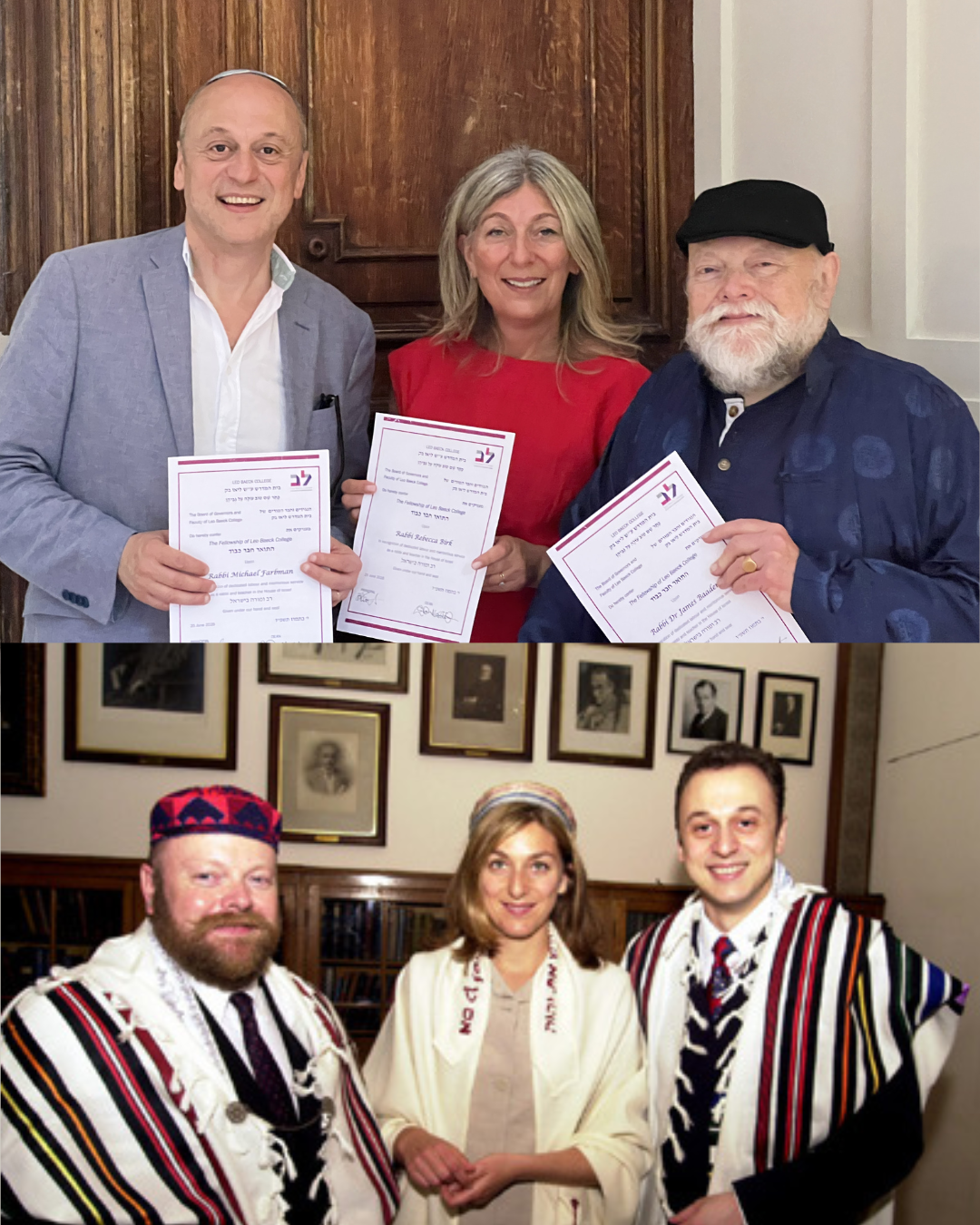
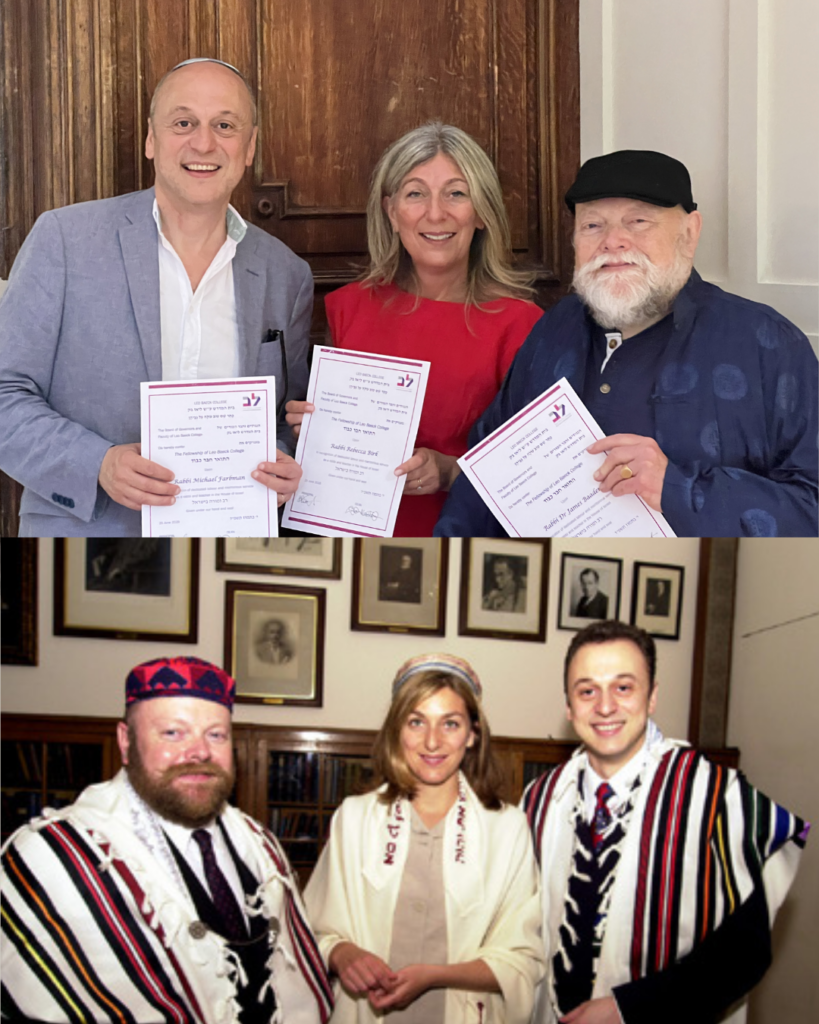
Twenty-five years ago this month, I stood with my classmates on the bimah of West London Synagogue and received my rabbinic ordination, the semikha. Like many newly ordained rabbis, I carried a mixture of excitement, humility, idealism, and uncertainty. I knew that I wanted to help build meaningful Jewish communities, teach Torah, accompany people through life’s joys and sorrows, and help shape a vibrant Jewish future. What I could not have known was how profoundly the communities I would serve would shape me in return.
As I reflect on this milestone, I find myself thinking less about the passage of time and more about the relationships, experiences, and sacred moments that have filled those years. A rabbi may officiate at weddings, teach students, lead worship, comfort mourners, celebrate B’nai Mitzvah, and guide communities through periods of change. Yet the true privilege of the rabbinate is being invited into people’s lives at moments of meaning and vulnerability. Every congregation leaves its mark on its rabbi, and every member becomes part of the story.
During these twenty-five years, the Jewish world has changed dramatically. Technology has transformed how we communicate and learn. Patterns of Jewish engagement have evolved. We have celebrated extraordinary achievements and faced profound challenges, including the painful realities confronting Israel and world Jewry today. Through it all, one lesson has remained constant: Jewish community matters. In an age that often pulls people apart, congregations continue to create spaces of belonging, purpose, learning, and connection.
I am especially grateful that a significant portion of this journey has been shared with TE. For 17 years we have celebrated milestones, navigated challenges, welcomed new members, mourned losses, learned from one another, and continued to build a community grounded in Jewish values and caring relationships. Whatever accomplishments may be associated with my rabbinate are, in truth, the accomplishments of a community that has chosen to invest in Jewish life and in one another.
This summer, I will have the opportunity to mark this anniversary in a particularly meaningful way. I will return to London to attend the World Union for Progressive Judaism’s Darkeinu conference, and will also receive an Honorary Fellowship from Leo Baeck College on the twenty-fifth anniversary of my ordination. I am deeply honored by this recognition, which feels less like a personal achievement than a reminder of the teachers, colleagues, family members, and congregants who have accompanied me throughout this journey.
As I prepare for a month-long sabbatical, I look forward to time for learning, reflection, and renewal. Jewish tradition understands that periods of rest are not interruptions to our work but an essential part of it. My hope is to return with fresh ideas, renewed energy, and a deeper appreciation for the sacred work we continue to do together.
At our Annual Meeting, I shared some reflections on these twenty-five years of rabbinate—what has changed, what has endured, and what gives me hope for the future. Most importantly, I hope we can reflect together on the next chapter of our congregation’s story. While anniversaries invite us to look back, they also challenge us to imagine what comes next.
For all the moments we have shared and for the journey that still lies ahead, thank you. It remains one of the greatest privileges of my life to serve as your rabbi.
During TE’s Annual Meeting in June, I shared that I enjoy looking at data as a way to orient myself. For the past decade, first when I was chair of TE’s membership committee and now as President, I like to look at as much membership data as possible to see how our community is shifting and to ensure I am thinking about our membership accurately.
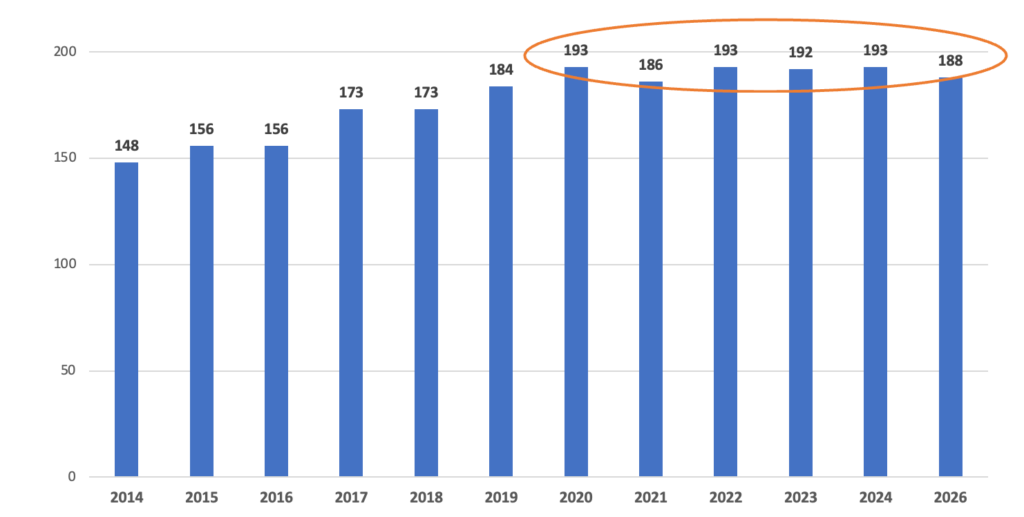
Our previous member database, Rakefet, shows that we have 188 family units at TE in 2026, up from 148 in 2014, which is the oldest data I could easily get my hands on. You will see that we have been very stable for the past six years after experiencing a nice membership growth for the six years prior. As many area temples are seeing declines right now, I am happy we are relatively flat, but I would of course love to see more new members joining TE in the year ahead.
TE Family Units (2014-2026)
Membership and Age Shifts (2014-2026)
Looking at our members by age has been helpful to see where our growth is coming from and also which age group is the majority of our community. This chart shows the total members each year, normalized to 100, so you can see how each age group evolved as a portion of the whole community. For example, 24% of our membership in 2014 was over the age of 70 and in 2026 that number is now 45%. Similarly 5% of our community was over the age of 80 in 2014 and that has now grown to 22%. Our older members, many of whom have been TE members for decades, are appropriately aging within TE. We as a community have to be mindful that as a whole, TE has more senior members.
But, interestingly, the split between those over and under 50 has not changed much in the past 12 years. Look at the line between gray and yellow, and yellow and blue in the chart below. We had 18% of our community under 49 in 2014, and today we have 20%. Looking at members below 59, we had 43% in 2014 and now have 37%. These shifts aren’t so meaningful, implying that for over a decade we have had more TE members over 60 then under 60 and that split is relatively unchanged. But, as a community its important that we are mindful that our more senior members are older than they were a decade ago (obviously 🙂) and we need to ensure we continue to bring in younger new members.
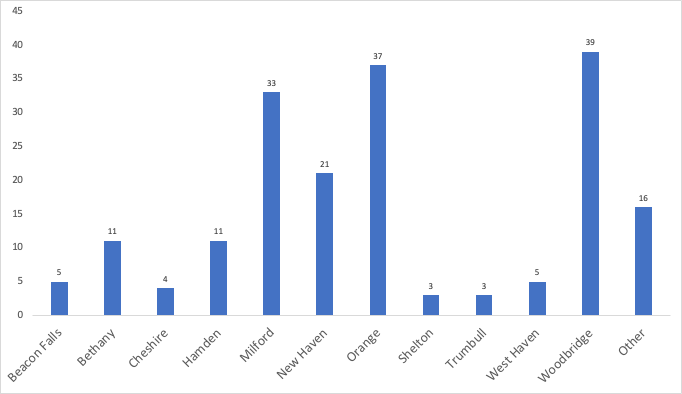
TE Members by Town (2026)
TE has always had high membership from Orange and Woodbridge but I thought it would be helpful to show all the towns where our members come from. I combined any towns with 2 or fewer families for ease of viewing, but I am happy to share the details if you are interested. When looking back a decade, Milford is the town that grew the most with TE members. In 2014 we had 17 family units from Milford and today we have 33. New Haven, Bethany and Hamden have all stayed pretty consistent since 2014.
We are shifting our office system from Rakefet to EasyShul in July. With this change I am excited to have more information to share to help us understand TE by the numbers, but more importantly this new system will make it much easier for our office and our community to communicate. EasyShul will have seamless billing, an online directory, easy event sign ups. It will also remove inefficient manual work from Sara and Lynn in the office.
You will receive an invite in early July to log into EasyShul for your 2026/2027 membership renewal and commitment form, as well as to validate and check that we have your right contact information.
Numbers and demographics about our membership is interesting and the administrative ease of EasyShul will help TE run smoother, but it only gets us so far. The most important piece of information that I can gather is directly from you. This past Spring we did a survey and I am so pleased to share that 120 surveys were completed. I shared some information about who completed the survey at the Annual Meeting and I am really pleased that the respondents appropriately represent our TE community.
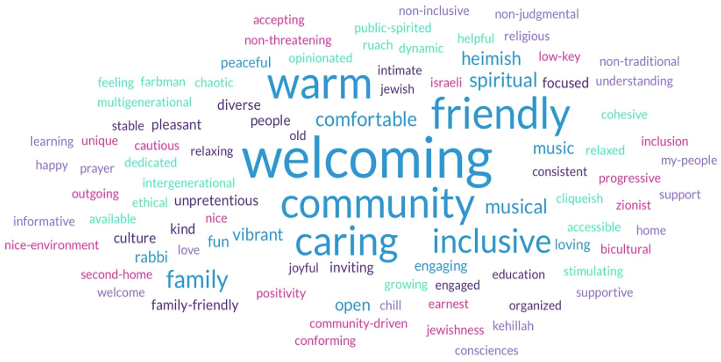
What three words would you use to describe TE
I will share more details from the survey soon but I couldn’t resist sharing this word cloud. One of the questions asked in the survey was “What Three Words Would You Use to Describe TE”. The size of the word in this image represents frequency of use. Our most used words to describe TE are: Welcoming, Warm, Friendly, Community, Care, Inclusive. I encourage you to review these words. Most are very positive, a few are critical. I appreciate this feedback and will spend time with the board this year keeping this word cloud in front of us to make sure we are being mindful of your feedback.
Please let me know if you have any questions on the information I shared here or at the Annual Meeting. Thank you for your feedback and keep it coming!
April’s Family Shabbat was a full circle moment for me. When we joined TE, Maddy, our oldest daughter, was entering kindergarten and Abby was in pre-school. We joined TE for our girls. Not because we felt a need for them to go to Hebrew School or have a Jewish education, but because they really loved the Jewish traditions and songs they learned in pre-school at Gan Hayeled. (Thank goodness for catchy Jewish kid songs!)
Scott and I enjoyed learning along with our girls at Asepha and then participating in the TE parent ritual of going to Costco and Trader Joe’s from 10:00-12:00 every Sunday morning.
I know everyone says that kids grow up quickly and the young years go by in a blink. I can now say from experience it’s true! In just a moment we went from sitting at Asepha and Family Shabbat with cute little girls on our laps, to sitting as a pair while our girls are on the side of the sanctuary with their friends, in their roles as teachers and madrachim.
Family Shabbat is my favorite service at TE. I love the songs and the visual t’filah, and I also really love the beautiful chaotic energy. For our April Family Shabbat we had 1st and 2nd graders lead the service, and Maddy was one of their teachers. During the service, the young kids were fully engaged. One child even corrected Maddy when she misread a line from “The Little Red Hen and The Passover Matzah”, the evening’s story- “you meant prickly prickly prickly not quickly quickly quickly.” Another child made a fantastic quick comment “he didn’t know the answer!” when an adult joked that they knew what Rabbi was talking about when he clearly didn’t. Everyone couldn’t help but laugh. All evening, there were kids being kids- moving around, talking, playing – so full of energy and a beautiful reminder of the vitality of our community.
Now my baby is graduating high school, and I’m excited to watch the next group of young teens become teachers. Last month I watched the little kids at Family Shabbat and knew that before long, they too would become the cool teenage teachers. We are so fortunate to be part of TE, where you can really see change happen and watch the community evolve. The baby at Asepha has their bat mitzvah, becomes the teacher, and then graduates, right in front of our eyes.
___________________
Coming Soon.. EasyShul
This summer, we are launching a new community database for TE. EasyShul will be our new platform for the office to manage membership information. It will also be where we post events, register for school, check invoices and make donations. EasyShul is very user friendly and will be a great resource for all of us. More information will be shared soon! Contact Lindsey with any questions.