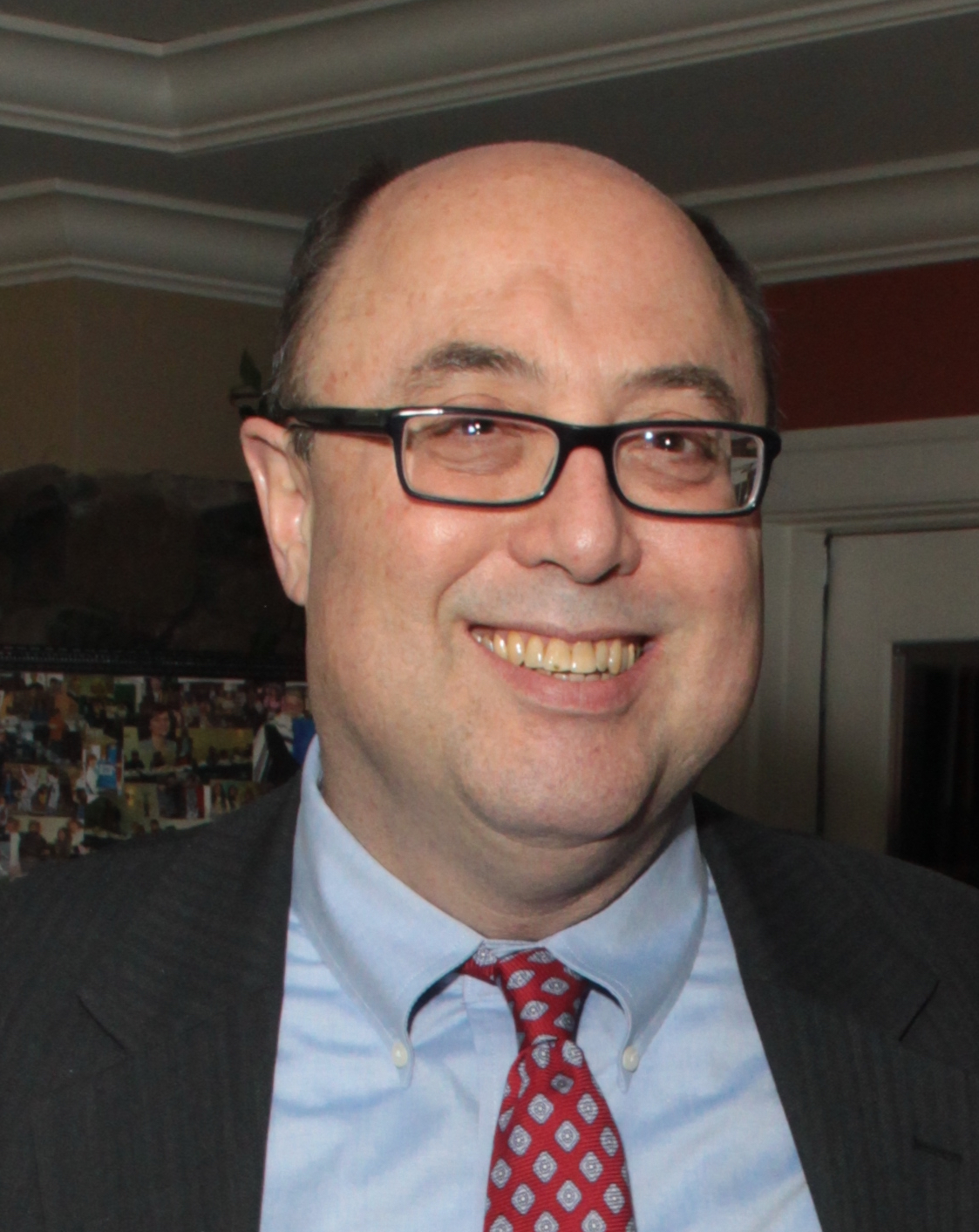
I am so excited to share that we have finished our EasyShul implementation. EasyShul is our new membership database which makes it easier for all of us to connect and has features to help TE run more smoothly.
From an office perspective, EasyShul is the system that Sara, Lynn and our treasurers use to organize our TE membership. It also allows us to manage our school, share events and track prospective members. All of this helps the office run smoother and more efficiently.
For all of us, the EasyShul portal and app allow us to easily access a membership directory, make donations, view our calendar, sign up for events, and pay invoices. I am excited to see how EasyShul continues to help us connect and engage with each other.
Can I ask a favor? If you haven’t logged into EasyShul yet, please do. It’s very easy, you just go to https://tegnh.easyshul.com/. If you run into any challenges logging in just reach out and I’m happy to help (I even make house calls).
If you don’t like dealing with the 6 digit security code (EasyShul uses a security approach called OTP authentication which replaces passwords with single-use, time-sensitive codes) or just prefer the ease of an app, I highly recommend you download the EasyShul app on your phone.
Now a second favor… As of this writing 69% of TE households have logged into EasyShul which is really great considering we only launched it a few weeks ago. But, only 12 of us have added a picture in EasyShul. Can you do me, and all of us, a favor- log into EasyShul and add a picture of yourself to your profile. This makes it more personable when using the site, and it also helps those of us who remember faces and names but sometimes struggle putting the face and the name together
During TE’s Annual Meeting in June, I shared that I enjoy looking at data as a way to orient myself. For the past decade, first when I was chair of TE’s membership committee and now as President, I like to look at as much membership data as possible to see how our community is shifting and to ensure I am thinking about our membership accurately.
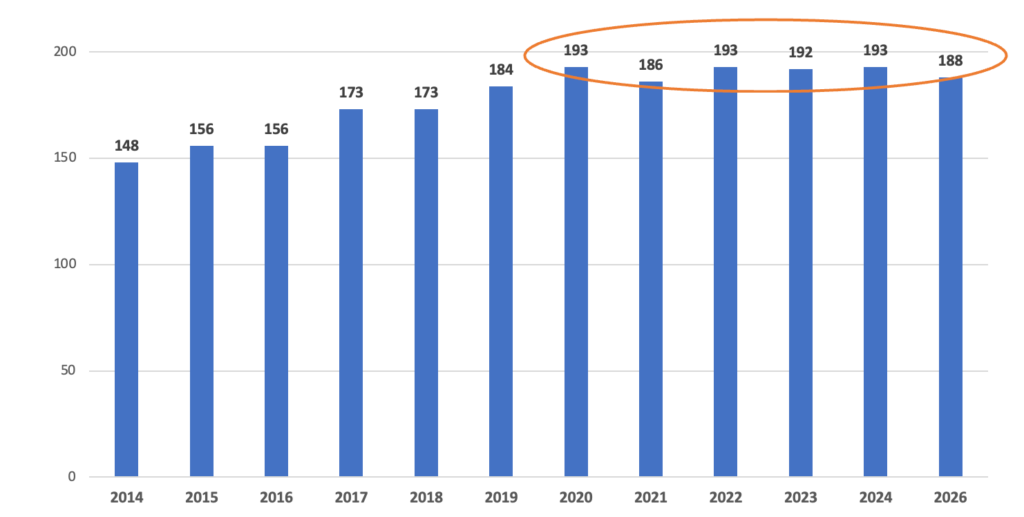
Our previous member database, Rakefet, shows that we have 188 family units at TE in 2026, up from 148 in 2014, which is the oldest data I could easily get my hands on. You will see that we have been very stable for the past six years after experiencing a nice membership growth for the six years prior. As many area temples are seeing declines right now, I am happy we are relatively flat, but I would of course love to see more new members joining TE in the year ahead.
TE Family Units (2014-2026)
Membership and Age Shifts (2014-2026)
Looking at our members by age has been helpful to see where our growth is coming from and also which age group is the majority of our community. This chart shows the total members each year, normalized to 100, so you can see how each age group evolved as a portion of the whole community. For example, 24% of our membership in 2014 was over the age of 70 and in 2026 that number is now 45%. Similarly 5% of our community was over the age of 80 in 2014 and that has now grown to 22%. Our older members, many of whom have been TE members for decades, are appropriately aging within TE. We as a community have to be mindful that as a whole, TE has more senior members.
But, interestingly, the split between those over and under 50 has not changed much in the past 12 years. Look at the line between gray and yellow, and yellow and blue in the chart below. We had 18% of our community under 49 in 2014, and today we have 20%. Looking at members below 59, we had 43% in 2014 and now have 37%. These shifts aren’t so meaningful, implying that for over a decade we have had more TE members over 60 then under 60 and that split is relatively unchanged. But, as a community its important that we are mindful that our more senior members are older than they were a decade ago (obviously 🙂) and we need to ensure we continue to bring in younger new members.
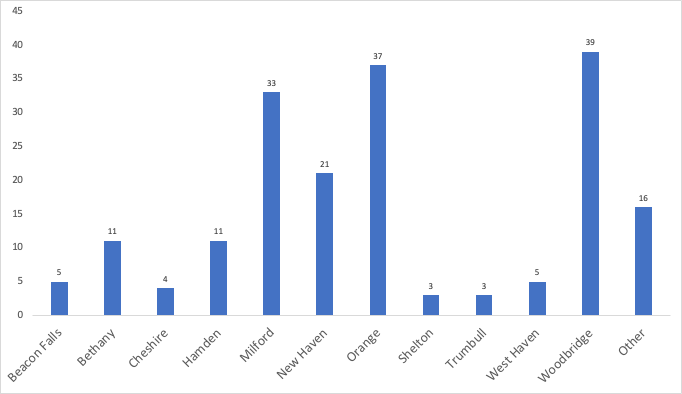
TE Members by Town (2026)
TE has always had high membership from Orange and Woodbridge but I thought it would be helpful to show all the towns where our members come from. I combined any towns with 2 or fewer families for ease of viewing, but I am happy to share the details if you are interested. When looking back a decade, Milford is the town that grew the most with TE members. In 2014 we had 17 family units from Milford and today we have 33. New Haven, Bethany and Hamden have all stayed pretty consistent since 2014.
We are shifting our office system from Rakefet to EasyShul in July. With this change I am excited to have more information to share to help us understand TE by the numbers, but more importantly this new system will make it much easier for our office and our community to communicate. EasyShul will have seamless billing, an online directory, easy event sign ups. It will also remove inefficient manual work from Sara and Lynn in the office.
You will receive an invite in early July to log into EasyShul for your 2026/2027 membership renewal and commitment form, as well as to validate and check that we have your right contact information.
Numbers and demographics about our membership is interesting and the administrative ease of EasyShul will help TE run smoother, but it only gets us so far. The most important piece of information that I can gather is directly from you. This past Spring we did a survey and I am so pleased to share that 120 surveys were completed. I shared some information about who completed the survey at the Annual Meeting and I am really pleased that the respondents appropriately represent our TE community.
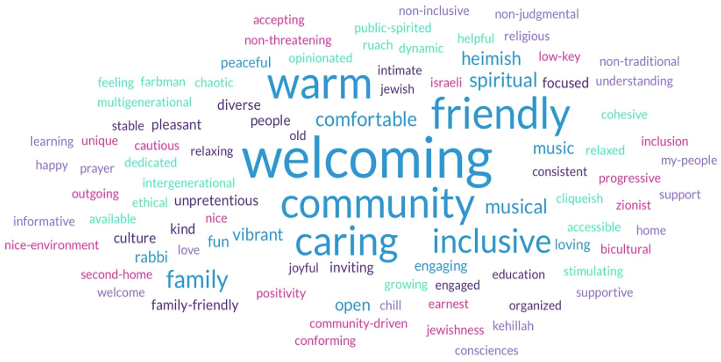
What three words would you use to describe TE
I will share more details from the survey soon but I couldn’t resist sharing this word cloud. One of the questions asked in the survey was “What Three Words Would You Use to Describe TE”. The size of the word in this image represents frequency of use. Our most used words to describe TE are: Welcoming, Warm, Friendly, Community, Care, Inclusive. I encourage you to review these words. Most are very positive, a few are critical. I appreciate this feedback and will spend time with the board this year keeping this word cloud in front of us to make sure we are being mindful of your feedback.
Please let me know if you have any questions on the information I shared here or at the Annual Meeting. Thank you for your feedback and keep it coming!
April’s Family Shabbat was a full circle moment for me. When we joined TE, Maddy, our oldest daughter, was entering kindergarten and Abby was in pre-school. We joined TE for our girls. Not because we felt a need for them to go to Hebrew School or have a Jewish education, but because they really loved the Jewish traditions and songs they learned in pre-school at Gan Hayeled. (Thank goodness for catchy Jewish kid songs!)
Scott and I enjoyed learning along with our girls at Asepha and then participating in the TE parent ritual of going to Costco and Trader Joe’s from 10:00-12:00 every Sunday morning.
I know everyone says that kids grow up quickly and the young years go by in a blink. I can now say from experience it’s true! In just a moment we went from sitting at Asepha and Family Shabbat with cute little girls on our laps, to sitting as a pair while our girls are on the side of the sanctuary with their friends, in their roles as teachers and madrachim.
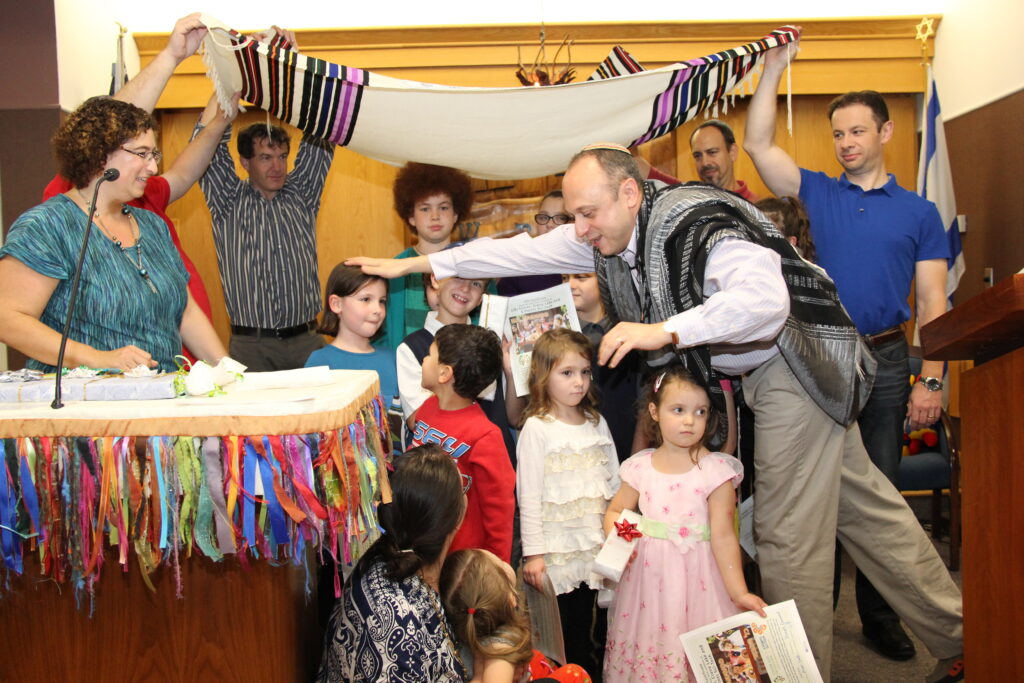
Family Shabbat is my favorite service at TE. I love the songs and the visual t’filah, and I also really love the beautiful chaotic energy. For our April Family Shabbat we had 1st and 2nd graders lead the service, and Maddy was one of their teachers. During the service, the young kids were fully engaged. One child even corrected Maddy when she misread a line from “The Little Red Hen and The Passover Matzah”, the evening’s story- “you meant prickly prickly prickly not quickly quickly quickly.” Another child made a fantastic quick comment “he didn’t know the answer!” when an adult joked that they knew what Rabbi was talking about when he clearly didn’t. Everyone couldn’t help but laugh. All evening, there were kids being kids- moving around, talking, playing – so full of energy and a beautiful reminder of the vitality of our community.
Now my baby is graduating high school, and I’m excited to watch the next group of young teens become teachers. Last month I watched the little kids at Family Shabbat and knew that before long, they too would become the cool teenage teachers. We are so fortunate to be part of TE, where you can really see change happen and watch the community evolve. The baby at Asepha has their bat mitzvah, becomes the teacher, and then graduates, right in front of our eyes.
___________________
Coming Soon.. EasyShul
This summer, we are launching a new community database for TE. EasyShul will be our new platform for the office to manage membership information. It will also be where we post events, register for school, check invoices and make donations. EasyShul is very user friendly and will be a great resource for all of us. More information will be shared soon! Contact Lindsey with any questions.
I hope by the time you are reading this the snow has mostly melted and spring is slowly making her way to us. We had some wonderful events and community gatherings this winter and have a lot planned for the spring, including many b’nai mitzvahs!
Your generosity and thoughtfulness during our Raise the Roof campaign were meaningful and the investment in our building says a lot about your commitment to TE. I’m glad we had the roof replaced before the worst of winter hit us. We had a few frozen pipes during the really cold days, but thankfully we were able to identify and thaw them before anything burst. Thank you Doug, Melissa, Jim, Scott, Ariette and our Buildings and Grounds team for your help.
I have some favors to ask as we enter spring and prepare for the summer.
We recently launched a survey to understand how well TE is meeting your needs and how we can improve our community, programs, and communication. Please complete the survey by the end of March so we have time to compile your feedback before our annual meeting on June 7th. I hope the majority of TE members complete the survey and provide feedback to help shape TE for now and years to come.
Are you curious to learn more about TE committees or the board? Do you have a skill or interest that would benefit TE? Would you like to have an active voice in decisions we make? Would you like to volunteer some of your time to support our community?
Spring is the time for us to review committees and the board, and seek interest from members who want to become more involved at TE.
There are so many ways to get involved in TE, with flexibility to match your interest and schedule. Joining a committee is a clear way to get involved at TE and I would love to see each committee gain a new member this spring. But, there are other ways to help too. If you enjoy facepainting—volunteer at a school event or our annual BBQ. If you like to cook-—join the kitchen crew at one of our many events. If you like connecting people or finding the right words to describe our community—join our membership committee. If you are a lawyer and enjoy reading contracts—offer to help the board when these come up.
You can contact me at President@tegnh.org to talk about committees, the TE board and additional opportunities to get involved at TE. I would love to connect and hear about your interests and priorities for TE.
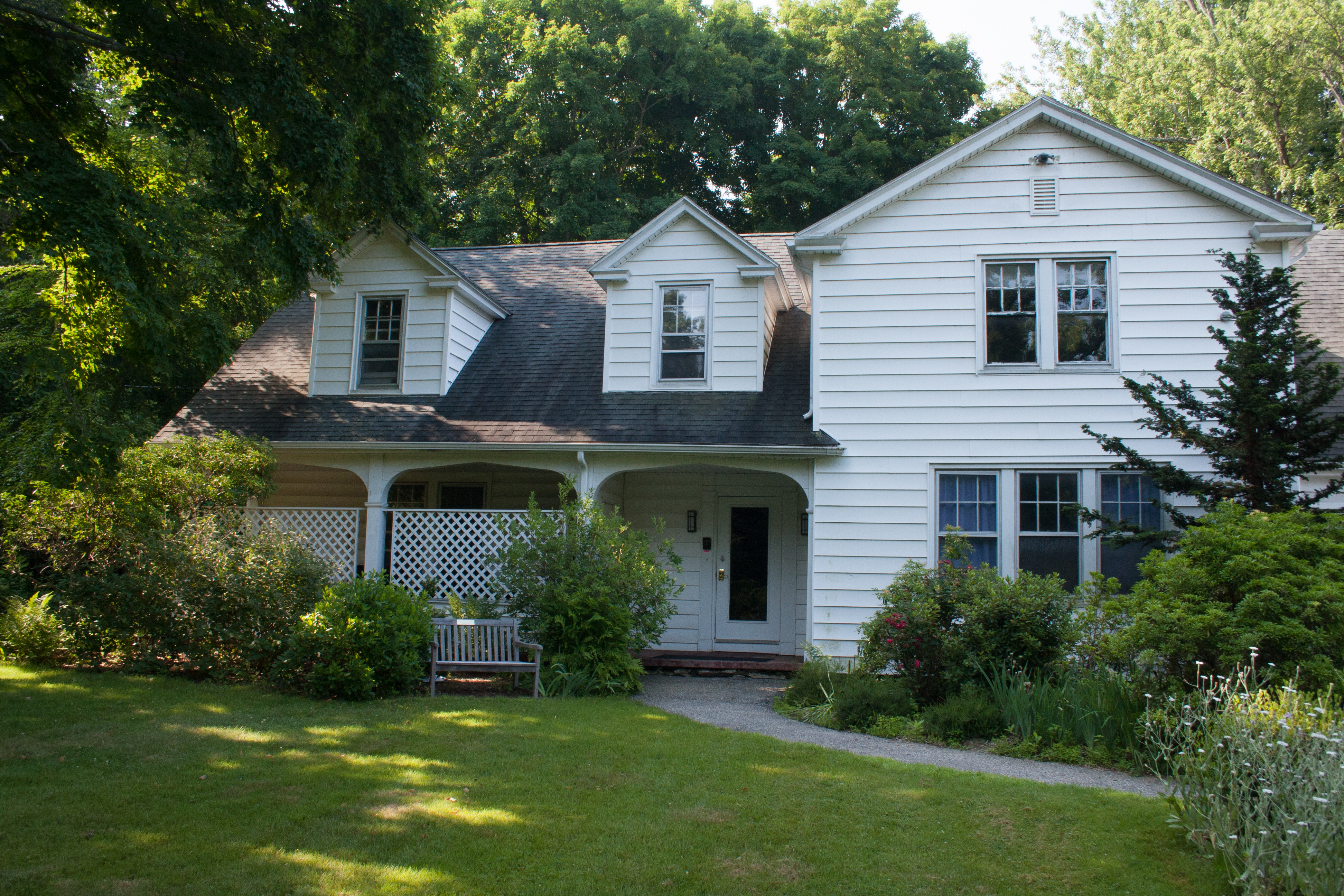
Did you know it has been ten years since the TE house came down?
Six months have passed and I still think one of the best things about being TE’s President is chatting with members of our community. One thing that always makes me smile is how folks identify their relationship with TE based on the different buildings they were in. We have members who attended events “in the barn”, others who “spent a lot of time in the house.” For anyone who joined more than a decade ago, myself included, we brought our kids to Asepha in the house, we had meetings in the house and we remember the distinction between the house and the sanctuary.
For newer members who joined in the past ten years, TE looks today mostly how it was when you joined – minus the two new classrooms near the kitchen. Some might not even know what “the barn” or “the house” means. If that’s the case, be sure to ask around and you will hear some great stories of TE’s history.
Summer 2015 was when TE moved into the expanded main building and February 2016 was when the house came down. These were momentous events in TE’s history and we feel the impact of them every time we enter TE.
The move from the old house into the new school/office wing
By having our school in the house and our services in the sanctuary, many in our community felt that there was a big divide, a “moat” as many called it, between our young families and the older members of our community. Our lay leaders kicked off an important project to unite TE called the One Campus Project. The goal was to bring all of TE together under one roof, so our community could learn, pray, meet, eat and interact all within one space.
I love the vision and energy that went into this project and I am grateful for those who invested so much time and resources into creating our one, united, TE building.
One thing I’m focusing on this year is to make sure that all our members feel connected to all that TE has to offer, including our amazing school and services. I want our established members to connect with our younger families and share their TE stories. If you haven’t experienced a Sunday morning Asepha in a while, I highly recommend you attend- the room is packed and the energy is perfect. I want people showing up, signing up and helping out. We all make TE the special place it is today. Lately, there have been many events that bring us all together, like the Dreyfus lecture that Ed organized with the Adult Ed committee, the Havdalah event in November put on by our religious school parents and teachers, and Chanukkah Shabbat organized by Holli, Jill and Ann.
My hope for 2026 is that we continue to appreciate the beauty of our community and come together within our TE home. Happy 10th birthday to our One Campus and united community.
In the TE lobby before Selichot services, Lenny told me that my Shofar articles don’t all need to be serious. Some can be funny or at least light-hearted. I told him I’m not really a funny person. An hour later, something classically TE happened which I thought I would share for this Shofar article.
Partway through the beautiful service that filled all the seats in our sanctuary and brought together four congregations, my first “presidential” High Holy Day responsibility took place. Nine “chosen” members of our community were asked to come onto the Bimah to change the Torah mantles. I was really proud of myself and had taken time over the preceding weeks to think about who would receive this honor. I had nine wonderful members of our community representing some of our newest members and some who have been part of the community for decades. I had members of different ages, and with varying experience participating in services. We had a quick pre-service huddle where Rabbi shared advice on how best to make the change and the nine people had arranged themselves into three teams and were all ready for their moment. Everything was set, and I was ready to sit back and enjoy watching our members take part in this ritual.
As they stood and walked onto the Bimah, I counted eleven people going up! I started to worry that I had really messed up and maybe I asked someone and had forgotten. I also worried that there was something special to the number nine and I had just committed a big faux pas as we entered into the High Holy Days.
In my moment of panic, I was surprised that Rabbi didn’t make eye contact with me. We are starting to be able to communicate through looks- a sign of a maturing relationship. To my relief, I didn’t get raised eyebrows. Did he not know where I was sitting? Thankfully everything seems to have gone okay, even though they were a bit crowded on the Bimah and they seemed slightly confused. Later, I learned that nine was the requested number solely because it’s helpful to have one person sit holding the Torah, one person to remove the silver and another to lift off and replace the mantle. Nine was a logistical, not sacred, number.
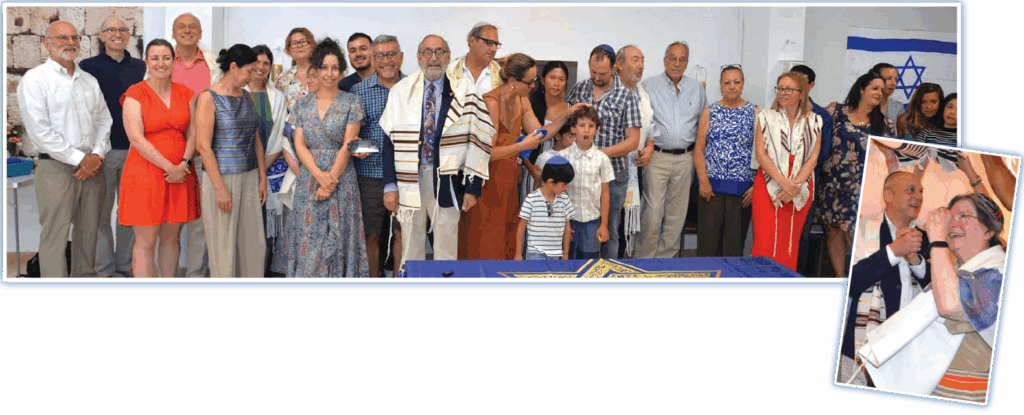
So why did I have eleven? When the choir began singing, Rabbi announced that we are now at the part in the service when he would like members of our TE community to come up and help change the mantles from our colorful ones to the white High Holy Day mantles. Two extra people stood up when Rabbi mentioned TE members, and proudly walked onto the Bimah. These “Bimah crashers” as they will be called, were simply excited and caught up in the moment. In classic TE fashion, they assumed that Rabbi was inviting the congregation to join in. The fact that we had nine carefully selected members who had huddled with Rabbi before the service and had pre-selected their “roles” was not known. In the moment, our Bimah crashers were proud, energized and ready to participate. That is what we do at TE, we stand up and join in.
At the Oneg after the service, there were many laughs with our Bimah crashers. Their energy and humor in retelling their experience as they realized they hadn’t been invited onto the Bimah was infectious. It was a really entertaining and heartwarming end to a beautiful service.
byLindsey Sussman, Rabbi Michael Farbman, Olga Markus, Jeffrey Levick and Melissa Perkal
Lindsey: l’dor va’dor
My first core memory at TE was the Rosh Hashana service I attended shortly after we joined, over a decade ago. I had never been to a high holiday service and I went with a friend and her parents. My friend grew up at a conservative temple in Massachusetts and was also a new member and young mom at TE. I was sitting in a row with them and felt uncomfortable at such a big service and knowing so little. There was clearly a known orchestration to the day. As I sat there, I was in awe of how everyone knew the words, knew the order and joined in at the right times. What struck me at that moment was that generations of family members attended services just like this one, over decades and centuries, and recited the same words. Parents taught their children, who taught their children. I was jealous and impressed. I knew I wanted to be part of this tradition, to have the comfort and connection of this history and know it will live on beyond me. As my oldest daughter has shared with us, her favorite hebrew phrase is l’dor va’dor, from generation to generation and I understand why.
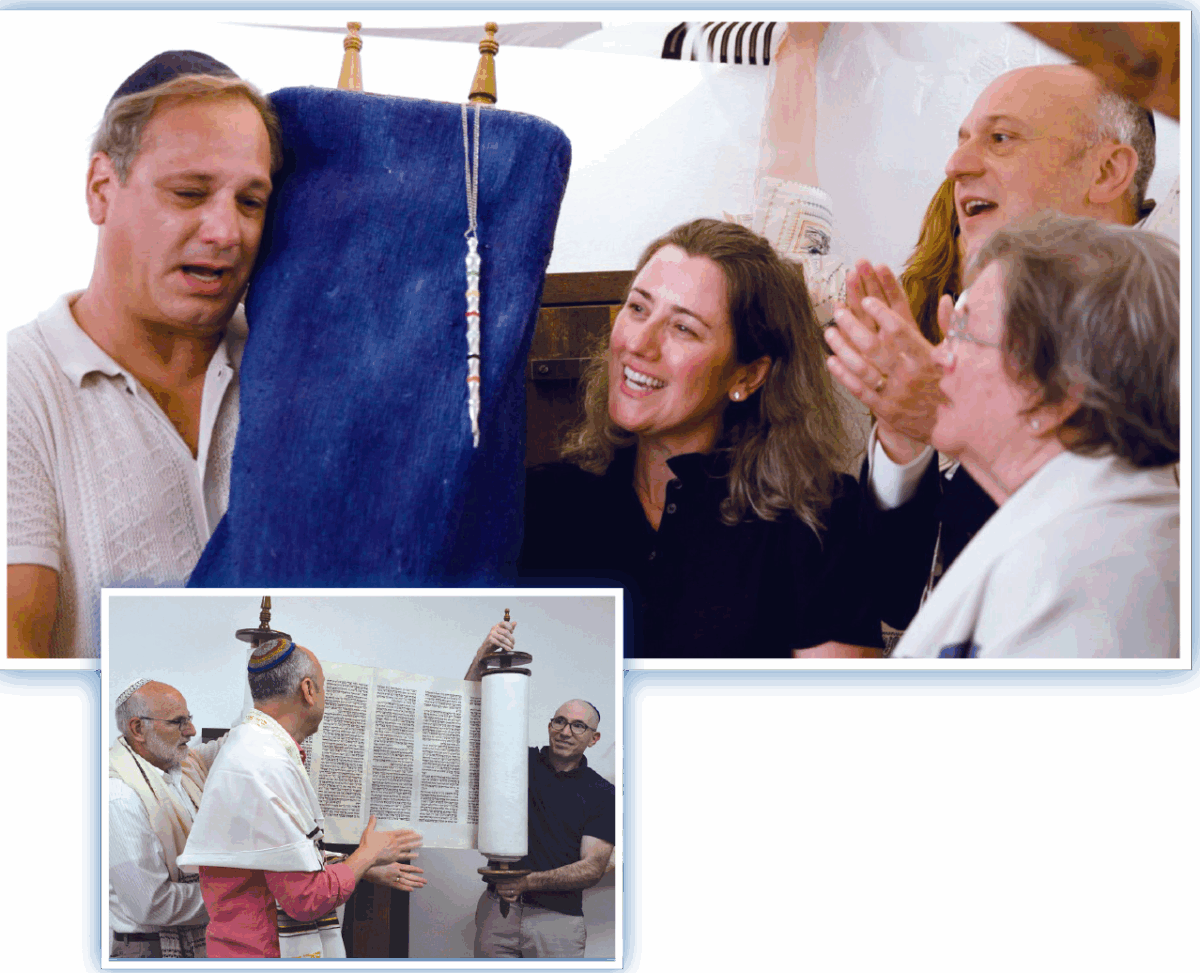
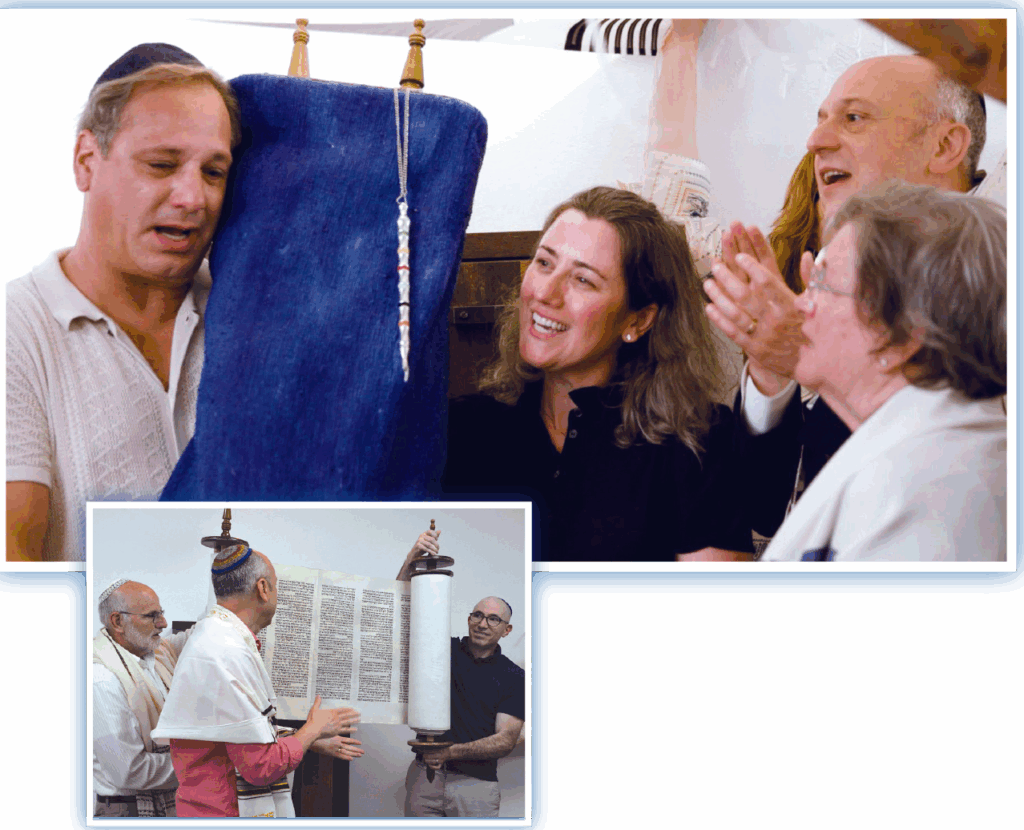
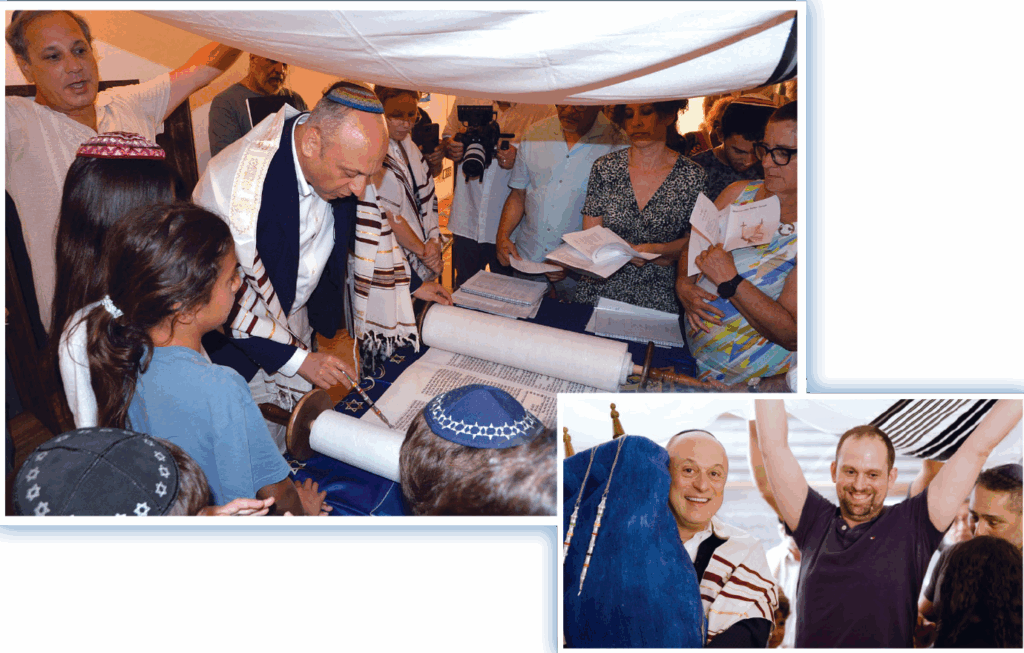
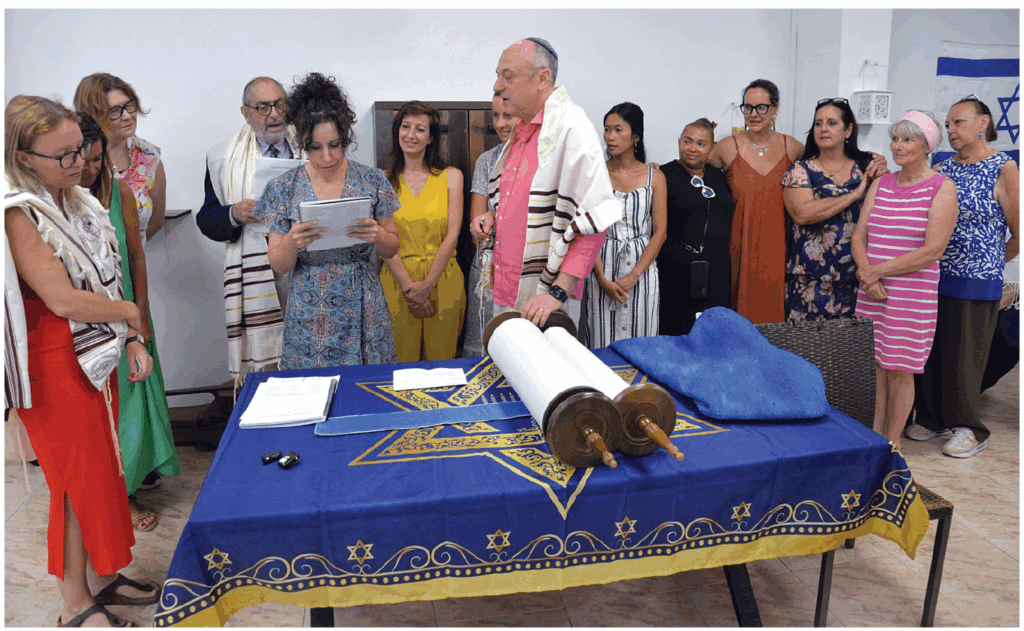
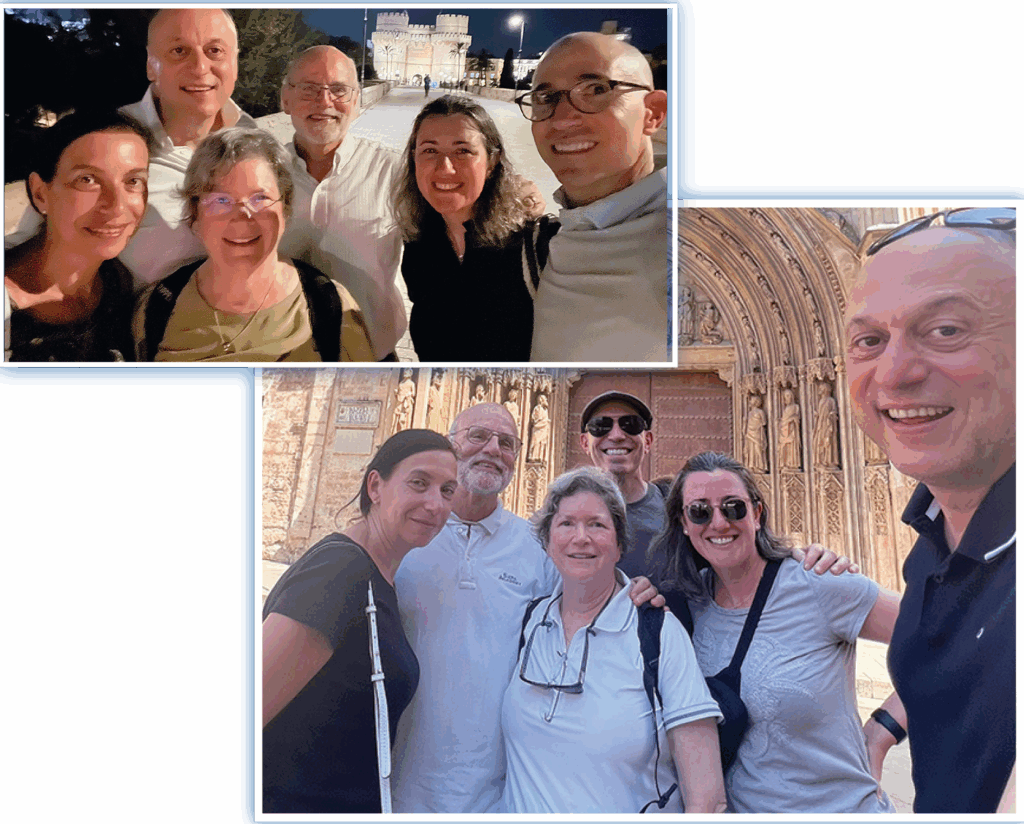
A decade or so later, I was struck with another powerful moment when a few of us had the honor, on behalf of the TE community, to deliver the gift of a Torah scroll to a new community in Valencia, Spain. Seven of us attended a Friday night service with members of Shir Jadash Comunidad. We entered an unmarked building on an industrial street. No signs or markings on the door. Inside was a large, modest space with a handful of folding chairs. Within an hour, there were at least 50 of us. Families from throughout the region, some who drove nearly an hour to attend, seniors, children, and even two families from Washington, D.C. who were in the area and heard about the congregation. While most of us didn’t speak the same language, we quickly fell into a shared experience. The service was done in a mix of Spanish, English and Hebrew. While our melodies were a little different, we were all having the same experience and knew the same words, the same flow. When Rabbi Farbman led us in Lecha Dodi on a borrowed guitar, the energy in the room expanded so quickly. You could feel it. Children were clapping along, voices were getting louder. It was amazing. The service continued with beautiful energy. Children were noisy on the floor in the corner, engaged but playing. Then after the service concluded, the congregants set up a dinner for us. Everyone helped bring out food, take care of one another. After dinner, without discussion, clean up happened, again as a group activity. Jim is sweeping the floor with one of the local congregants, Scott is folding tables, Melissa is clearing food. Our TE group was seamlessly meshed with their community, not just for the service but for the small details that make a community work.
From that unmarked building, I could close my eyes and would think I was at TE. The songs, the words, the children, the energy. This congregation is like TE at its start, and in many ways still how we operate. We function only because of the community, those who donate their time and resources to make TE run. We have a lovely building and a strong and diverse community but at its heart we are still the same. It’s the person who picks up the broom, bakes the challah, has an aliyah, speaks up, shows up, that makes our community so strong. Valencia reminded me of that, but with the added joy and curiosity of a child, still feeling things out.
Rabbi Farbman: Torah as a living document…
In the midst of the celebration, a few of us were pulled aside by a member of the community who is a local journalist, for a few moments of reflection. The language barrier made it a little difficult to communicate, but we managed nonetheless!
They asked me to talk about this moment, about bringing the Torah. I shared briefly the journey, and the challenges – making it through security at JFK with the Torah required three levels of authorization, but we succeeded. Being allowed to bring the scroll onto the plane was not an easy feat, but with a little perseverance, the willingness of Iberia staff to listen to my explanations, the letters we prepared in advance and, perhaps most importantly, the articles in Spanish press published ahead of time, I was ushered onto the plane and shown to the overhead compartment in first class, where the Torah safely traveled (while we were at the back of the plane in our seats:).
I also acknowledged that of course, the most economical way of delivering the Torah to Valencia would have been to pack it carefully and to ship it with a courier. But the most economical is not always the most appropriate or the most meaningful! Navigating all the challenges along the way, and bringing the Torah by hand was not easy – but I cannot think of a more fitting way to bring the Torah from one community to another.
As I sat in the small, hot room, I proceeded to tell them that a community needs people – without people wanting to be together and spend time together, you don’t have a community. The community can exist without the building – even though having a place to call home is very, very helpful. The community can exist without the rabbi – even though having the rabbi teach and lead the community can help transform it in great many ways.
Rabbi Alona Lisitsa is helping Shir Jadash from afar, as she is only able to travel to Valencia a few times a year, but her knowledge, her teaching, and her support enable this nascent community to flourish and continue to grow. The community can exist without the formal prayerbook – TE had famously compiled many a loose-leaf prayerbook in its early days, leading to publication of our beloved ‘blue’ Seder T’filot Emanuel, long before we adopted Mishkan T’filah prayerbook of our movement. These days, one can even project the words of the prayers onto a screen or a wall, with visual t’filah! The presence of the well-laid-out prayerbook that contains transliteration for those who are only learning their way around the service is super helpful, even if it is just a printout, but a beautiful prayerbook does not make a community.
All of these elements are important, and as I said – none of them are enough if you don’t have people who want to come together, spend time together, pray and eat together and make a living community.
You can even make do without a Torah scroll – you can study from the book, and in the absence of a Torah scroll you can even read the weekly portion from a book – although customarily people are not called up for an aliya in those circumstances. But when you enter the Torah scroll into a small rented room, and place it into the hands of a community who are thirsting for its presence, you see the instant transformation, and it is beautiful.
I was honored to stand there, to witness the tears, to add my own tears to those of others in the room, as we celebrated this powerful moment in time. It was a true blessing to get to experience this moment of joy and community.
Jeffrey Lelvick: Community
In the beginning of this year, I noticed a short blurb in this publication that mentioned that TE was donating one of our Torah scrolls to a new Reform community in Valencia, Spain, and that a small delegation of congregants were planning on taking the journey to Spain to hand off the scroll in person. As a filmmaker, I recognized a compelling story and knew immediately I wanted to document it. It had all the makings of a great narrative: a nearly 100-year-old Torah from Poland, that had already lived a long life here in the U.S., was being donated to a community in a country where Jews were expelled over 500 years ago.
As I began filming and editing some initial footage, I was surprised to find myself welling up and crying at various points of the process. I was overwhelmed with emotion watching the scribe restore the scroll. As I recorded the Shavuot service where Rabbi Farbman read the Ten Commandments from the outbound Torah, I couldn’t take my eyes and camera off the flickering candles and the smiling faces of our fellow congregants who warmly followed along, nodding and singing during this intimate service. A few months later we did it all again, but this time in the company of our new friends and fellow Jewish travellers–the members of Shir Jadash in Valencia.
A sun-scorched Valencia was awaiting us when we arrived with the Torah in early July. And while the sparkling Mediterranean Sea and waving palm trees indicated that our humble home in Orange was far away, the community and warmth of the members of Shir Jadash felt incredibly familiar. Its members welcomed us into their small space with smiles and open arms, as if we had known each other for years. It was as if somebody started playing a vinyl record in Connecticut, lifted the stylus, and it put it back down in Spain. The language barrier was real, however, when Rabbi Farbman began strumming and singing Lecha Dodi, if there was any space between our communities, it quickly evaporated, and in that moment, we were one community, sharing our customs and hymns as they have been passed on through generations. As the president of Shir Jadash tightly held the donated Torah under the chuppah the group had created with a tallit, tears streamed down his cheek. From behind the camera, I too, choked up witnessing such beauty derived from such a natural act of providing this community an essential part of our tradition.
At various moments, I found myself wandering away from my camera to sing along and pray with the group, as if I were being pulled in by an unseen force. I’ve come to understand that force as the need for any of us–all of us–to be part of a community. I instinctively felt like I was part of the small community there and part of a much larger Jewish community during my few days in Valencia. As I spoke with the local members, who came from diverse backgrounds–from Catholics who became Jews by choice to others who had been unknowingly practicing Jewish rituals as children, I realized that they had found a community that spoke to them, that fulfilled the need to be together, to share meals, and to sustain themselves. The neshama of their community is deeply Jewish, and I’m not sure if that’s because of its diversity or in spite of it.
As I dig deeper into my footage to revisit and log what I captured, I’m struck by how much I shot of the Torah itself. From the scroll being placed in the overhead bin on the plane to being gently placed into the arc of Shir Jadash for the first time, it is clear to me that this sacred object is not one to be placed on a shelf and admired, and that perhaps the sacredness is not necessarily only from the words scribed on its parchment, but stems from the community it creates when it is unrolled and read in together in a shared space.
Olga: Pride and Joy
Pride and Joy—these are the two most powerful emotions that continue to resonate with me following our recent journey to Valencia, Spain, where we had the profound honor of accompanying a Torah scroll to its new spiritual home, on behalf of the Temple Emanuel community. As I stood before the congregation of Shir Jadash Comunidad, presenting the gifts from our Religious School—talitot and a Torah yad purchased with Tzedakah contributions from our students, families, and faculty—I was filled with an indescribable sense of pride and deep, abiding joy. What a blessing it was to take part in such a sacred mitzvah.
The weekend was marked not only by ceremony, but by a heartfelt human connection. There were tears of gratitude, hugs of friendship, and bursts of laughter that echoed across language barriers. We embraced one another not as strangers, but as a long-lost family. The shared joy, the emotional resonance of the Torah’s arrival, and the warmth of genuine hospitality created moments I will never forget.
Following Shabbat lunch, a member of Shir Jadash asked me, “How does it feel to leave your Torah scroll behind?” I paused for only a moment before responding without hesitation. I replied, “It doesn’t feel like leaving it behind at all. On the contrary—I am filled with deep gratitude and immense pride, knowing we have delivered the Torah into the welcoming arms of its new, loving, and gracious home.”
Shir Jadash Comunidad, in so many ways, mirrors our own beloved Temple Emanuel. It is a warm, sincere, DIY-spirited congregation, full of individuals who open their hearts to newcomers. Despite our different native tongues, we felt entirely at home. The bonds we formed over just a few days were real and moving.
I believe this journey marks not an ending, but a beautiful beginning—a first step toward a long-lasting relationship between our two communities. There is something indescribably powerful about standing together with fellow Jews across the world, realizing that regardless of distance, language, or tradition, we are all united as part of K’lal Israel—the sacred and enduring global Jewish family.
As for me, I will carry this unforgettable experience in my heart, and do my best to share its spirit and meaning with all of you. Am Yisrael Chai—the People of Israel live!
Melissa Perkal: Joy
For me, my love of being Jewish is the joy. The joy of community, the joy of song, the joy of meals shared, the joy of prayer, the joy of being able to give back to those who need it, the joy of learning, the joy of shared experiences. Sometimes, that joy seems to go underground and become dulled by unthinking repetition. The trip to Valencia and Shir Jadash Comunidad was a return to joy. It was a profoundly joyful and rejuvenating experience. So many of the trip’s details have been shared by my fellow travelers, so I won’t repeat them here. I think my newest task is to help re-ignite the joy here at home. It’s made even more exciting by finding a community in Spain that reflects that joy back to us and is ready for us to return to them at any moment.
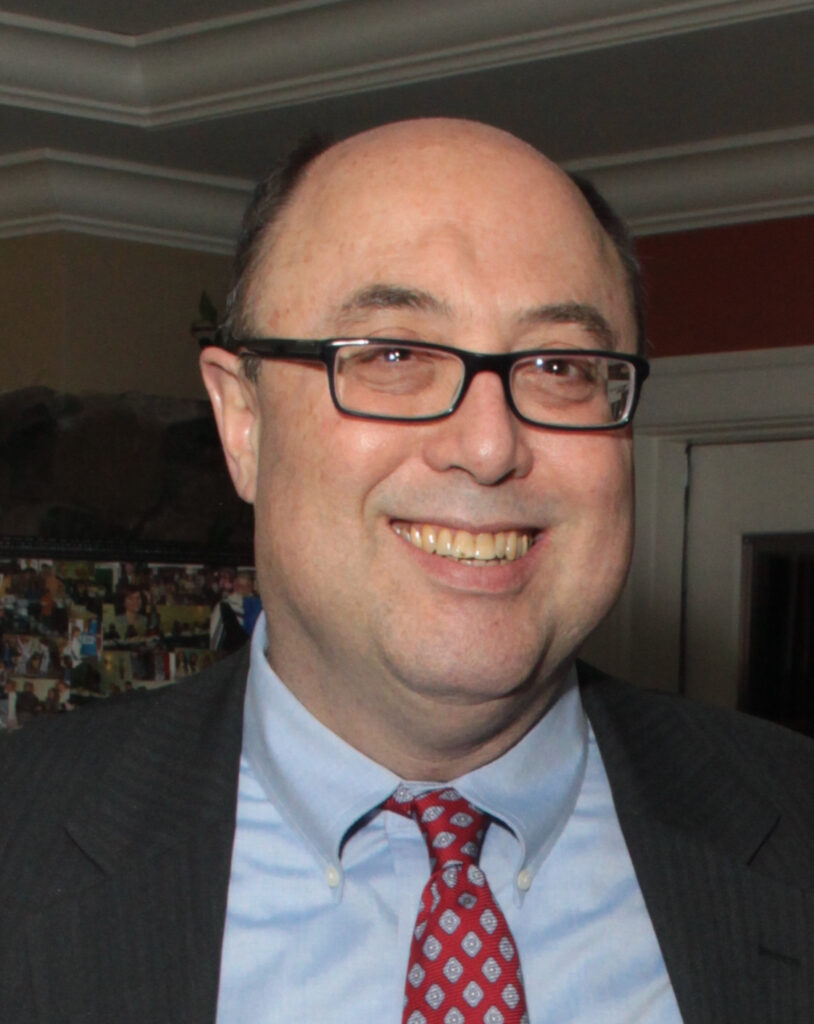
I am honored to be writing my first article as TE’s president. Since we first joined in 2013, I have loved TE, and have been grateful for the energy, peace and community it provided me and my family. I had heard bits and pieces of TE’s history, knew that there were layers to what makes us so special, but didn’t know the specifics. My family had a great experience with the TE school which is skillfully led by Olga and the school teachers. Not being raised in a religious family, getting to know Rabbi, learning from him, being comforted and supported by him, and watching our community thrive thanks to his presence has been amazing.
This year, I’ve had the privilege of learning more about TE’s history and have been peeling back the layers of what makes TE so special. I’ve had the pleasure of speaking with so many wonderful past TE presidents, and connecting with new and longtime members. I’ve heard stories about TE in its early years, I saw a TE membership directory from the 80’s, and a video from TE’s 50th anniversary. The love and respect in people’s voices as they speak about past members who were the heart and soul of TE over the decades reinforced that we are a special place that thrives because of connections and commitments.
I am humbled to be joining this special group of TE layleaders who work to strengthen and sustain our beautiful community. I’m excited to continue to learn and listen, and I encourage you to ask each other, and me questions, share stories and continue to participate to keep TE strong.
This is it – my final Shofar column. “This is the end”. Five years of serving as president of Temple Emanuel spread out over two terms—the first was for two years, which commenced on July 1, 2015; the second for three years and commenced on July 1, 2022. This is my final term and it ends June 30, 2025. At that time, I will have served as president of TE for a longer period than any prior president. “What a long, strange trip it’s been!”
Despite my joking about being president, it has been very rewarding (well mostly). It has provided me the opportunity to work with the Rabbi, the TE staff, our lay leaders and most importantly, you, the TE congregation. Having my terms separated by more than a decade, has enabled me to see firsthand that ”the times, they are a changin‘. ” Fifteen years ago, we had a new young rabbi who was replacing a legend, Rabbi Brieger. Now while Rabbi Farbman is still young, he too is a legend with a wealth of experience. The challenges of 15 years ago have been replaced by new challenges.
I’ve been trying to figure out if I am the oldest TE president. While I am not certain of the answer to that, I am certain (and proud) that I am the most immature. (“Ah, but I was so much older then, I’m younger than that now.”). It has been fun. “Thank you for letting me be myself again.” I have worked with wonderful Board members who have made me, undeservedly, look good. While this is the end of my presidency, it is not the end of my commitment and love of TE. I am not “leaving on a jet plane” and will continue to work for TE and its new outstanding president, Lindsey Sussman. Please show her as much kindness as you have shown me. I love and appreciate all of you. And, of course, thank you Caryn!
In a recent article, I mused on the differences between being President of Temple Emanuel now as opposed to being President during my initial term 15 years ago. The major difference is that 15 years ago we were concerned about safety and security, but not to the degree we need to focus on now. I have come to depend on Joe Kanell on issues concerning the safety and security of our TE community (as did my immediate predecessors). Joe would coordinate with the Orange Police, our outside security company, and with our TE greeters. He helped keep us safe, while working hard to avoid making anyone uncomfortable. Joe was always available to help. I can’t overstate how much I have come to depend on his sage advice. This September, Joe will be stepping down from his voluntary role. His duties will now be handled by Howard Koenig. Howard, who has been well trained by Joe, is a worthy successor. It is a thankless job for a volunteer, but it doesn’t have to be. When you see Joe, be sure to let him know how much you appreciated his service (he will probably blush). Also, thank Howard for taking on this important position (and let him know if you are available to help).
Another major change is that while we are a very social congregation, the pandemic kept us from fully gathering for several years. Happily, we are fully back now. On June 21st we celebrated Rabbi Farbman’s 15th anniversary at TE, as well as his birthday. We had a well-attended Shabbat dinner, a special service, and a special Oneg to celebrate. We are very fortunate to have the Farbman family as part of our community.
On August 2nd, we had our always meaningful Shabbat On The Beach. The weather was expected to be stormy, but Rabbi Farbman arranged to have the rain hold off till after the Oneg was complete (nothing should ever stand between this congregation and food).
We have many other future events, both spiritual and social. On Friday, September 6th we will have our annual BBQ and Shabbat Under the Stars. This is a great combination of both the social and spiritual cores of TE. It is always a successful (and meaningful) event and I hope to see everyone there.
The High Holy Days are fast approaching. While I will be reaching out to many of you, feel free to contact me if you would like to participate in the services or other activities (you can either email me, call me, or talk to me at TE —you may have noticed I like to talk).
Thank you for making our TE community so wonderful.