Introduction to Judaism Class begins Sept 18th

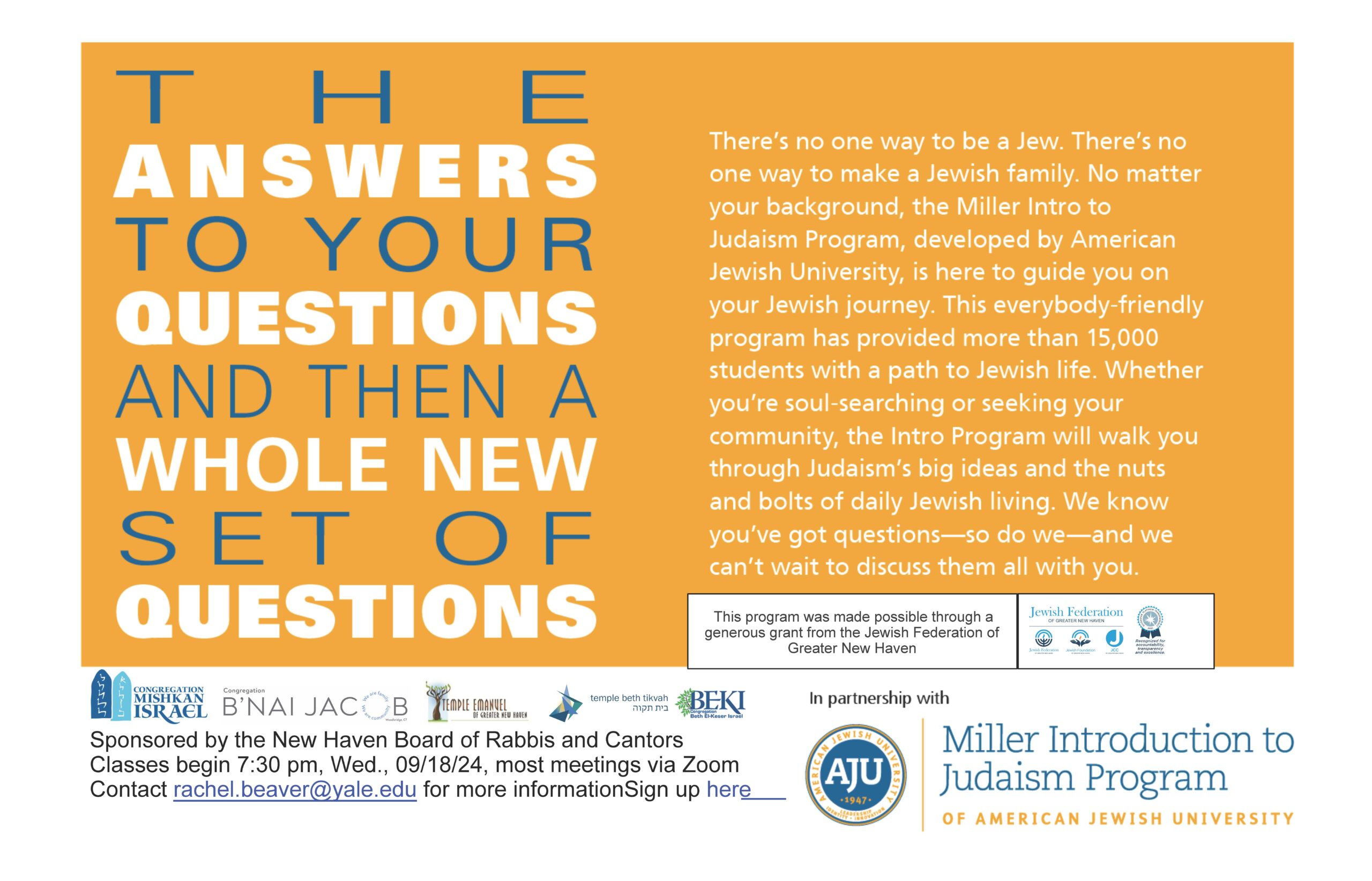
Introduction to Judaism Class will begin on Wednesday, September 18, 2024 at 7:30 p.m. The first two weeks are in person, most subsequent sessions will be online. This class will allow you to learn more about your Jewish heritage or prepare you or a loved one for the process of conversion. This is a combined course offered under the auspices of the New Haven Board of Rabbis and Cantors, with a number of synagogues co-sponsoring. This 20+ week class explores the basics of Judaism, including history, prayer, sacred texts, and holiday celebrations.

Each student will need a rabbinic sponsor. 

The cost of the class is $72 for members of an area Jewish congregation, or $180 for non-members.

Advanced registration required

2024 – 2025 Temple Emanuel Tikkun Olam Activities

Your Tikkun Olam Committee encourages your active support and participation with the following activities. Please read The Shofar and the weekly Shofar Blasts for more information concerning all of these projects.

Interfaith Volunteer Service Day Sunday, August 4th

Please join with a group of TE volunteers and those from other congregations for an interfaith day of service. This is a perfect hands-on Tikkun Olam activity for family participation. Jean Silk, Coordinator

3rd Annual Reverse Tashlich  (A Rosh Hashanah tradition)  Sunday, September 22nd (rain date Sunday, October 6th)

Partner with “Repair the Sea” and “Save the Sound” to remove litter from our local beaches. This is a perfect hands-on Tikkun Olam activity for family participation. Rebecca Cohen, Karen Fenichel, and Adam Spiewak, Coordinators

31st Annual High Holy Days Food Drive October 2nd – October 16th  (Through the Rosh Hashanah, Yom Kippur, and Sukkot holidays)

Donate non-perishable food to be distributed to the food pantries of both the Jewish Family Service (JFS) and the Town of Orange. Monetary donations can also be sent directly to these two food pantries. Let’s help those in need right here in our own communities. Will Sherman, Coordinator

22nd Annual Thanksgiving Frozen Turkey and Pie Collection October 27th – November 17th  (Pre-Thanksgiving)

Donate frozen turkeys, pies, & all the “fixins” to be delivered to the Downtown Evening Soup Kitchen (DESK). Let’s surpass last year’s collection of 125 turkeys and help make Thanksgiving special for those in need. Drivers will also needed to transport the turkeys.   Jeffrey Levinson, Coordinator   

Religious School Chanukah Baskets Project December 6th – December 22nd

Toys, books, games, clothing, gift cards, and personal hygiene/care objects to be donated to JFS, r’Kids Family Center, Fair Haven Community Health Center, JCARR, and Fellowship Place. Maddy Sussman, Olga Markus, and the Religious School students, staff, and parents

Abraham’s Tent January – March (One week; dates to be determined)

Prepare/serve dinner and socialize with a small group of selected homeless men, coordinated by the Columbus House Homeless Shelter. This is a great hands-on activity. This activity may be coupled with a monetary collection to benefit Columbus House and all their programs. Barb Levine-Ritterman and Lee Stolzman, Coordinators    

Mishloach Manot and Diaper Drive February 2nd – March 9th

The mitzvah of giving Mishloach Manot is derived from the Book of Esther which enjoins the Jewish people to send portions of food to one another and gifts to the poor. As in the past, TE will distribute a selection of Purim treats and we will continue our tradition of collecting diapers and monetary donations to support The Connecticut Diaper Bank. Michelle Bailey, Rochelle Kanell, and Rise’ Siegel, Coordinators for the Diaper Drive 

Beth-El Pasta Collection Purim, March 14th

The Religious School children and the adult Megillah reading participants will use boxes of pasta as groggers to drown out the name of Haman during the Purim service. The pasta will then be donated to the Beth-El Homeless Shelter & Soup Kitchen in Milford. A pasta collection box will be available in the lobby. Nancy Weber, Coordinator    

Religious School Purim Mitzvah Project Purim, March 16th

“Blessing Bags” with notes from the Religious School children containing personal hygiene/care objects will be donated to the homeless program of Fellowship Place. “Welcome baskets” will be donated to Columbus House. These projects are sponsored by the Tzedakah Fund collected by the Religious School students. Olga Markus and the Religious School students, staff, and parents      

In addition to all the above Tikkun Olam Projects, members of Temple Emanuel are actively involved in a variety of additional activities and we urge your active support and participation with the following:

Jewish Community Alliance for Refugee Resettlement (JCARR)

A partnership of six local synagogues and the Jewish Federation of Greater New Haven, JCARR has helped welcome and relocate a number of refugee families from around the world. Your ongoing support and assistance in a variety of ways is greatly appreciated. Jean Silk, Coordinator

Congregations Organized for a New Connecticut (CONECT)

Keeping within our Jewish values of “Justice, justice you shall pursue,” CONECT is an organization devoted to social and economic justice, gun violence and health insurance issues, police reform, and immigration rights. CONECT is currently seeking a Temple Emanuel liaison. Please contact the Rabbi if you’re interested.

Beth-El Homeless Shelter & Soup Kitchen (in Milford)

In addition to a variety of collections, volunteers from TE prepare and serve dinner on the first Tuesday of every month. This is a great hands-on activity. Nancy Weber and Rachel Suchoff, Coordinators
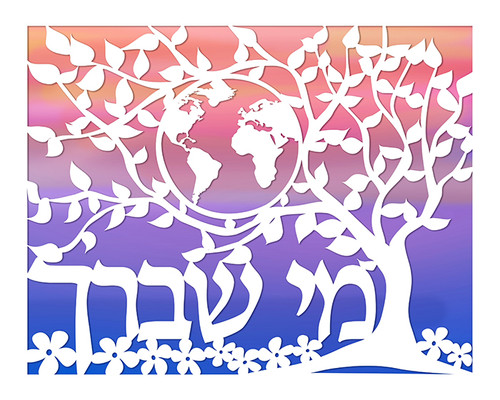
Misheberach avoiteinu, m’kor habrachah l’imoteinu…

When members of our community and our loved ones fall ill, we add their names to the Misheberach list that we read before reciting the prayer for healing, inviting us all to hold the community members in our prayers, alongside our own loved ones and friends. We often use the traditional formula of using someone’s Hebrew name to preserve the anonymity of the person, and at other times we use the full name, thus sharing the news of illness with wider TE community, reminding people to reach out and call/visit a friend. (Please note, according to our tradition you should ALWAYS check with the person you want to pray for whether they are comfortable with their name recited in public or added to the list read out in the synagogue)!

The prayer for healing is traditionally recited during the Torah service. In addition, a slightly different version of the prayer for healing is part of a weekday Amidah, which is not recited on Shabbat as part of our liturgy, when the 13 ‘middle’ blessings/petitions are replaced with one special blessing for Shabbat.

The words of Debbie Friedman’s Misheberach have become a staple of our Shabbat services, as it did in numerous communities all around the world – the powerful music, the inspiring words, combined with an opportunity to offer a communal prayer for healing have become an essential part of our Shabbat services. TE’s spiral-bound prayerbook Seder T’filot Emanuel has included the text of this prayer at the end of a Friday night Amidah, and it continues to be one of the most powerful elements of the service for so many of us. New words and new melodies continue to be written, and we often add the new prayers for healing to our services – but the presence of the prayer for healing in all our Shabbat and Festival services remains a constant.

Over the years our Misheberach list became surprisingly long. And while there is definitely a long accepted tradition of appointing an emissary to pray for one’s health if you can’t make it to the synagogue, our current minhag, or custom, that evolved at TE has led to the breakdown of the original intent of the prayer for healing: to be offered in person with intentionality.

Rabbi Dr. Daniel Landes, in My People’s Prayerbook, remarks:

“The Mi Sheberakh is not a magical incantation. It obligates the [pray-er] to give tzedakah and to pray personally on behalf of the person for whom the prayer is given. It summons us all to recognize our own utter powerlessness in the face of illness.”

The TE Ritual Committee discussed this at length at a recent meeting and agreed to modify our current practice. If you are thinking of a loved one, a family member or a friend, and would like to pray for their health – please come to Shabbat service, in person or online, and please think of them as you add their name – publicly or privately, to our communal prayer for healing. If you hear of someone’s acute illness and want to add their name (and you can’t get there yourself), please call/email the office, and the name will be added to our list, which will continue to be read every Shabbat. When the person gets better, please remember to let us know so we can remove their name from the list – we love hearing good news! After the name has been on the list for about a month, the list will ‘reset.’ Please note, the names of all TE members struggling with illness will remain on the list without any time limit.

I invite you to use the opportunity of the Misheberach prayer in our services to think of and to pray for healing for your loved ones. May all who are in need of healing be blessed with the love, care and support they need.

TORAHS OF TEMPLE EMANUEL

by Peter Stolzman

For most Jews, the Torah elicits a variety of feelings and meanings.  The scrolls we use in our worship services teach us the lessons and history of the Hebrew people.  Some think of the Torah as the divine word of G-d, others feel it is a chronological history of the beginnings of a people.

When the ark is opened and the Torah scrolls are revealed we can look in awe.  It awakens a spiritual longing in many as well as a deep connection with who we are and what we are called upon to do.  However, we relate to the text it is a symbol, perhaps the primary one, of our identity.

Temple Emanuel is currently home to five Torahs.  Some we know a piece of their history and some we are less knowledgeable about.  The following is a brief history of our Torah scrolls.

When Temple Emanuel first came together as a community in 1962, we did not have a Torah of our own.  Instead, our student rabbi, Robert Goodman, would use a borrowed scroll when needed.  In 1967, using our first Torah he performed a triple bar mitzvah for Andrew Levine, Jeff Lipson and Danny Salzman at the JCC in New Haven.  TE had just acquired its first Torah, the Holocaust Torah.

Memorial Torah Scroll #1178

Written in 1880, the Holocaust Torah was used in Horazdovice, Czechoslovakia.  During WW2 it was “collected” along with other articles of Jewish life, by the Nazis.  The scroll’s congregation was exterminated.  After the war, this Torah and approximately 1500 others were found and transported to Westminster Synagogue in London, United Kingdom.  The synagogue had the room to store them and set about the task of having them restored and repaired.  Once in good condition, they were given on permanent loan, to newly established congregations around the world.  TE’s Lois and Paul Levine traveled to London to get ours.  In 1967 we received #1178, our first scroll.

On a visit to Westminster, I was told that the restoration had been very slow and was expensive, as only trained scribes could do the work.  However, in 1965 an itinerant scribe, David Brand, knocked on the door and asked if they might have any work?  Twenty years later and after 770 Torahs, he had repaired all he could.

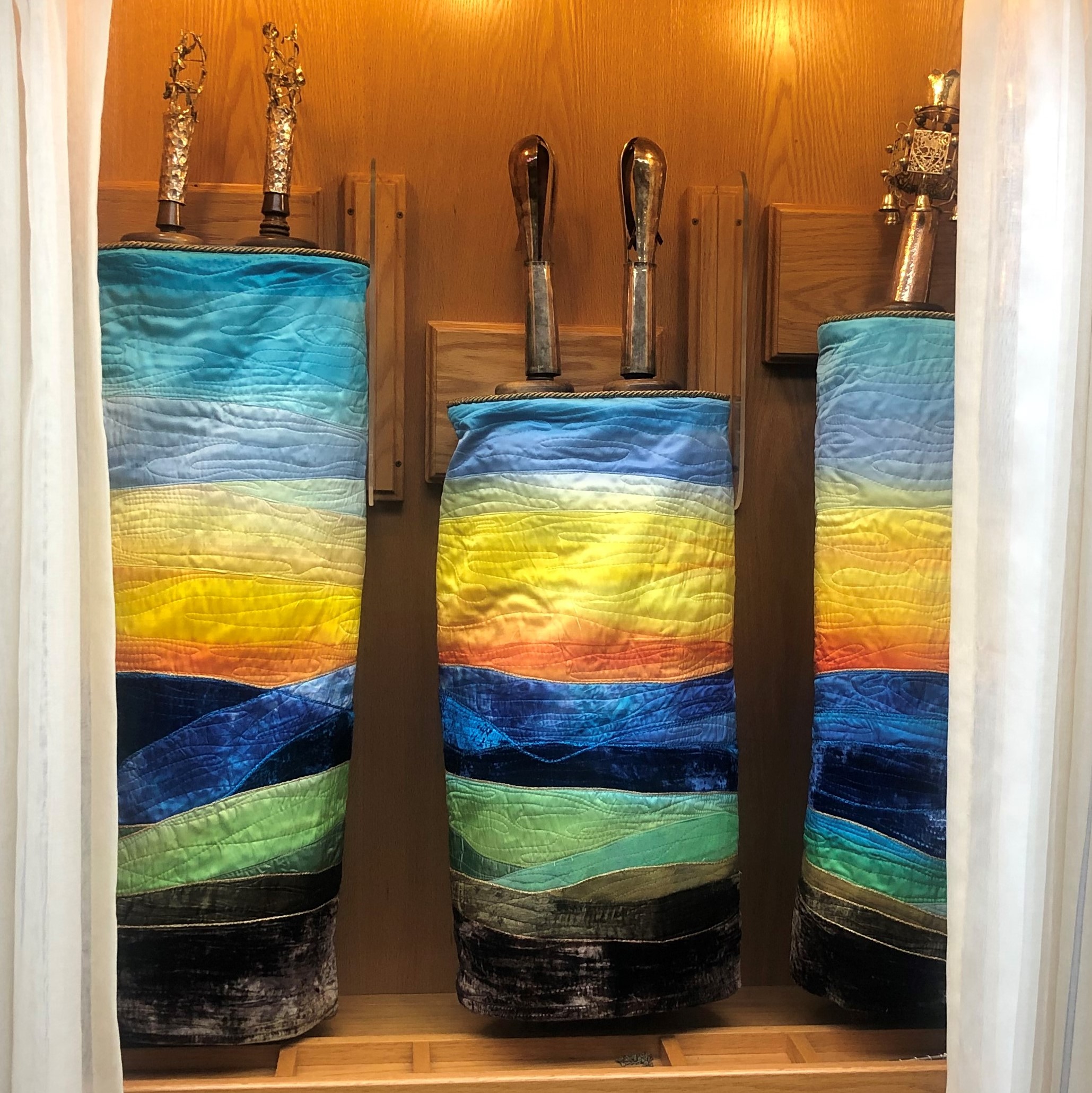
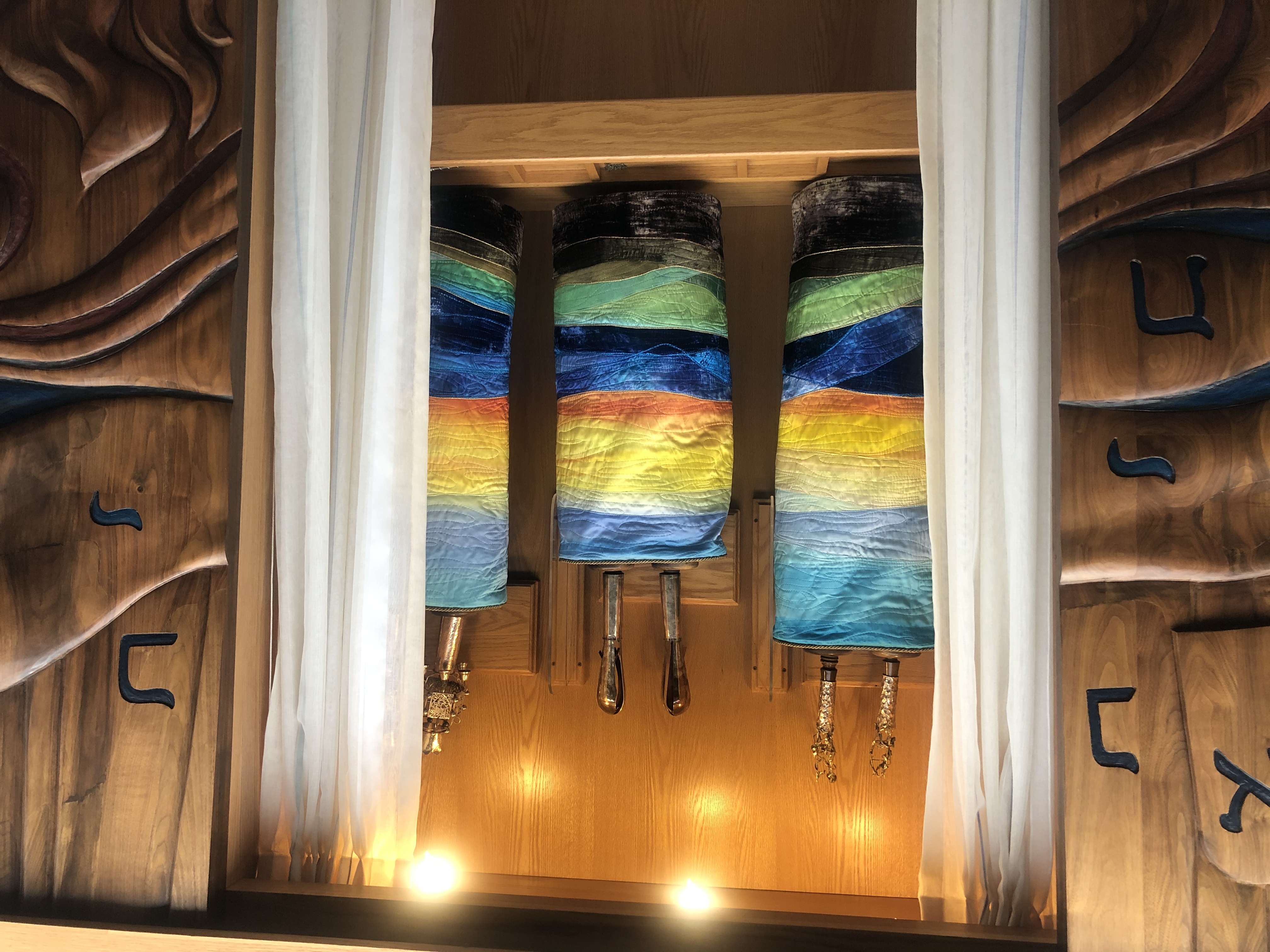
In 2007 this Torah was retired as it needed repairs.  It was placed in a display case in the TE lobby until the congregation was able to restore it and return it to active service.  It was returned to the Ark in 2020.  Every family that wished was invited to work with the scribe and restore a letter, thus fulfilling the commandment to write a Torah.  It was a wonderful experience.  This Torah is easily recognized as the tallest and lightest in our ark.  It is written in Beit Yosef font and is unglazed, making it lighter than a glazed scroll.

‘small’ Torah in our ark

In addition to the Holocaust Torah, Temple Emanuel acquired two Torahs in 1979 from Beth Israel in Derby, and in 1981 from Temple Rodeph Shalom of Ellenville, NY.  The Ellenville scroll is a small, in height, Torah.  It is glazed so it is heavy and is approximately 100 years old.  It is originally from Romania and is currently in our ark along with the Holocaust Torah and a medium sized Torah, on permanent loan from the Jewish Home for the Aged by way of the Jewish Federation.  We received this Torah in 2021.

‘medium’ Torah in our portable ark

The Torah scroll from Beth Israel in Derby was originally from Germany and is about 100 years old.  It is said to have “beautiful writing” and is housed in a separate portable ark.

The other gift from Beth Israel, is a Polish Torah, approx. 100 years old.  After having a scribe repair our Polish Torah, previously in the Rabbi’s office, Rabbi Farbman and a small group from Temple Emanuel escorted the Torah to its new home, Congregation Shir Jadash in Valencia, Spain. Our congregation was proud and pleased to provide this first Torah to a newly formed congregation. The Rabbi was able to conduct a Torah service in its new location on 7/5/25. May it have a long and flourishing life.. 

Torah scroll on permanent loan

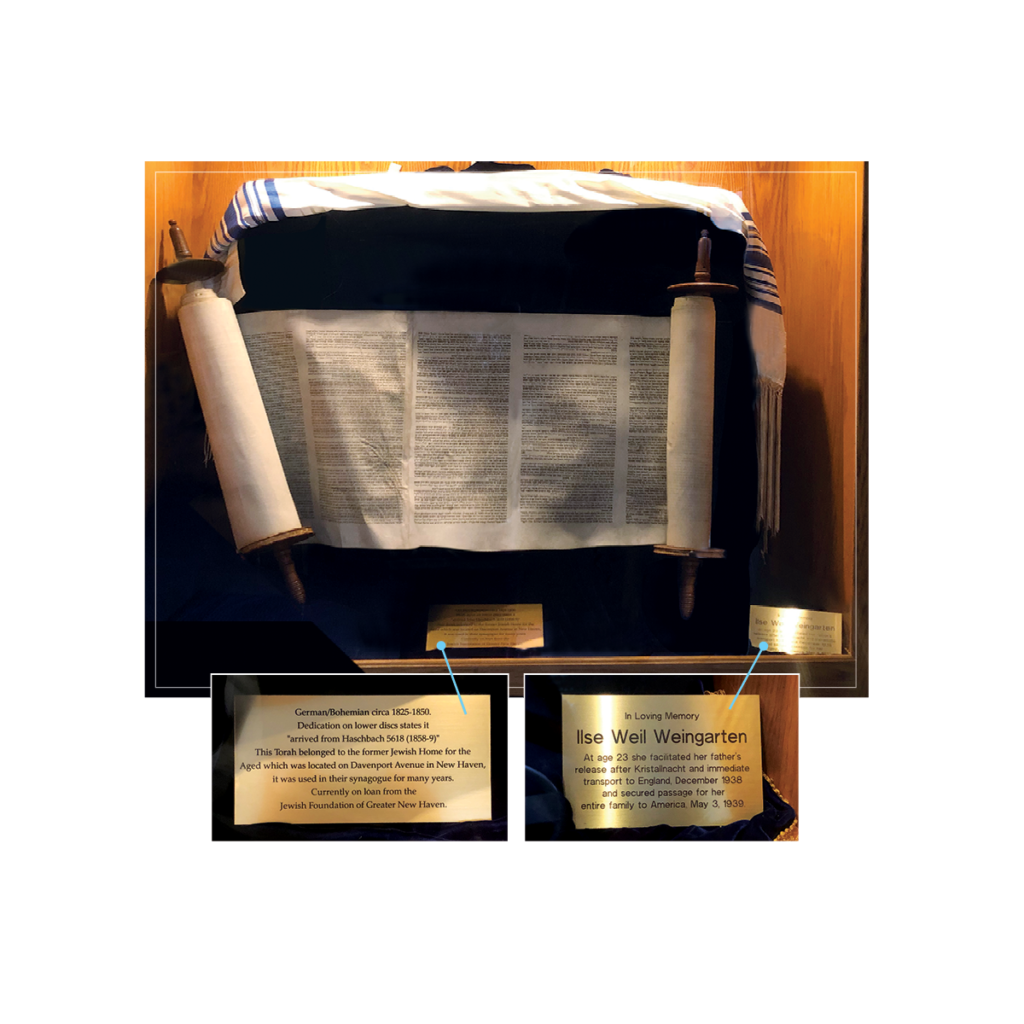
Our final Torah is displayed in TE’s lobby.  This Torah is also on loan from the Jewish Home for the Aged through the Jewish Federation. We received it around 2020.  It is not kosher as it is not in perfect condition and is unrepairable.  While we cannot use it for services it is a welcome reminder of who we are when we enter the Temple.  It also provides an up-close view of the text and how a Torah is written.

You can learn more about the making of a Torah scroll here.

Some information in this article was gathered from Congregation Beth El’s (Berkeley, CA) website and Temple Emanuel archives and interviews with past and present congregants.

Wow!

As I explained in my last column, there are times when I find it difficult to write for the Shofar.  While I enjoy communicating with our congregation, a column is a one-way communication, and I miss the interaction that one gets when talking with another.  This month is different – I have an idea for the column, and the words are jumping onto the page.

As President of TE, I, of course, am aware of various events taking place at the Temple.  School is no exception. I am informed by Olga as to various events and happenings that will occur at the school over the coming weeks.  While hearing the short-term calendar is impressive, it is incredible to hear the entire school year in review.  Every April the Finance Committee of TE formulates a budget for the coming TE year.  Part of that process involves a report by Olga and Rabbi Farbman concerning the school.  They prepared a slide show that reviewed all the events of the current school year.  Hearing and seeing them all at once floored me.  The frequency and innovation of events was incredible to hear.  As one of the Finance Committee members said, “I wish I could come back as a 5th grader.”  In times when the religious institutions are having trouble attracting and retaining members, TE is doing amazingly well.  A major reason for this is the work of the Rabbi and Olga.  Olga will deliver a report on the school as part of our annual meeting (which this year will be June 2nd at 6 pm).  I encourage all to attend, if for no other reason than to hear how well our school is doing.  The framework for our school was created by Susan Pinsky Bleeks (and the work of Janet Adams). Olga has used that foundation to move forward. It should be no surprise that TE is doing well and our students enjoy going to Religious School.

Uf Gozal: Spread your wings and fly away…

Around this time of year the classic song from Israeli rock icon Arik Einstein ‘Uf Gozal’ begins to pop up everywhere I look. It acknowledges the difficult feelings for parents watching their kids grow up, mature and leave the nest. We have been the so-called ‘empty nesters’ for two years now, and I think the reality is yet to fully set in, even as we watch our kids spread their wings with pride, joy and yes, a little sadness.

This year’s crop of high school graduates has grown up at TE right in front of our eyes – I have so many cute pictures from their childhood to prove it! Many have remained active in our school as teenagers: Katie and Sarah Harper, Ava Shanbrom, Maya Katsovich, Sophia Rivkin and Beyla Ridky have had an outsized influence on the life of TE over the years, and most of them are pretty used to the extended TE family treating them as if they were our own children. They have sung in the children’s choir, and then years later they taught the children’s choir for the next generation of kids. They were our students and then became our colleagues, helping teach, tutor and inspire our current religious school students. They have written and performed Purim spiels and sat on TE boards and ran Chanukkah basket fundraisers… If I attempt to list all their achievements, this column would never fit into the allotted space! Over the next few weeks, we will get to celebrate them and their achievements, to hug them and to wish them well as they take that important leap and go off to college – I hope you all mark May 17th in your calendars and come to Shabbat service to do just that. But first, I wanted to invite you to a special ceremony on May 5th – and to share with you a description of two Eagle Scout projects completed this year for the benefit of Temple Emanuel.

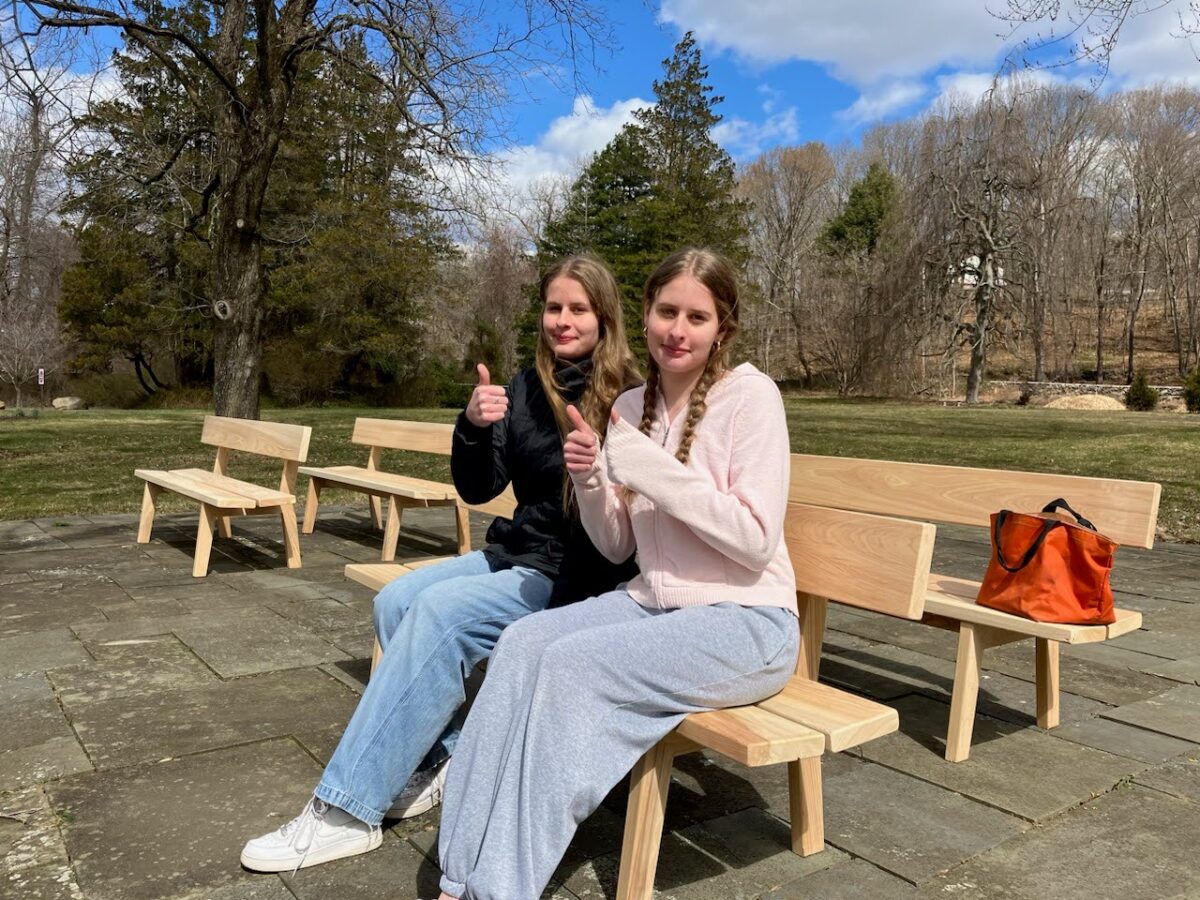
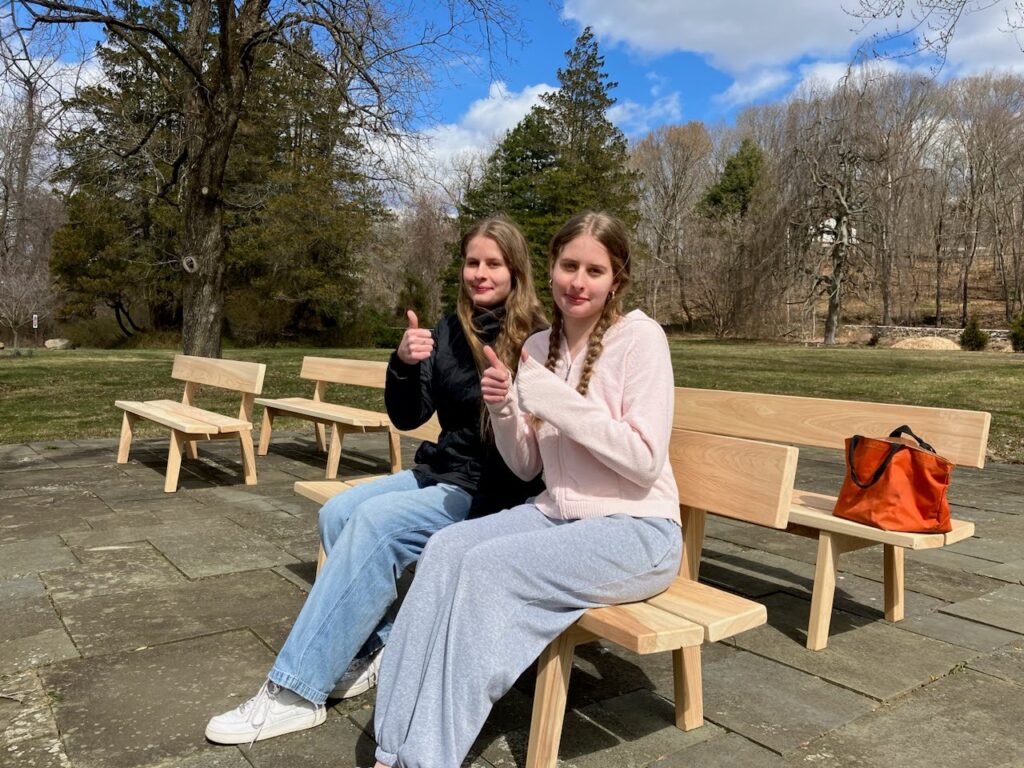
For her Eagle Scout project, Katie Harper chose to help her community here at Temple Emanuel by building an additional four benches for the outdoor sanctuary. “I decided to expand the outdoor sanctuary because it has become a special space for me and many other members. It was a lot of fun assembling the benches, and I am pleased that the outdoor sanctuary will now be widely more accessible during services. As the weather starts becoming warmer, I cannot wait to use the benches in the upcoming weeks.”

Sarah Harper, as part of her BSA Eagle Scout Project, led a group of volunteers in restoring over 80 damaged spiral-bound prayer books at Temple Emanuel. The entire restoration process involved many steps and was completed over the course of four months.

“In Jewish tradition, any document or ritual object with God’s name on it must be buried in a special grave called a ‘genizah.’ It is the proper way to dispose of these holy objects with the utmost respect and consideration. As part of my Eagle Scout project, I have arranged for a geniza to be created on TE property, and we have collected over 15 boxes of beyond-repair prayer books and additional items from the community. I have been an active member of Temple Emanuel for over 18 years and these prayer books were the first to incite my love for attending services, studying Hebrew, and learning the different tefilot. I am extremely delighted for the newly bound prayer books to get used again and for the beyond-repair items to get appropriately laid to rest. I hope everyone in the community will be able to witness and take part in this sacred occasion along with me.”

The genizah ceremony will be held on Sunday, May 5th at 9:30 a.m. All TE families and members are invited to attend to learn about the ritual of disposing of sacred texts and objects, as well as to assist with burying the items.

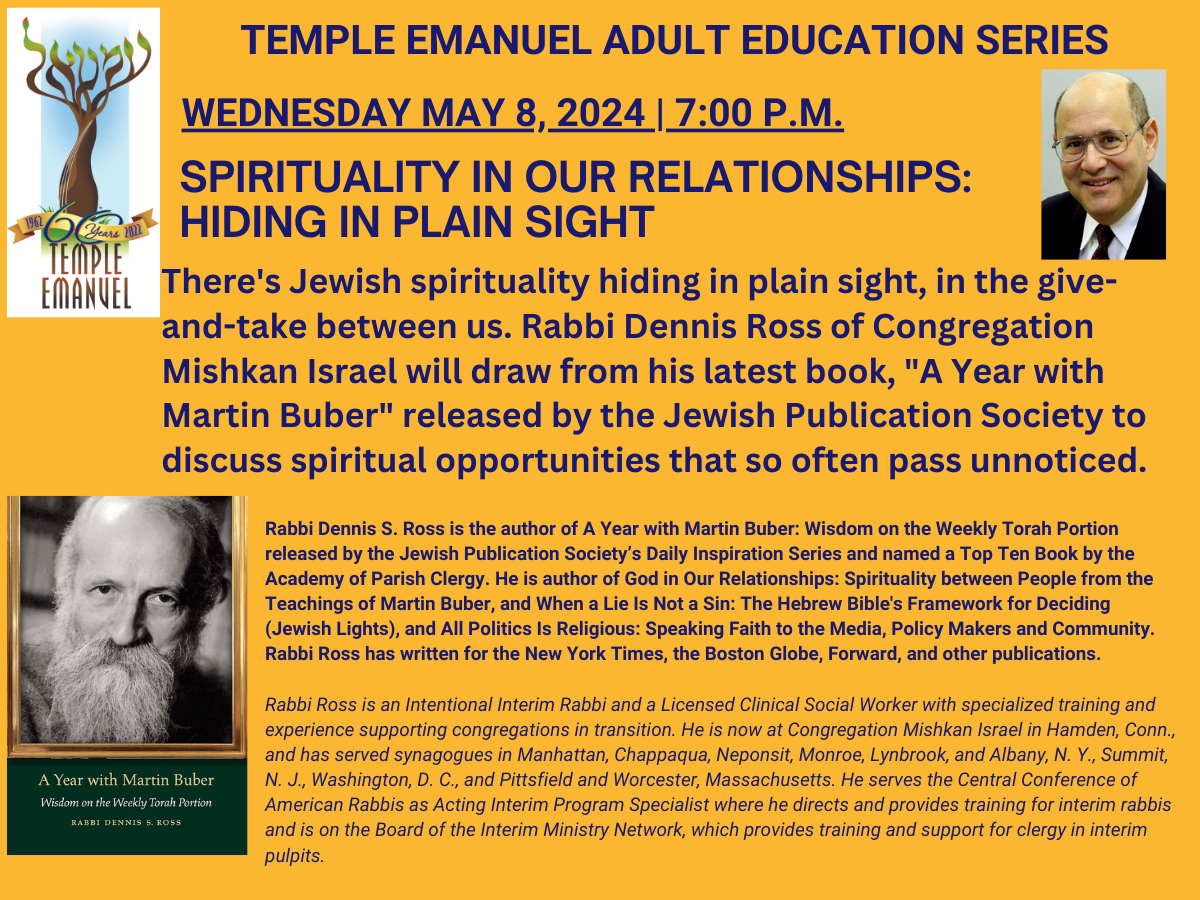
TE Adult Education Series. Spirituality In Our Relationships: Hiding in Plain Sight. Wednesday, May 8, 7 PM 

There’s Jewish spirituality hiding in plain sight, in the give-and-take between us. Rabbi Dennis Ross of Congregation Mishkan Israel will draw from his latest book, “A Year with Martin Buber” released by the Jewish Publication Society to discuss spiritual opportunities that so often pass unnoticed. 
Rabbi Dennis S. Ross is the author of A Year with Martin Buber: Wisdom on the Weekly Torah Portion released by the Jewish Publication Society’s Daily Inspiration Series and named a Top Ten Book by the Academy of Parish Clergy. He is author of God in Our Relationships: Spirituality between People from the Teachings of Martin Buber, and When a Lie Is Not a Sin: The Hebrew Bible’s Framework for Deciding (Jewish Lights), and All Politics Is Religious: Speaking Faith to the Media, Policy Makers and Community. Rabbi Ross has written for the New York Times, the Boston Globe, Forward, and other publications.
Rabbi Ross is an Intentional Interim Rabbi and a Licensed Clinical Social Worker with specialized training and experience supporting congregations in transition. He is now at Congregation Mishkan Israel in Hamden, Conn., and has served synagogues in Manhattan, Chappaqua, Neponsit, Monroe, Lynbrook, and Albany, N. Y., Summit, N. J., Washington, D. C., and Pittsfield and Worcester, Massachusetts. He serves the Central Conference of American Rabbis as Acting Interim Program Specialist where he directs and provides training for interim rabbis and is on the Board of the Interim Ministry Network, which provides training and support for clergy in interim pulpits. 

How I Overcome Writer’s Block

Writing has never been my favorite form of expression. You see, I suffer from writer’s block which often leads to procrastination. My favorite form of communication is meeting and getting to know people in person.

This column is a unilateral activity. I write weeks in advance and don’t get to hear your feedback contemporaneously.  Nevertheless, I am expected to write a message. So here it is: Let’s meet and talk in person at TE! 

Don’t miss the many upcoming events which fill the pages of this month’s Shofar!  From challah baking to our scholar–in–residence series, TE, as always, offers something for everyone! I look forward to meeting and talking to you soon! 

To life, To Life — L’chayim…

As we approach the fourth anniversary of the Covid 19 lockdown and as we look back at the last four years, it is easy to be overwhelmed by what we have all lived through, what we have learned to live with (and, perhaps more importantly, what we have learned to live without) and what challenges we faced. It has taken us all some time to begin to return to ‘normalcy,’ both in our personal lives and especially in our communal lives. We have been back in our sanctuary and our building in person for a while now, even as we continue to live stream our services and events, making sure everyone has access to much of what we do as a community.

We had many exciting plans for this year, and were going to start working on some of them after the High Holy Days— but events of October 7th have stunned us all into a painful and anxious new reality. Every special occasion, every festival, every Shabbat comes with a dilemma: how can I find joy in traditional observances when there’s so much pain and suffering? Chanukkah lights gave us hope, and helped to heal our broken hearts, at least a little—but now with Purim on the horizon, what will our celebrations look like? What stories will we tell at our Seder table this year? How many empty chairs will we have to leave at the table?

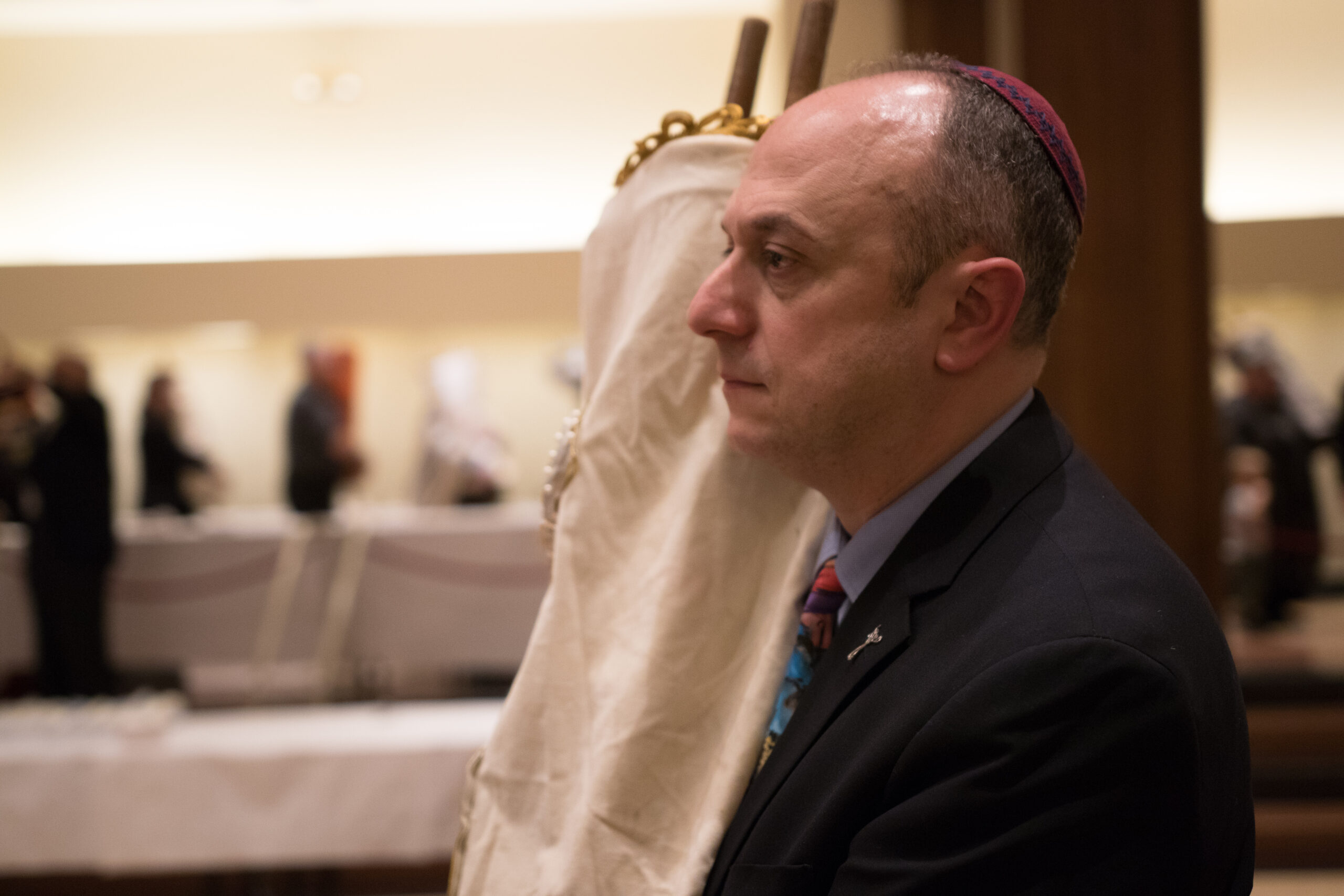
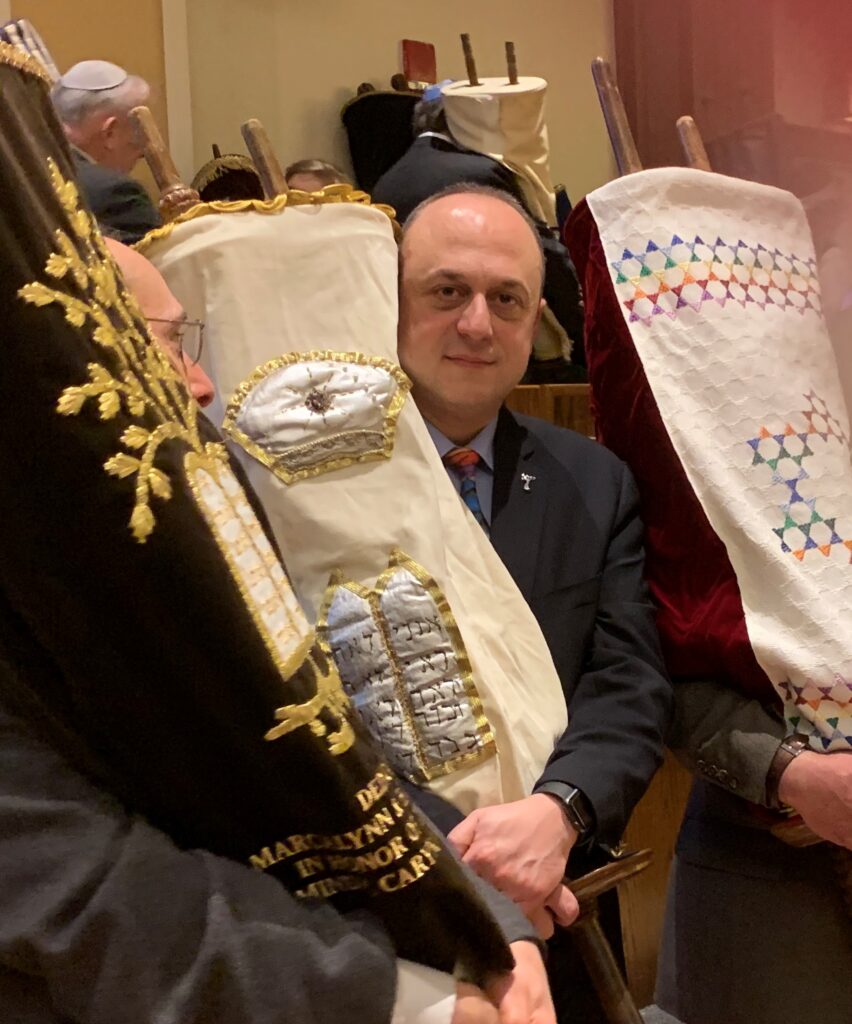
Five years ago, a group of TE members attended a special gathering of the Holocaust Memorial Torah scrolls in New York City, bringing the TE memorial scroll (back then housed in a display cabinet in our lobby) with us. It was a profoundly moving experience. As I held TE’s Holocaust Memorial Scroll #1178, and as I marched in a quiet procession of over 70 Czech memorial scrolls, I was overwhelmed by the fact that in my arms I held not only an incredible treasure of the Jewish people that was created and lovingly maintained by previous generations of Jews I did not know, but a scroll that belonged to the destroyed Jewish community of Horazdovice, a community that perished in the flames of the Holocaust. This was not just the Torah connecting me to the Jewish past. This was a moment to acknowledge, once again, that the future of this Torah’s Jewish community of Horazdovice was wiped out by the cruelty of hate and yet somehow, miraculously, the orphaned Torah has survived and found its way into the loving hands of our community, right here in Orange, CT. Scroll after scroll paraded through the room packed with over 800 people from some 80+ synagogues in the Tri-State area, honoring the painful past and celebrating the miraculous survival of Judaism. I will never forget this moment and this feeling.

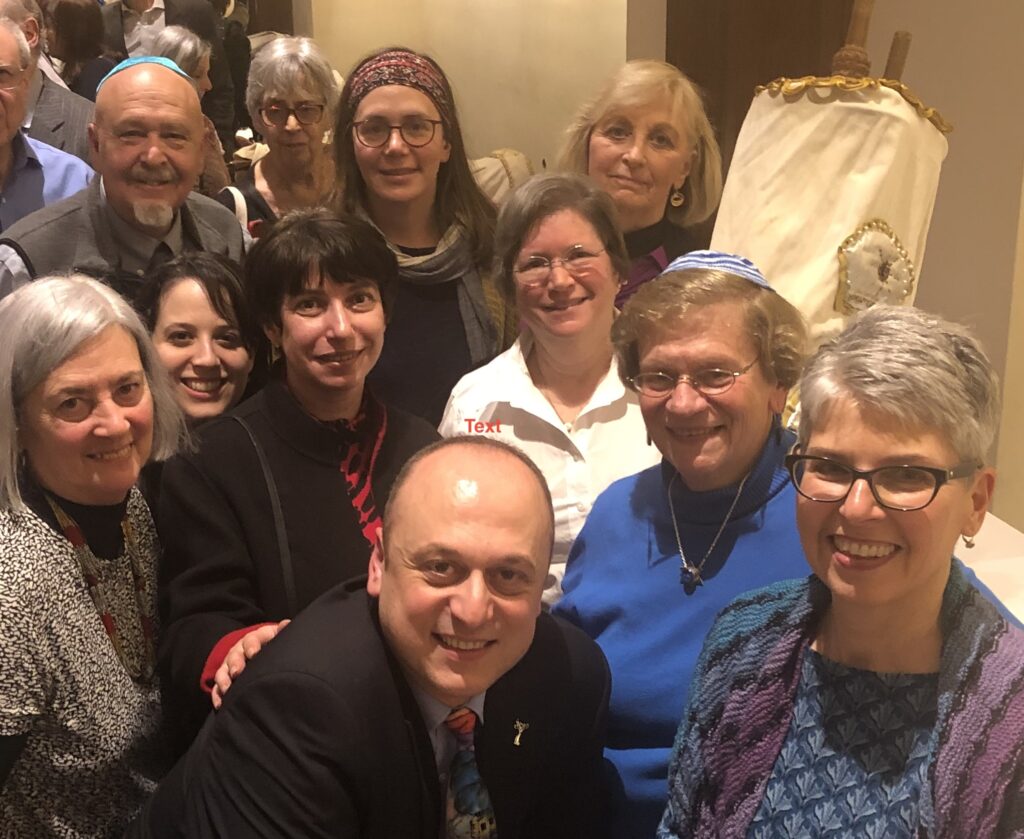
TE delegation with our Memorial Torah Scroll at the gathering in NYC

This year the Memorial Scrolls Trust celebrates its 60th anniversary, and there will once again be a gathering of the Torah scrolls in New York on Sunday, April 7th. This time we will return once again but as I carry our scroll in that procession, it will be a scroll that has been restored and is once again used to celebrate Jewish life as children of our community step up to the Torah celebrating becoming B’nei Mitzvah!

This year, as our calendar begins to fill up with learning opportunities, social gathering opportunities and celebrations, may we continue to be inspired by the story of our Torah scroll, by the resilience of the Jewish people, by our desire to live and build and preserve what we cherish.

We will learn with Dr. Liram Koblentz-Stenzler, as part of our Annual Scholar–in–Residence Program on March 20th and 27th,  and engage in some challenging and timely topics. We will celebrate Purim (including, once again, a special Adult Purim party), and Passover with our Annual Second Night Seder at Temple Emanuel. We will visit the Beinecke rare books collection, and we will plan an opportunity to ice-skate together. We will march proudly with our newly restored Torah scroll, honoring the difficult past, and look towards the future. We will continue to find strength and joy in each other and in sharing our traditions. Am Israel Chai—the People of Israel Lives!

Standing with our people…

Members of Temple Emanuel at the March for Israel in Washington, DC.

On Tuesday, November 14th, a number of TE members joined the Greater New Haven delegation and traveled to Washington, DC to participate in the March for Israel. It was such a powerful experience, standing with hundreds of thousands of Jews (and some allies) from all over the country, demanding safe return of hostages, renouncing antisemitism, and standing with Israel and with each other. To see so many friends, colleagues, current and former congregants from many different places. To hear words of support. To cry with parents of hostages, demanding to #BringThemHomeNow. It was especially moving to see the little girl working on this sign: ‘my Jewish joy is stronger than your hate.’ I have asked one of the TE march participants, Phoenix Matarazzo, to reflect on our experience:

“Last month, I had the opportunity to participate in the March for Israel with fellow TE members, Rabbi, Olga, and other members of our Greater New Haven Jewish community. It was a day that brought together Jews and allies from various backgrounds, religious observance, and political views. The atmosphere was both somber and joyous. One of the highlights for me was joining everyone in singing “One Day” led by Matisyahu and The Maccabeats. This song always resonates with me because it expresses the deep longing for a future filled with peace. However, it also reminds me that this day of peace is still not here. This yearning for justice and peace was evident throughout the entire day.

As I stood in Washington, I couldn’t help but reflect on our previous school theme of seeing the world through Jewish eyes, and this year’s theme of telling OUR story. What better way to tell our story than by actively participating in it? We are blessed to carry the strength of our ancestors, supporting each other in our happiest and darkest moments. I thought to myself, “We should do this again, during better times!” Perhaps a nationwide Shabbat dinner?

It struck me that this may be the only time in my life that I will get to sing Hatikvah with over 290,000 people. Despite our differences, we are united in our support for the safe return of our kidnapped family members and the protection of our homeland. We are truly one mishpacha, one family.

As I listened and prayed alongside the impressive lineup of speakers and artists, I couldn’t help but believe that we are on the verge of a better world, a new kind of peace, and a stronger unity among the Jewish people. We refuse to yield to the beliefs of our enemies. We stand tall in our own story, proud to live it and pass it on to future generations.

The March for Israel filled me with hope for more acts of kindness, more connection with our traditions and with each other. I hope for more dialogue with our allies and with those who may not yet understand how to be allies. I hope for more education about who we are and where we come from. I hold on to the hope that our mishpacha will be whole again, with all our family members safely home.