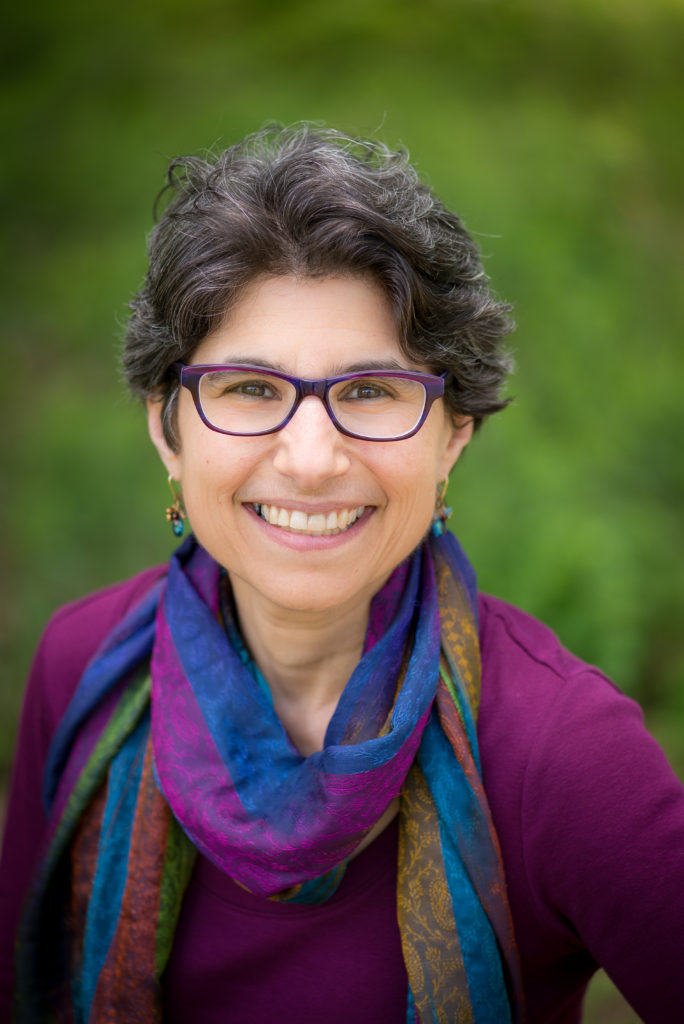
Our Liberation from Mitzrayim

March brings spring along with the festival of Passover. Passover, with its Seder rituals and story of freedom is one of my favorite Jewish holidays. The story of our exodus from Egypt is a story I find very compelling, a story with an important message to teach, the importance of freedom for everyone throughout the world.

Mitzrayim, the Hebrew word for Egypt, is often translated as a narrow space, a place of limited opportunities and constricted choices. During the Seder we consider what it means to be personally liberated from Mitzrayim, and many Jews use this as an opportunity to reflect on what holds us back from fully living our lives. This year our limits are more tangible and less metaphorical. While we are not slaves, our lives have been severely restricted and constricted by the Covid pandemic. Some of us have gone through difficult illnesses and may even be enduring lasting physical effects. Some have experienced losses without being able to attend a funeral or spend last days with loved ones. Some folks are bored, greatly missing grandchildren and others they are close to. Yet other people I speak with are thriving in the calmer, slower paced lives that the pandemic has required.

While we haven’t been liberated from the Covid pandemic yet, we do see hopeful signs as case numbers decrease in our community, throughout the country and around the world, and the numbers of those vaccinated increases every day. We remember that when we were liberated from Egypt, we wandered in the desert for 40 years, as we learned how to transcend our limitations and live in freedom. As we start to find a way out of the narrow space of this pandemic, it will take us time to learn how we can live in this new reality.

With the arrival of warmer weather, I look forward to holding outdoor services and other events. The board of directors has started to discuss how we may be able to transition as the situation improves. We continue to place high priority on everyone’s health and safety while we understand the community’s need for more connection. Many thanks to Rabbi Farbman for continuing to provide stimulating services and events virtually, and to all of you who have been participating. Thanks as well to those who delivered Mishloach Manot/Purim bags to our members, making the personal connection so many of us crave.

I look forward to passing through this narrow space together, moving into a place of less restriction and more openness. I am hopeful that as spring brings us more sun and more warmth it will also bring us more freedom. Meanwhile, I will continue to enjoy seeing many of you on Zoom, at services, breakout rooms, meetings or TE programs.

COVID, COMMUNITY, AND CONNECTION

Beautiful autumn colors lift my spirits as I write this column. Fall 2020 is a difficult time for many people and I am not immune. How do I find inspiration and positivity when I am fearful about the future of our country and of our planet, while I am tired of social distancing, yet know that we must continue on for many more months? What sustains me when the going gets tough?
I know that many people turn to prayer and faith when times are difficult. For me, the wonder of nature helps to sustain my spirit. After several rainy days this week, I am bolstered by bright sunshine, dahlias in my garden, and green leaves mixing with orange and red. I am nourished by exploring new walks and hikes, breathing clean air and enjoying the quiet beauty of Connecticut.
Similarly, the practice of yoga nourishes my soul. I have continually turned to yoga over many years to support my body, stretch my stiff muscles and keep
me from pain. But once I begin, I remember how it calms my spirit, and helps me practice mindfulness, to stay centered and take one day at a time.
Friends and family are another pillar of my support. Zoom gatherings and eating dinner together over FaceTime keep me connected with those I love. Whether eating outdoors or sitting around the fire pit, sharing a story or a laugh or commiserating about what might come, the joy of listening to others
and being heard by them sustains me.
I am grateful for my own good fortune—good health, loving family, dear friends and financial stability. And I am very lucky to have the Temple Emanuel
community in my life. I am excited to see our community service projects grow stronger, and our growing involvement with social justice work through CONECT. While my rhythm has changed from going to TE on Friday nights to tuning in on Zoom, I am still comforted by the familiar tunes I hear and the
dear faces that I scroll through.

Thanks to all of you who have reached out to support other members during this difficult time. As the weather gets colder and our patience grows weary, it will be even more important. Please continue to check in on each other. We are working hard to bring you programs that keep our community connected while we continue to be physically apart. Let me know what Temple Emanuel can
do to make this time easier for you. The TE community helps to sustain me and I want to make sure it is there for you too.

Doing the hard work… by Robin Levine-Ritterman

I join with so many Americans in grief and anger at the senseless killing of George Floyd by a Minneapolis police officer. And I grieve even more for the continued violence that we see perpetuated against Black people in our country, a violence that takes its roots as far back as our history of slavery began in 1619.

Jewish tradition teaches us that we should stand up for what is right and support those who are treated unjustly. As a people who have experienced violence throughout our history, it is imperative that we stand up against racial injustice. We began Audacious Hospitality discussions at TE in the hopes that our congregation could start looking at how we treat others and learn to embrace and support the diversity of our congregation. In the words of Rabbi Jonah Pesner, Director of the Religious Action Center of Reform Judaism, “Our country simply cannot achieve the values of ‘justice for all’ to which it aspires until we address ongoing racism in all sectors and at all levels of society.”

As I write this statement, I am acutely aware of the white privilege that I enjoy. Today, when my 22 year-old son borrowed my car for a trip to the store, I did not need to worry if he would be stopped by the police, or shot, or suffocated, because of the color of his skin. It is hard to fathom what it would be like to live with that stress day after day, yet far too many parents do.

We need to stand in solidarity with the people of color in our country who are affected by racial injustice. If we are to end injustice, we need to act. The Rabbi and I are working with a group of congregants to plan several programs about racism and how it impacts us all. Temple Emanuel has partnered with CONECT, Congregations Organized for a New Connecticut, to take action on social and economic justice issues of importance in our state. Consider joining in our discussions, or our work with CONECT. Below are some links to further resources on racial justice.

Look for more information on the TE programs about racism in the next Shofar blast. If you are interested in helping us organize these programs, please contact me or the Rabbi.

CONNECTING WHILE SEPARATE

The Coronavirus pandemic is a time like none other in our lives. The loss of control, of daily routine and physical intimacy have impacted many of us in deep and troubling ways. Whether we are alone, without an income, trying to home school our children while working full time, or worrying about loved ones that we cannot visit, the stressors around us have grown exponentially. It is at times like this that we truly understand the importance of being part of a larger community. I am impressed at how the Temple Emanuel community has filled a void in our lives. Weekly Shabbat services provide structure and a needed, though brief, connection to others as we wave
and say “Shabbat Shalom” via Zoom. The TE religious school immediately set up online learning to replace in-school classes, helping our children retain some normalcy and routine in their lives.
Our members have reached out and checked in with each other, have made
meals, gone grocery shopping for those unable to do so and provided online
support in how we cope with the stress.
Members continue to work in our gardens, keeping TE beautiful for when we all return. And our contractor has started work on the school building addition, helping to promote our vision of the future during this time of uncertainty.
The larger Jewish community is there for us as well. The Jewish Federation of Greater New Haven has been doing its own outreach to members in the community and has set up emergency grants to Jewish agencies, synagogues and individuals in need. They have been providing tech support, running errands and providing online programming to help us as we make our way through this crisis. We are all a part of many communities —our families, our friends, our workplaces, organizations to which we belong.
As a member of Temple Emanuel, please know that we are here for you. If there is something you need, please reach out to me or to the Rabbi and we will try to get you the help you need. Thanks to all of you who have volunteered your time and kindness. We don’t know when this pandemic will end or how things will change, but I do know that having the support of a community makes a huge difference in how we get through difficult times. We are lucky to have such a strong Temple community, and I thank all of you
for being a part of TE. I wish all of our members and staff good health and peace as we make our way in this uncertain time.

The URJ Biennial: Exhausting and Exhilarating

Five thousand Jews talking, singing and praying together in a convention center in Chicago. More Jewish music than you can imagine. The Second City Chicago improvisational comedy theater group, which kept us rolling in our seats. The Union of Reform Judaism Biennial conference was all this and more.

I have just returned from 5 days in Chicago, along with 8 other TE members. At the Biennial I learned more about governance and leadership, met with other Temple presidents and heard their struggles and triumphs, and gained insights into how to become a more audaciously hospitable congregation. I learned about the impact we can have by voting in the World Zionist Congress elections, which will influence policy and funding for Jewish institutions in Israel and around the world. I learned about the wonderful social justice work of the Religious Action Center of Reform Judaism (RAC), and of the exciting work by IRAC, the Israel Religious Action Center, working for equality for all Israelis, including marginalized groups like Ethiopian Jews, Mizrachi Jews and Arab citizens. I also learned that the Jewish community needs to change with the times to include the next generation, many of whom don’t see congregational membership in the same way past generations have.

For those of us at TE who enjoy being a musical congregation, the music at the Biennial is itself a reason to attend. One could spend the entire 5 days just listening to music! The Jewish Rock Radio stage (check it out on Facebook) features different musicians every half hour. Many of the musicians who have performed at TE were onstage, and we spent time listening to who we might invite next. Every service has music, every plenary session has music and every night there was a variety of performances to choose between, from rock and roll, to singing blindfolded on the floor, to bluegrass.

The experience of Shabbat at the Biennial touched me deeply. Imagine praying along with 5,000 other Jews in a service whose prayers are carefully chosen to be meaningful and inspirational. The music was deeply spiritual and joyfully engaging, and was played by professional musicians. Torahs from surrounding synagogues were carried throughout the hall while we danced in the aisles.

The Biennial is a time to feel the strength of our community. A time to meet Jews from all over North America – baby boomers, millennials, teens and young adults from NFTY (the Reform Jewish Youth Movement), and a few babies along with their parents. The URJ is working to increase inclusivity of groups that have been marginalized in society and welcomed the LGBTQ community, Jews of color and people with disabilities. The Biennial was a wonderful time for those of us from Temple Emanuel to connect. The Rabbi, Melissa Perkal, Janet Adams, Doug and Karen Fenichel, Vlad Katsovich, Laurel Shader, and Anna Zonderman all joined me in Chicago. We shared meals, sessions, worship, concerts, travel and grew closer. Thanks to Janet Adams, our Hadracha program that trains our teens to be madrichim and teachers, was featured in a poster session of innovations within the reform community.

The Biennial confirmed for me what a special congregation we have, and how much we are already doing to be warm and welcoming, and to educate the next generation. Those of us who went to Chicago returned to TE energized and eager to put into action what we learned. We look forward to an even larger TE delegation at Biennial 2021 in Washington DC.

Audacious Hospitality

“Temple Emanuel is a warm, caring, and open community. As a small but growing Reform synagogue, our members have the opportunity to know one another and to have meaningful input into how our synagogue operates. Temple Emanuel is a participatory, diverse, non-judgmental, and intellectually vibrant congregation. Our membership comes from many towns in the greater New Haven area, and the Valley, adding to the diversity of our congregation.”

This paragraph comes from the homepage of our website. Much of what I love about Temple Emanuel is embodied in these words. We are warm, caring and open. We are a participatory congregation, diverse in many ways. We work hard to welcome new members and visitors. Temple Emanuel embraces other values dear to my heart. Again from our website: “Tikkun Olam (healing the world), social action, and social justice are important values of the modern Reform movement and a priority at Temple Emanuel.”

With all of this in mind I often think about how TE can do even better on these fronts. How could we welcome members or guests who cannot walk up the steps to the bimah to accept an aliyah? How could we welcome those who don’t feel comfortable using a bathroom gendered male or female? My wife Barb and I have worked hard in our lives to be visible and proud lesbian parents, making sure that our kids feel comfortable with their family and accepted in their community. Do others feel as comfortable at Temple Emanuel being who they are? Do Jews of color feel at home at TE?

Being welcoming and inclusive, and being sensitive to people who are outside the majority, are values I feel strongly about. The Union of Reform Judaism (URJ), the umbrella organization for North American Reform Judaism, has an initiative to embrace the diversity of the Jewish community. This initiative is called Audacious Hospitality, “… a transformative spiritual practice rooted in the belief that we will be a stronger, more vibrant Jewish community when we fully welcome and incorporate the diversity that is the reality of modern Jewish life.” The URJ has developed a number of resources for member congregations, including an Audacious Hospitality toolkit. This educational program helps congregations examine the welcome they give and helps to strengthen the relationships we have with one another.

Temple Emanuel is a wonderful congregation. I feel joy when I sit down at services or join families at the asephah and feel the connection and warmth of our community. I would like to go even further to make every household feel that they have been seen and heard, and that their voices are important to the whole. I invite everyone who is interested to join in a discussion about how TE might become more audaciously hospitable. We will meet on Sunday, November 10th at 10 am. If you are interested but cannot attend that date, please let me know. As always, I am interested in your thoughts and ideas, and can be contacted at president@tegnh.org

Time of Renewal

As you read this column, the rhythms of fall are beginning. The trees are starting to change color and the weather should be cooling off. For many of us, vacations are over, school is beginning, and it is time to buckle down to new commitments.

It is also time to start thinking about the High Holidays and what they can bring to us. A major theme of the New Year celebration is Teshuvah. Teshuvah is often translated as repentance; we spend time reflecting on what we did wrong and how we can do better in the coming year. But Teshuvah is also a time of renewal. We turn from our routine, look within, and imagine new possibilities, new beginnings. We can recreate ourselves and the relationships we have with others, and work toward transformation of the world.

In my role as president, I am working to understand how I can help transform TE into an even more vibrant community: a place where everyone feels welcome and supported, and where we can give even more to the community around us. I was recently struck by an article by Rabbi Rick Jacobs, president of the Union of Reform Judaism, about his choice to spend Tisha B’Av in an Orthodox synagogue, among Jews who pray differently and might believe differently and hold different political views than he does. He encourages all of us, Orthodox and Reform, liberal and conservative, not to give in to the divisions among us, nor to ignore the substantive differences we have. He instead challenges us to the exercise of building a community that acknowledges, honors, and draws strength from our differences.

I believe that our relationship with CONECT (Congregations Organized for a New Connecticut) can be one way to rise to this challenge. CONECT brings together houses of worship and civic organizations from New Haven and Fairfield Counties to work on social and economic justice issues of common concern. As a new member of CONECT, our first job is for TE members to work together to identify the social issues important to us as a community. CONECT’s work begins with relationships, first within our congregation and later, if we choose, with other member congregations. CONECT has developed a process of listening, learning, and reflecting that will help us work together to build trust as we find common goals to work towards.

As we contemplate Teshuvah, I hope we can recreate ourselves and the relationships we have with each other in more meaningful ways, from our personal lives, to our communal work, to our interactions with the world as a whole. May we continue to work toward the world we would like our children and the generations to come to inherit.

President’s column, Summer 2019

I take a deep breath as I begin my term as president of Temple Emanuel. It is an honor to be given the responsibility to lead our congregation and I thank all of you for entrusting this job to me. As I begin my role I have taken some time to ponder why I took on this responsibility and what Temple Emanuel means to me.

I joined Temple Emanuel in 1999, with my wife Barb, our 4 year old daughter Maya and our 2 year old son Joshua. Until that time we attended different congregations, Slifka for the high holidays, BEKI often. We started “shul shopping,” attending services at several congregations around the area. When we made the decision to join TE, I remember thinking that we were joining because of the services and the feel of the congregation. We loved the music and the warmth. But we knew very few people at TE and at the time it did not feel like “our community.” Twenty years later I feel very differently.

What I appreciate most about TE is the community. I can show up by myself on a Friday night and know that I will not feel alone as I sit in services. When my mother died, there was a congregation to support me and come to a shiva service at my home. If we should have an illness or difficult time in our family, I know people from TE would be there to help. This sense of community has grown over time: sharing Shabbat services weekly, setting up numerous Rosh Hashanah luncheons, and sitting for hours at numerous board and committee meetings, have all helped me build strong bonds with so many of you.

TE has become the major focus of my Jewish community, a place that helped provide my children with a Jewish education, a place where I can celebrate Shabbat and Jewish holidays, a place where I can struggle with what prayer and God mean to me, and what it means to be a Jew.

TE is a special place. We have a wonderful community, incredible lay leadership, and a very special Rabbi. I hope to be able to continue the work of the leaders who came before me to keep TE a strong, vibrant congregation, and to help it thrive and grow. I want to see TE become a community where everyone can feel at home. I hope to get to know all of you over the next two years and I am interested to hear your thoughts, ideas and concerns. (president@tegnh.org)

I want to thank our past president Alan Kliger for all the work he has done to strengthen TE, both during his years as president and in the years before. TE is a stronger, more vibrant community because of the work he has done.

Everything has to do with loving and not loving

This column is the last I will write as president of TE. It’s hard for me to take in the reality that nearly 2 years have passed since the June 2017 annual meeting where I received the “go bag” from our past president Melissa Perkal, containing the essential elements for a TE president: duct tape, flashlight, screwdriver, wrench, extension cord, WD40, and an organized book of instructions for what to do when: vendor contacts, high holiday preparation, social hall rental, etc. A deer in the headlights, I had no realistic idea of what was in store for me. But a legion of past presidents – – so many still so active in TE leadership, assured me that I would be OK, and that TE would survive despite my ineptitude with tools, and my aversion to details. I would be OK – largely because so many helping hands were there always to do what had to be done: bring food (now without nuts!!), prepare for festivals and celebrations, move chairs – and move them again, cook and serve outdoors, teach, learn, share, and come together in joy and in grief. We love our synagogue, we love praying together, learning together, seeking together. Sometimes arguing together. But at its heart, TE is a place of love.

Joan and I sing in the New Haven Chorale, and are preparing a piece written by a Yale faculty composer, Christopher Theofanidis. His The Here and Now is inspired by a 13th century text written by the Persian Poet Jalal al-Din Rumi. One of the phrases we sing over and over like a chant, is “Everything has to do with loving and not loving. Everything has to do with loving and not loving…” This so resonates with me – – everything we do has to do with loving and affirming life, or not loving and turning away from life.

I have been thinking about why Temple Emanuel has continued to thrive, despite the many challenges we have. We are a small community with so much to do, and relatively few hands to help. We have had financial challenges, some small, some large and daunting. In our modern world, our synagogue is not the central organization in our lives – – we have jobs, schools, we have social media, we have family gatherings – – dominating our time and attention. Why, then, do we value and support TE? Everything has to do with loving and not loving. TE gives us a space to be loving. Loving by extending ourselves to our community at times of need and at times of joy. Loving by praying together, arguing together, singing together, being together. We have a choice. Everything has to do with loving and not loving. We choose loving.

My last 2 years have been blessed with a capable and committed board of directors, working committees that really did their jobs, from our finance committee, adult and children’s education, caring community, membership, garden and cemetery, tikkun olam, building and grounds, safety, ritual, and more – – the inside workings of a real community. I have been so fortunate to work with a fantastic school administrator and her staff that have seen our school grow and thrive, a dedicated administrator overseeing daily process, a warm and inviting office staff that is our face to the outside world, and handles our phones, our calendar, our payments and contributions. We have an incredible caretaker, who makes our space her space, and is so proud of TE. And we have a rabbi who has been an inspirational leader. He has provided a constant vision of the future, and urges us to discover what TE might become. Every day, our rabbi shows his concern for each congregant – – those in pain, those in fear, those with confusion, uncertainty – – and also those with joy, with enthusiasm, with wonderful anticipation of new career, new relationships, new life.

I feel so fortunate to be part of TE. Everything has to do with loving and not loving. Our rabbi, our teachers and staff, our whole community, all help me to grow in loving. From my heart, thank you.

We stand together for Kaddish

Joan and I recently heard a string quartet concert devoted entirely to elegies. The music was so moving, the audience so quiet, I thought about how we give voice to support each other at the time of loss.

At TE, our custom is to stand together alongside mourners, and recite the Kaddish together. This ancient prayer was written in Aramaic, the common language in Talmudic times, so that everyone would understand what was being said. It is a prayer of praise for Adonai. In most traditional congregations, reciting the Kaddish is an obligation of a male mourner, or close male relatives. Others are not obligated to recite the Kaddish, but TE’s custom is for all to stand with the bereaved, in memory of the departed, and in support of those remaining.

In our wider culture, the elegiac tradition recognizes that mourners, sometimes wordless, receive critical support from others who stand together and share the sorrow. Elegiac poems and music move each of us as we think about the one who has died, our own mortality and beyond to the miracle of our short lives.  

Mary Frye wrote this elegiac poem for a Jewish girl who had fled the holocaust, only to receive news that her mother had died in Germany. Frye saw this girl weeping inconsolably because she could not visit her mother’s grave to share her tears of love and bereavement.

Do not stand at my grave and weep

 by Mary Elizabeth Frye

 Do not stand at my grave and weep:

 I am not there; I do not sleep.

 I am a thousand winds that blow,

 I am the diamond glints on snow,

 I am the sun on ripened grain,

 I am the gentle autumn rain.

 When you awaken in the morning’s hush

 I am the swift uplifting rush

 Of quiet birds in circling flight.

 I am the soft starshine at night.

 Do not stand at my grave and cry:

 I am not there; I did not die.