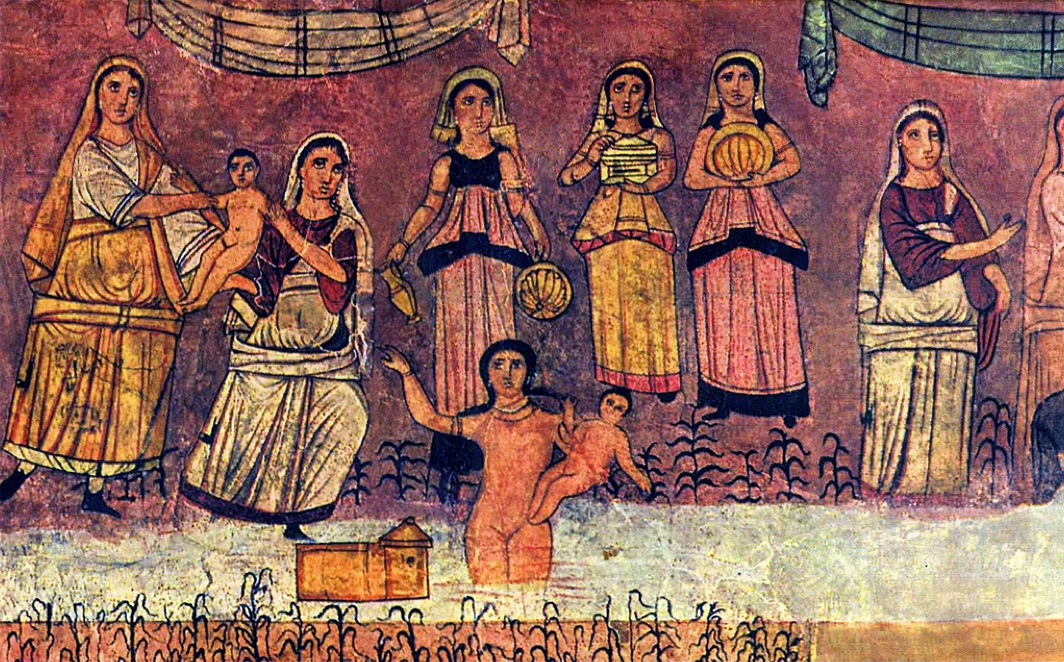
We are excited to offer this wonderful new course, taught by Anne Schiff, a PhD candidate at Yale.
Please save the dates!
Thursday nights, 7 – 8:30 pm.
January 24, 31; February 7, 28; March 14; April 4, and 11.
We are excited to offer this wonderful new course, taught by Anne Schiff, a PhD candidate at Yale.
Please save the dates!
Thursday nights, 7 – 8:30 pm.
January 24, 31; February 7, 28; March 14; April 4, and 11.

Share a potluck Shabbat meal with family and friends! Unwind at the end of the week, and welcome Shabbat with your extended Temple Emanuel Family.
A Tot Shabbat service for families with kids under 5 is at 5:30pm, and a main Shabbat service will begin at 7:30pm – you are welcome to either, or just come and share the meal! Please sign up for potluck – follow the link!
Since the October attack on Tree of Life Synagogue in Squirrel Hill Pittsburgh, synagogues and other institutions across the country have been working on ways to keep our synagogue schools and sacred spaces safe,at the same time as maintaining the open and welcoming community that is part of our culture and religious practice. At Temple Emanuel, our rabbi, staff, lay leaders and our safety committee have worked hard together to find the best way to do this. A community Safety meeting was convened by NH Jewish Federation,where several New Haven area synagogue presidents and rabbis shared information- what each is doing to be prepared, and to mitigate risk. In addition, the Federation is prepared to act on our behalf to transmit possible resources available from federal, state or local authorities, and to examine the possibility of group purchasing or other collective activities.
The principles of safety for TE are similar to those practiced by schools and other public institutions. They include thinking in advance of what we will do in the case of a threat, learning from law enforcement the best steps for safety, training our staff and teachers in best response alternatives, working together with local law enforcement to minimize risk and planning for action if ever needed.
On the national scene, Bernhard Mehl’s Kisi organization lists several steps to synagogue safety;
TE has already taken most of these steps, and is in the process of examining and adopting several others. Special thanks to our Safety Committee, led by Max Case and Michael Shanbrom. As you see some of our changes for safety, including electronic surveillance of our building and environs, keeping our doors locked, having congregant volunteers serve as safety monitors during school and religious service hours, and encouraging Orange Police to know our building, our schedule, and do periodic sweeps of our property, let us know if you have observations or ideas that may help us all feel safe at TE.

Come celebrate Shabbat with Rabbi Michael in the beautiful TE sanctuary with songs and stories! Perfect for children under 5 and their families.
Members and non-members welcome!
The Tot Shabbat service on Friday, January 25 at 5:30 pm will be followed by a Shabbat potluck (dairy) dinner, allowing congregants of all ages to interact and enjoy the meal! We will have some teens to help out during dinner, allowing parents a chance to get to know more adults at TE.
To sign up for potluck dinner, please follow this link.
 I often take too long to write my shofar articles, waiting for the ‘right’ moment to put together words that would resonate when the new TE Shofar will reach your home. This month I was quite happy to submit my column in a timely manner, but then… Pittsburgh tragedy rocked our world, and the crafted words had to be set aside…
The shock of hearing the news at the end of the Torah study, the long week filled with grief, the life stories of the victims, their pictures, their funerals… But also the week filled with vigils, and countless messages of support from faith communities, and neighbors, and strangers – Jews and non-Jews, religious and secular, priests, imams, community leaders and ordinary folks. And most importantly: the TE sanctuary filled to the brim on a Sunday morning for asephah (assembly), with parents and children who choose to be a part of the Jewish religious community, the synagogue, with its customs, and traditions and values… And then the first Shabbat with our sanctuary filled beyond capacity with people seeking comfort and community, and with others coming to show support and solidarity… And the Pittsburgh Gazette that printed the opening words of kaddish, in Hebrew, right below their name… And Pittsburgh Penguins that changed their logo for the first game after the tragedy to incorporate the Star of David – as did the Steelers…
I can talk about hatred today, and antisemitism – both are far too real, and need to be taken seriously by all of us, by our society and our country. Growing up outside America, I am not surprised by either of these things – I have a firsthand experience of both, and have physical and emotional scars to show for it. One of the greatest tragedies of anti-Semitic hatred, any hatred really, is when it is followed by indifference, or tacit approval, of the society at large. This last week was tough – but also filled with hope and comfort. We live in the society where this is NOT OK. Our neighbors, our friends, strangers on the street, our police officers, our elected officials, our athletes, all of us rise to say: this is NOT who we are.
This does not mean there’s no hate, or no antisemitism – sadly, it is very much here. We have to be vigilant, as we know from history that we ignore these signs at our own peril… But let us also acknowledge and celebrate the fact that our society at large chose to stand with us in our time of sorrow. And then let us go back to doing what we do best: practice our values and our traditions, celebrate Jewish Festivals and Shabbat, sing and pray, learn and feed the hungry, improve the world – and improve ourselves. Let us do what is in our power, every day: be the best versions of Jews WE can be.
Over the past few days we have been sorting through some of the archives of Temple Emanuel, and marveling at some of the history, including terrific photos, and a collection of the old Shofar editions, going all the way back to typed up pages from 1966! I flipped to one of the first issues (December 1969), and found a message from then President, Paul Levine:
“Last year after considerable, careful thought we put out a mini-leaflet which we feel is true to the spirit of our congregation. In it we described ourselves as “… a new temple for creative judaism”. It was no accident that “temple emanuel” and its description appeared in lower case letters. This device signified to us that the institution was no more important than its congregants… An institution such as ours must serve the needs of its members. But the rabbi, officers and board are not all-wise in guessing the needs of the members. Realizing this, last summer Rabbi Winer, together with an officer or board member visited nearly every congregant’s home to solicit views and ideas. Many worthwhile innovations followed. One or two ideas flopped. But if we profess to be “a new temple for creative judaism” we must continue to be willing to change where desirable. Therefore, I solicit your ideas and your help in carrying them out. Our temple is a very precious concept. Let’s care enough to have it serve us properly.”
Having stumbled upon this paragraph by accident, I have been returning to it, day after day, and pondering the legacy of our early ‘pioneers’. While we no longer spell Temple Emanuel’s name in lower case letters, we remain committed to the principles of ‘creative Judaism’, and especially to our identity of a community, rather than an institution. We remain governed by committed lay leaders who do not presume to be all knowing, and continuously encourage ALL members to share their vision, as well as their energy, in making TE the kind of a community we all need it to be.
The first summer I arrived at Temple Emanuel I was blessed with an incredible opportunity to get to know my new congregation. All throughout that first summer, TE members took turns in leading Shabbat services, sharing their favorite tunes, their passion for Judaism and Shabbat, and their wisdom in making the words of the weekly Torah portion come to life. Many have continued to share their talents with TE community since, but mostly on the weeks when I am out of town: working at camp, attending a conference or taking a family holiday. This year, I’d like to begin changing that – and I can find no better inspiration than the words of Paul Levine!
I’d like to invite all TE members to partner with me, and with each other, in leading the services at Temple Emanuel on a regular basis, not just when I am away from the bimah. I’d like to learn from you and your take on the weekly Torah portion. I’d like to be guided by you with regard to your favorite tunes. I’d like to partner with you in making TE Shabbat that much more special every now and again. I promise to help you make educated choices with regard to the service, to help with music, playing and singing, and to be a true partner in the holy work. I know that many of you are up for this challenge, and I can’t wait to have these experiences with YOU! Call me, text me, email me – and let’s find a date for YOUR Shabbat!
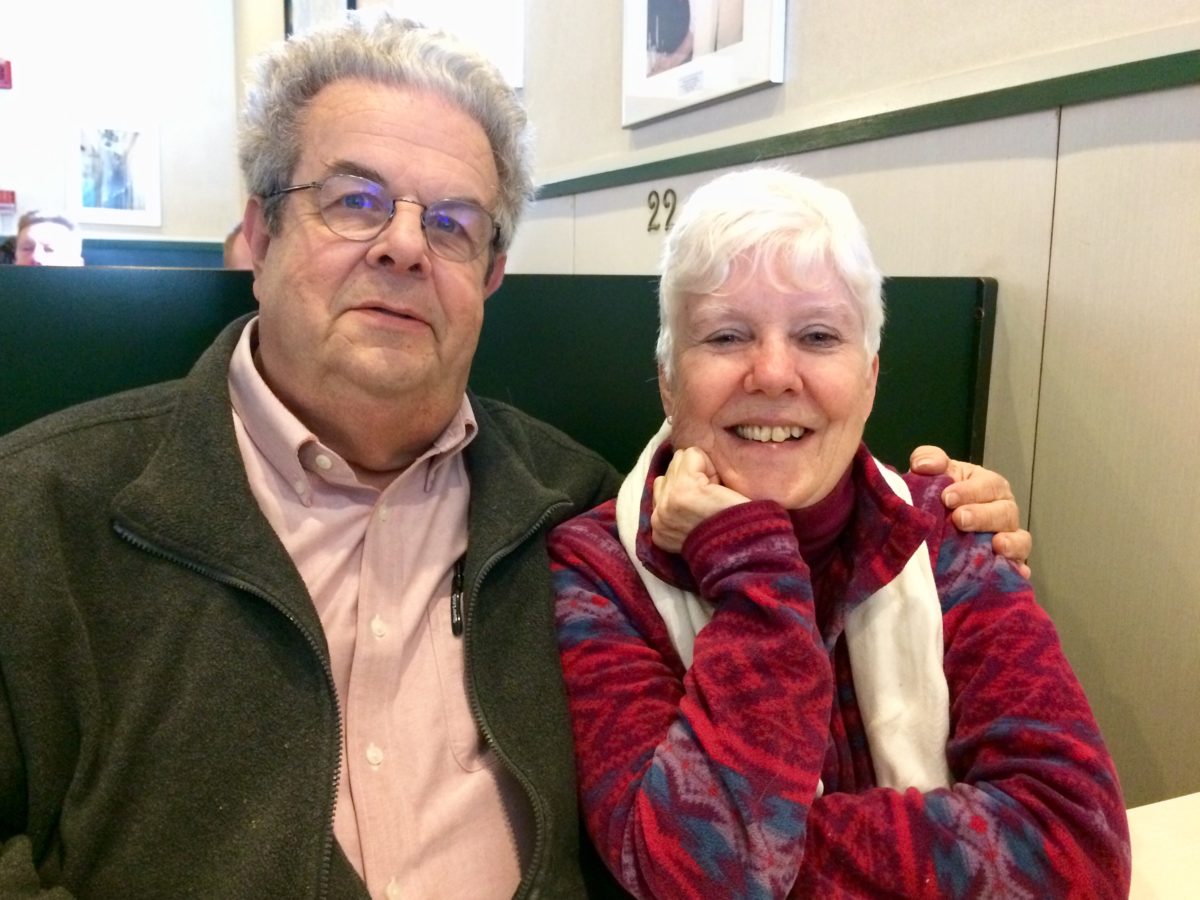
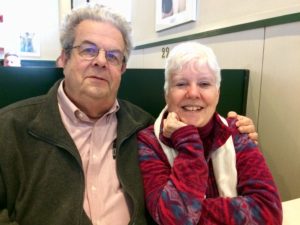 As young parents Lee and I needed help in raising our children as Jews. Structure, ritual, education and life cycle support was needed and Temple Emanuel proved to be the answer. What started as an aid for our children led Lee and I into our own search for answers and our own places in the world of Jewish belief. Over 40 years later we are still exploring and refining our relationship with our ancient faith.
At Temple Emanuel we are able to participate, question and continue to grow. We are able to progress in our own individual style and at our own pace. We are surrounded by a congregation of loving and nonjudgmental people. It is a hamish place, it is home.
Our legacy gift allows us to feel that we will be able to provide that environment that nurtures us to future generations.
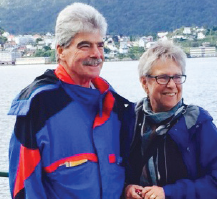 It all started about 40 years ago. We had recently moved to our new home and were looking for a Sunday school for our daughter to start her Jewish education. We had heard about a small synagogue with a young Rabbi who played guitar, so we decided to try it out. Needless to say, we loved him and his tunes. We joined. Rabbi Jerry presided over Rachel’s Bat Mitzvah and Mark’s Bar Mitzvah; he married Rachel and Stephan; and helped us through the deaths of parents and loved ones. His connection to our family was deep. As often the case, as the children became more involved, we did, too. We came to more Shabbat services and events, served on boards and took leadership roles. TE became our community.
When Rabbi Michael came to TE, he had a new musical vision. He had new musical variations to try out, new melodies and the idea of a community that played as well as sang together. We had serious reservations. How could he change the tradition? We listened more intently, and the tunes grew on us to the point that we learned to embrace how others created music around our familiar prayers. But, of course, there is more to it than that. Michael brings spiritual guidance to families, works with the children and teens in our school and actively involves them in the community of prayer. Shabbat services are a joy that we anticipate sharing with a loving and giving group. It is interesting to us that our married children, who are raising our grandchildren, are looking for a TE – like synagogue in their own communities, but are having trouble finding one. They hold dear the values that they learned here at TE.
It is for these reasons that we wish to support this spiritual community by joining “Leave a Legacy”. We want to ensure that Temple Emanuel will continue to enrich other families in the future.
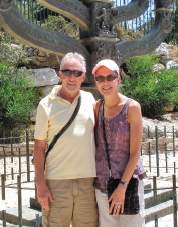 We were engaged, but not yet married, and knew we wanted to be part of a Reform synagogue. Temple Emanuel was close to where we lived at the time. We first attended TE in 1991, just to check it out, and were greeted with open arms and a feeling of belonging. We attended services more and more and became involved with some of the social action programs. Soon after that, we decided that this was the kind of community we wanted to belong to and became members. We felt at home with Rabbi Jerry, his music and his passion for TE and its members. As we raised our son, Adam, Temple Emanuel was a large part of his Jewish upbringing— through Hebrew School, bringing many Jewish traditions into our home, educational and fun programs, volunteering as he grew up and later participating in the TE Band.
Temple Emanuel has been a cornerstone of our Jewish lives, both spiritually and through traditions. It has been the Jewish foundation for Adam, and it has been my (Nancy) Jewish education as a Jew by choice. We have formed many long-time friendships here. TE members have been by our side in times of sorrow and celebration, like family.
THIS is why we joined the Leave a Legacy Program; to give back to Temple Emanuel, and to sustain this amazing community.
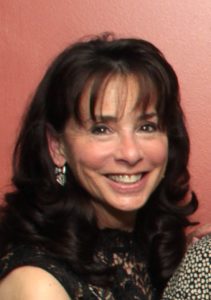 In 1968 my husband and I came to Connecticut for one year of his residency. We had no plans of putting down roots, since this was simply another stop along the educational road. We had both grown up in New York, and hardly realized we were a minority group. Neither of our families were observant, nor did we have any formal religious education. As young adults, we had gone alone to High Holiday services, where we felt less than welcome. However, we both had done our own study of Judaism and felt a spiritual need to further our understanding. Although being Jews by birth, we were now Jews by choice.
We heard of a small group of people who had organized in 1962 with “a keen sense of Jewishness, a pioneer spirit, and desire to practice their religious beliefs and educate their children in a more meaningful manner than was available from other reform congregations.” Within 5 years, the small congregation became Temple Emanuel and was given recognition. We joined this unique community, with its basis of volunteerism, and held our services throughout the New Haven area with a student part-time rabbi. Once we realized that Orange was going to be our home, we became more active members, teaching and serving on many committees.
Temple Emanuel has changed and grown from its inception. However, its basic values and the spirit of our special community have remained the same, first with the expert guidance of Rabbi Mark Winer, and then with Rabbi “Jerry” Breiger. I am truly grateful to both of these men and the friends of TE who not only helped educate my family, but supported us through both the most joyous and most difficult times of our lives.
As one of the more “mature” members of TE, I have been lucky enough to experience the advances our synagogue has made and now share the presence of our remarkable Rabbi Farbman in our new home. I have pledged to the “Leave a Legacy” program to make sure those of the next generation have the same opportunity that those before gave to me. Someone recently said that “we are the memories of tomorrow”… and I want us to be remembered as passing on the gift of Temple Emanuel.