On Memory and Ritual

Speak to the Israelite people and instruct them to make for themselves fringes (tzitzit) on the corners of their garments throughout the ages; let them attach a cord of blue to the fringe (tzitzit) at each corner. That shall be your fringe (tzitzit); look at it and recall all the commandments of Adonai and observe them, so that you do not follow your heart and eyes in your lustful urge. Thus you shall be reminded to observe all My commandments and to be holy to your God. (Numbers 15:38-40.)

This paragraph from the Torah may be very familiar to you – or perhaps only a portion of it is. It describes the Divine commandment to wear tzitzit, or fringes, on the corners of our garments as permanent reminders to follow and observe the mitzvot, commandments of the Torah. The text in full appears as part of the third paragraph of Shema in the prayerbook, restored to full length of the text in the Mishkan Tefilah and Mishkan haNefesh from the shortened versions that have been standard in American Reform siddurim, where tzitzit was not mentioned, even though the reminder to follow God’s commandments was very much retained.

So what is tzitzit? The rabbis of the Mishnah looked for ways to define and codify what these words were referring to, and so the tzitzit that consists of strings (8) and knots (5) was designed to remind us of the 613 commandments (with Hebrew tzitzit adding up to 600 in gematria). But the knots and strings are mostly there to remind us of something bigger – Judaism, commandments/mitzvot, rituals and observance. It’s a mnemonic device, a reminder – when your eye catches it, you will remember. My teacher Rabbi Lionel Blue (alav hashalom) used to describe tying knots in the handkerchief as a child, to remember something – and tzitzit is exactly that!

In more traditional settings, Jews interpret the commandment of tzitzit as something constantly required – the ‘tallit katan’ is an undergarment that contains tzitzit and is worn at all times as part of clothing. For non-orthodox Jews the tallit, a prayer shawl, is the garment that has tzitzit attached to it, and is worn at specific ritual moments. The traditional rules of tallit specify that it is worn during the daytime hours – so usually only for the morning and afternoon services, with exception of Yom Kippur which is treated as one long day, and hence the tallit is worn for Kol Nidrei (evening service) and then for the entire day of Yom Kippur. In addition, Shaliach Tzibbur, the person leading prayer, often wears the tallit even when leading services at night – that is why you will always see me wearing a tallit on the bimah, night or day, but not if I simply attend the evening service led by others. Traditionally women are considered exempt from the mitzvah of wearing tallit, since it is considered a time-bound mitzvah – but contrary to some popular beliefs, nowhere does it prohibit women from wearing a tallit, and so the non-orthodox movements have embraced the practice of women and men wearing the tallitot as a sacred ritual.

Our ritual committee recently discussed the wearing of tallitot and kippot on the bimah at TE. It opted against creating any kind of formal policy on the matter, reflecting the long held reform tradition of informed choice. It has also decided to encourage all those coming up to the bimah, especially as part of the Torah service, to wear a tallit where appropriate. (Following a wide-spread minhag (custom), we reserve the wearing of tallit to Jewish adults, or teens who have reached the age of majority, having celebrated their bar or bat mitzvah). Tallitot have always been available by the entrance into our sanctuary, but moving forward we will also make some available right by the bimah in case you are offered a mitzvah in the service or an Aliya to the Torah. If you have never experienced wearing a tallit, please let me know and I will gladly help you recite a blessing for donning the tallit. If you own one, please bring it with you next time you sign up for an Aliya on Friday night, or when you come to Shabbat Morning minyan or a bar/bat mitzvah ceremony. Then we can chant the words of the Shema together and fulfill this ancient Jewish tradition! Let me know if you have any questions, and I look forward to seeing you on the bimah, wearing your tallit, soon!

Restoring the Holocaust Memorial Scroll #1178

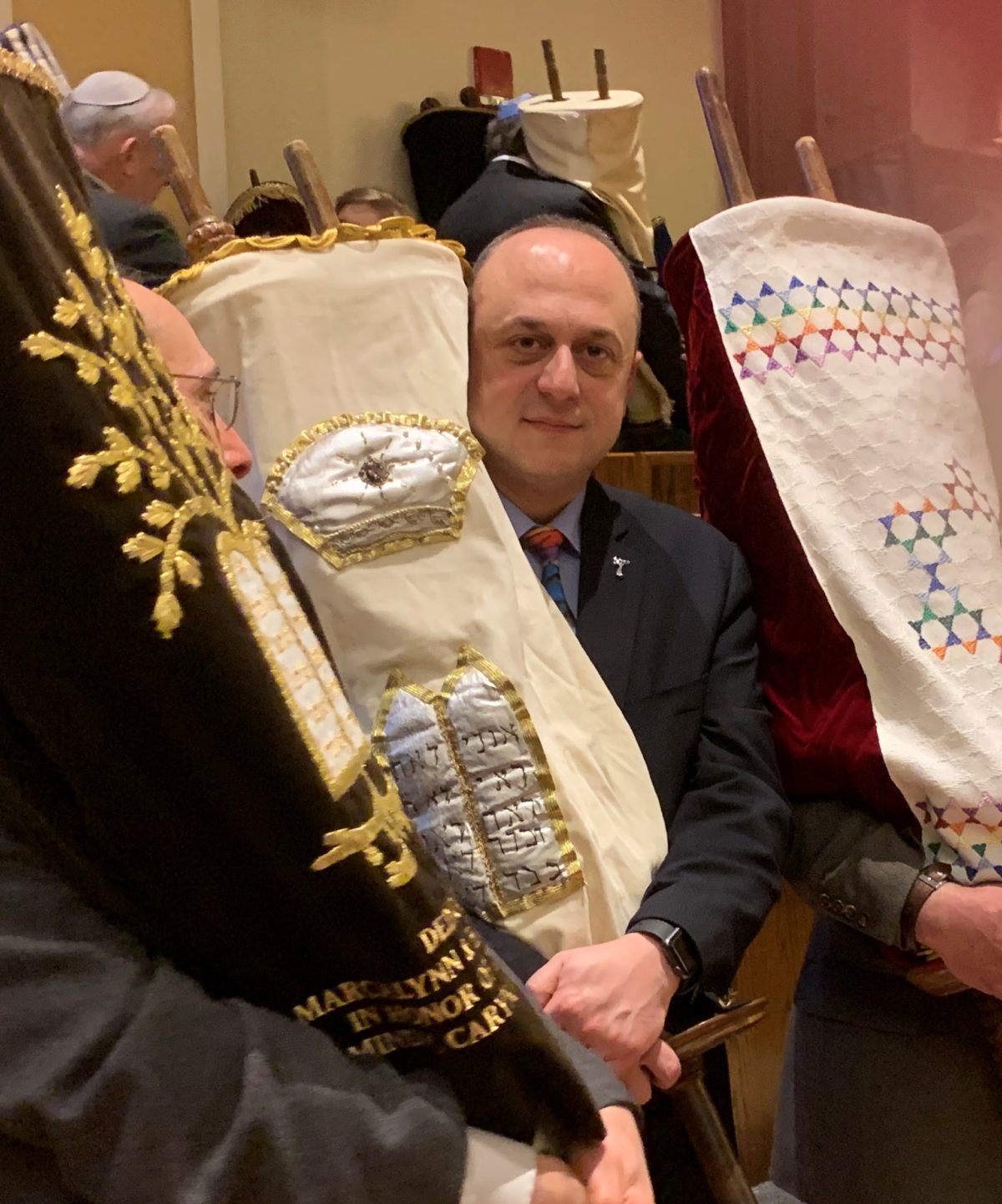
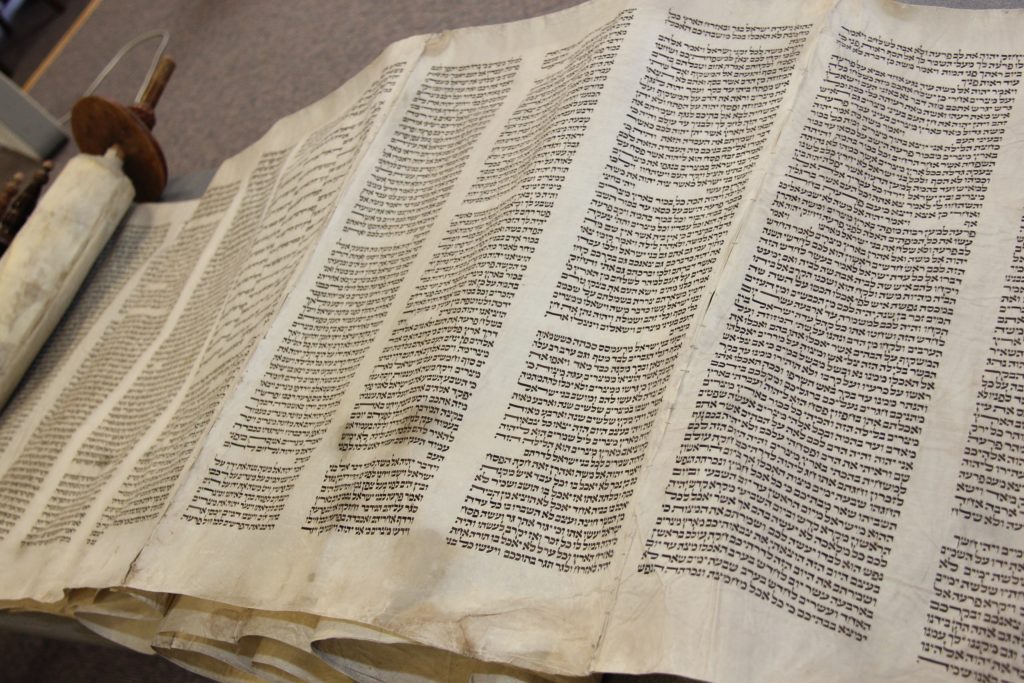
Earlier this year a Torah scribe visited TE to inspect our Torah scrolls, provide minor repairs and to teach our students and our teachers a little about the scribal art. In the process of his visit, we discovered a few minor fixes that were required for two of our scrolls – which were properly performed. We also discovered that one of our Torah scrolls will need a number of serious and costly repairs, rendering the scroll not kosher. But there was also a piece of amazingly good news: the Holocaust Memorial Scroll #1178, the first-ever TE Torah scroll which has been part of every Bar and Bat Mitzvah at Temple Emanuel from 1967 until 2007 while badly damaged, is NOT beyond repair! The skilled scribe can repair and restore this very special Torah! It will take time and money, but we can reclaim this Torah scroll, and bring it back to serve the Jewish people in the best way it knows how – by using it to share the words of Torah with people gathered in this sanctuary to celebrate Shabbat and special occasions.

As many of you heard me explain on Rosh Hashanah, I read from this very special, currently non-kosher scroll on that morning. But I did so with a mission: to invite you all to join me in a sacred task of repairing and restoring this Torah scroll, to reclaim a wonderful TE tradition, and to renew our commitment to keeping the memory of the Jews of Horazdovice alive – not just by seeing their Torah (as it is currently displayed in a special glass cabinet in our lobby), but by reading from their Torah.

On Sunday, November 24 the Torah scribe will return to Temple Emanuel, this time to begin a process of restoration. Every TE family will have an opportunity to help restore this scroll – literally by writing in individual letters (with the help of the scribe, of course). Every TE family will have an opportunity to schedule a personal ‘Torah restoration appointment’ – we really do want EVERY member of TE to have this sacred opportunity. As we restore this sacred scroll together, we will make every effort not just to honor its long, and at times painful history, but to also remember the joy of community that wrote it, and the joy of our community that has used it over the last 50 years. Our 7th graders, inspired and supported by the Barbara Rosenthal memorial fund, lovingly created by the Weber family right here at TE, already began a special project of researching the history of the Jewish community of Horazdovice, and will present their findings on November 24th.

Next year we plan to use this Torah scroll again during the High Holy Days, with all its symbolism, and all its history. Next year it will be kosher. THIS is how we respond to hatred: by building a strong Jewish community, by raising Jews with a strong Jewish identity.  By continuing to invest in the JOY of being Jewish – not the OY. THIS is how we keep Judaism alive.

Financial Requirements for the TE Torah Restoration Project

There are 3 areas that will require financial support:

1.           Restoration of the Holocaust Scroll (including the actual cost of Scribal repair and restoration, as well as the cost of special visit(s) from the scribe to Temple Emanuel, enabling us all to participate in the sacred task of restoration

2.           Repair of Temple Emanuel’s other Torah Scrolls and maintenance of all our scrolls, including the Holocaust Memorial Scroll #1178.

3.           Holocaust education for our religious school and for adults.

Several generous donors have already reached out to support these activities. We are soliciting funds to assure we can do all of these tasks in relation to our Torah scrolls and Holocaust education as a combined project.

Our fundraising goal for this project is $50,000. We have already secured nearly $30,000 toward that goal, part of which is an $8,000 matching challenge – – matching dollar for dollar contributions that other TE families will commit.

If you would like to discuss any of these details or offer your generous support to this special project, please speak to Alan Kliger or Melissa Perkal.
Audacious Hospitality

“Temple Emanuel is a warm, caring, and open community. As a small but growing Reform synagogue, our members have the opportunity to know one another and to have meaningful input into how our synagogue operates. Temple Emanuel is a participatory, diverse, non-judgmental, and intellectually vibrant congregation. Our membership comes from many towns in the greater New Haven area, and the Valley, adding to the diversity of our congregation.”

This paragraph comes from the homepage of our website. Much of what I love about Temple Emanuel is embodied in these words. We are warm, caring and open. We are a participatory congregation, diverse in many ways. We work hard to welcome new members and visitors. Temple Emanuel embraces other values dear to my heart. Again from our website: “Tikkun Olam (healing the world), social action, and social justice are important values of the modern Reform movement and a priority at Temple Emanuel.”

With all of this in mind I often think about how TE can do even better on these fronts. How could we welcome members or guests who cannot walk up the steps to the bimah to accept an aliyah? How could we welcome those who don’t feel comfortable using a bathroom gendered male or female? My wife Barb and I have worked hard in our lives to be visible and proud lesbian parents, making sure that our kids feel comfortable with their family and accepted in their community. Do others feel as comfortable at Temple Emanuel being who they are? Do Jews of color feel at home at TE?

Being welcoming and inclusive, and being sensitive to people who are outside the majority, are values I feel strongly about. The Union of Reform Judaism (URJ), the umbrella organization for North American Reform Judaism, has an initiative to embrace the diversity of the Jewish community. This initiative is called Audacious Hospitality, “… a transformative spiritual practice rooted in the belief that we will be a stronger, more vibrant Jewish community when we fully welcome and incorporate the diversity that is the reality of modern Jewish life.” The URJ has developed a number of resources for member congregations, including an Audacious Hospitality toolkit. This educational program helps congregations examine the welcome they give and helps to strengthen the relationships we have with one another.

Temple Emanuel is a wonderful congregation. I feel joy when I sit down at services or join families at the asephah and feel the connection and warmth of our community. I would like to go even further to make every household feel that they have been seen and heard, and that their voices are important to the whole. I invite everyone who is interested to join in a discussion about how TE might become more audaciously hospitable. We will meet on Sunday, November 10th at 10 am. If you are interested but cannot attend that date, please let me know. As always, I am interested in your thoughts and ideas, and can be contacted at president@tegnh.org

Tikkun Olam Projects 2019-20

Tentative Projects for the 2019-2020 (5780) Calendar Year

September/October 2019    

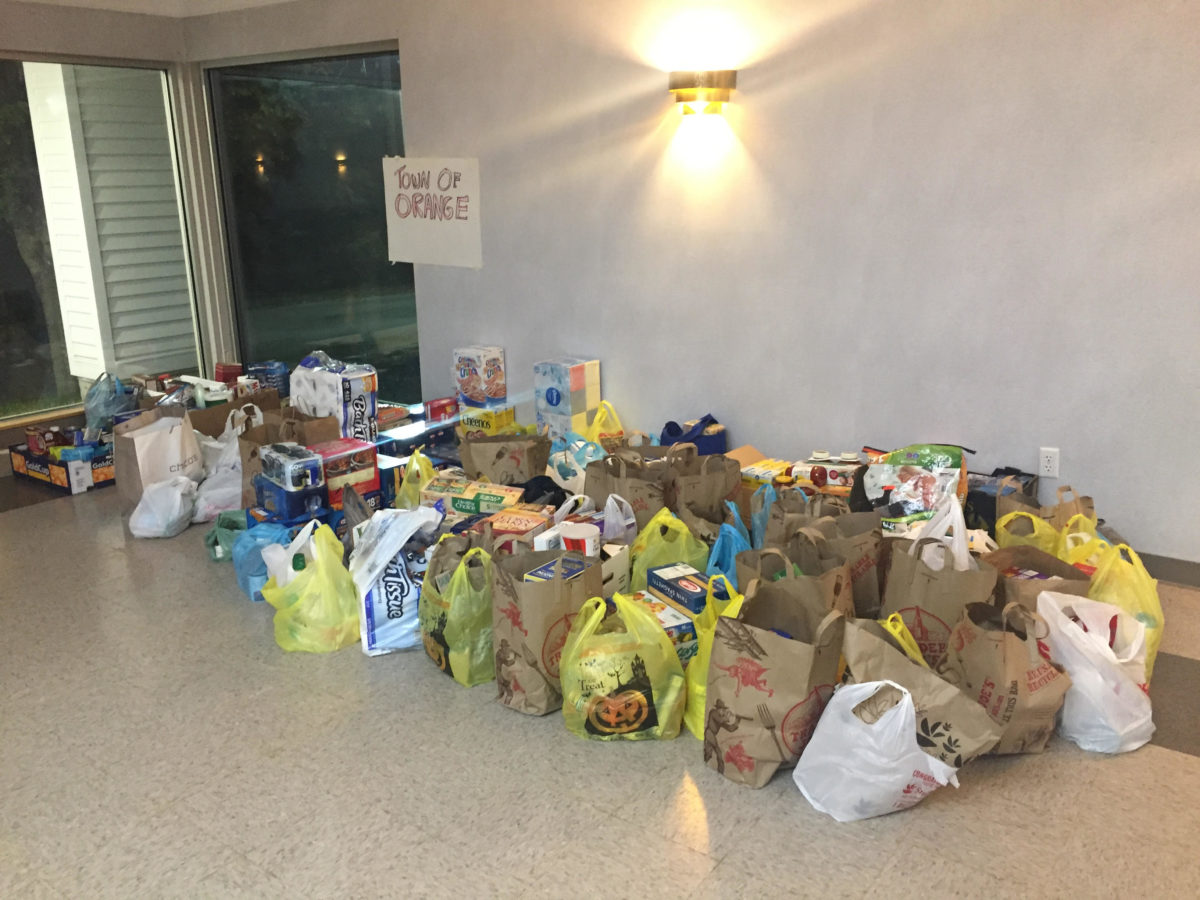
26th Annual High Holy Day Food Collection – Will Sherman, Coordinator

Rosh Hashanah & Yom Kippur & Sukkot

Food to be picked up by JFS and the Town of Orange between 10/23 & 10/25

November/December 2019  

  •  Thanksgiving Turkey Collection – Peter Stolzman, Coordinator
  •  New Haven’s Lighthouse Point Park “Fantasy of Lights” – in conjunction with Easter Seals – Goodwill Industries (Monday, Dec. 9, 2019) – Adam Spiewak, Coordinator
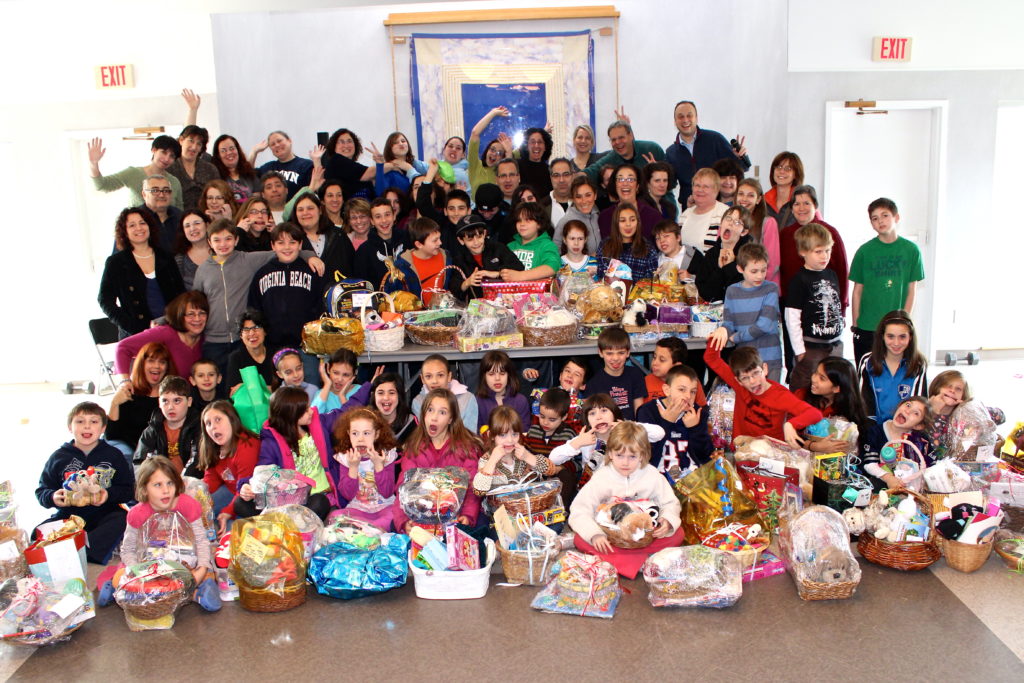
  •   Religious School Chanukah Baskets (Sunday, Dec. 8, 2019).  Baskets will be donated to: JFS, ‘r Kids Family Center, Fair Haven Community Health Center, & Fellowship Place. Sara Shanbrom will coordinate with assistance from Rebecca Olshansky and Lily Katsovich. 
Annual Chanukah basket program

January/February 2020

  • Religious School MLK Day Project.  Sunday, January 12, 2020.  “Welcome Kits” to be donated to Fellowship Place and Columbus House.  Janet Adams, Coordinator
  •  Abraham’s Tent.  Week of February 24, 2020.  Lee Stolzman & Barbara Levine-Ritterman, Coordinators
  •  Diaper Drive Collection – Marisa Kogan, Coordinator

March/April 2020

  •  Continuation of the  Diaper Drive Collection — Marisa Kogan, Coordinator
  • Purim Pasta Collection – Nancy Weber, Coordinator.  March 8-10, 2020.  All collected pasta to be donated to the Beth El Shelter in Milford.
  •  Federation Mitzvah Day (Sunday, March 15, 2020): “Rise Against Hunger” project hosted at Temple Emanuel.  Melissa Perkal &  Adam Spiewak, Coordinators
  •  Kosher-for-Passover Food Collection.  Food to be distributed to JFS prior to the start of Passover (which is April 8, 2020).  Will Sherman, Coordinator

May/June 2020

  •  Red Cross Blood Drive at T.E.  Adam Spiewak, Coordinator  (Need date)
  •  Collection of specific items for Milford’s Beth El Shelter.  Nancy Weber, Coordinator

Time of Renewal

As you read this column, the rhythms of fall are beginning. The trees are starting to change color and the weather should be cooling off. For many of us, vacations are over, school is beginning, and it is time to buckle down to new commitments.

It is also time to start thinking about the High Holidays and what they can bring to us. A major theme of the New Year celebration is Teshuvah. Teshuvah is often translated as repentance; we spend time reflecting on what we did wrong and how we can do better in the coming year. But Teshuvah is also a time of renewal. We turn from our routine, look within, and imagine new possibilities, new beginnings. We can recreate ourselves and the relationships we have with others, and work toward transformation of the world.

In my role as president, I am working to understand how I can help transform TE into an even more vibrant community: a place where everyone feels welcome and supported, and where we can give even more to the community around us. I was recently struck by an article by Rabbi Rick Jacobs, president of the Union of Reform Judaism, about his choice to spend Tisha B’Av in an Orthodox synagogue, among Jews who pray differently and might believe differently and hold different political views than he does. He encourages all of us, Orthodox and Reform, liberal and conservative, not to give in to the divisions among us, nor to ignore the substantive differences we have. He instead challenges us to the exercise of building a community that acknowledges, honors, and draws strength from our differences.

I believe that our relationship with CONECT (Congregations Organized for a New Connecticut) can be one way to rise to this challenge. CONECT brings together houses of worship and civic organizations from New Haven and Fairfield Counties to work on social and economic justice issues of common concern. As a new member of CONECT, our first job is for TE members to work together to identify the social issues important to us as a community. CONECT’s work begins with relationships, first within our congregation and later, if we choose, with other member congregations. CONECT has developed a process of listening, learning, and reflecting that will help us work together to build trust as we find common goals to work towards.

As we contemplate Teshuvah, I hope we can recreate ourselves and the relationships we have with each other in more meaningful ways, from our personal lives, to our communal work, to our interactions with the world as a whole. May we continue to work toward the world we would like our children and the generations to come to inherit.

The month of Elul and the opportunities it offers us

Rosh Chodesh Elul falls on September 1st this year, a somewhat unusual aligning of the Hebrew and Gregorian calendars. The month of Elul offers us a chance to arrive at Rosh Hashanah and the Days of Awe a little better prepared for the experience. Just as the Kabbalat Shabbat section of our Friday night service allows us to ‘ease’ into the tefilah experience with melodies and poetry, so is the month of Elul offering us a chance to get ready for the intensely personal and communal experience of the High Holy Days. There are multiple ways to do so: craft for yourself some additional Jewish experiences, read a book with a Jewish theme, visit a service you don’t regularly attend, watch an Israeli movie or TV show (which now abound on our streaming services), brush up on your Hebrew reading skills (or start learning!). What YOU do depends on what you like to do, or what works for you – the goal is to be extra mindful about the Jewish experiences you create for yourself and those around you, moments that will help you ponder your life and your actions, as well as the collective journey of the Jewish people.

This year, once again, we will begin using the new High Holy Day machzor all through the month of Elul, helping us get better acquainted with the prayer book and the themes of the Days of Awe. As always, there’s no better preparation for the moving and inspiring Rosh Hashanah and Yom Kippur than to refresh our prayer book skills together while celebrating Shabbat during the month of Elul. (We will make an exception on September 6 for our Annual Shabbat Under the Stars service, when we will use our usual ‘traveling’ siddurim). The culmination of our preparation will be the Selichot service, an annual event that brings together four reform synagogues in our area for the joint experience of preparing for High Holy Days with rabbis, cantors and a combined choir. On September 21 at 7pm we will be hosted by Temple Beth David in Cheshire, and I very much hope to see many of you there for this immensely moving and special start for the Days of Awe.

Rosh Hashanah is coming September 29. Will you be ready?

Shabbat on the Beach, August 30 at 6pm

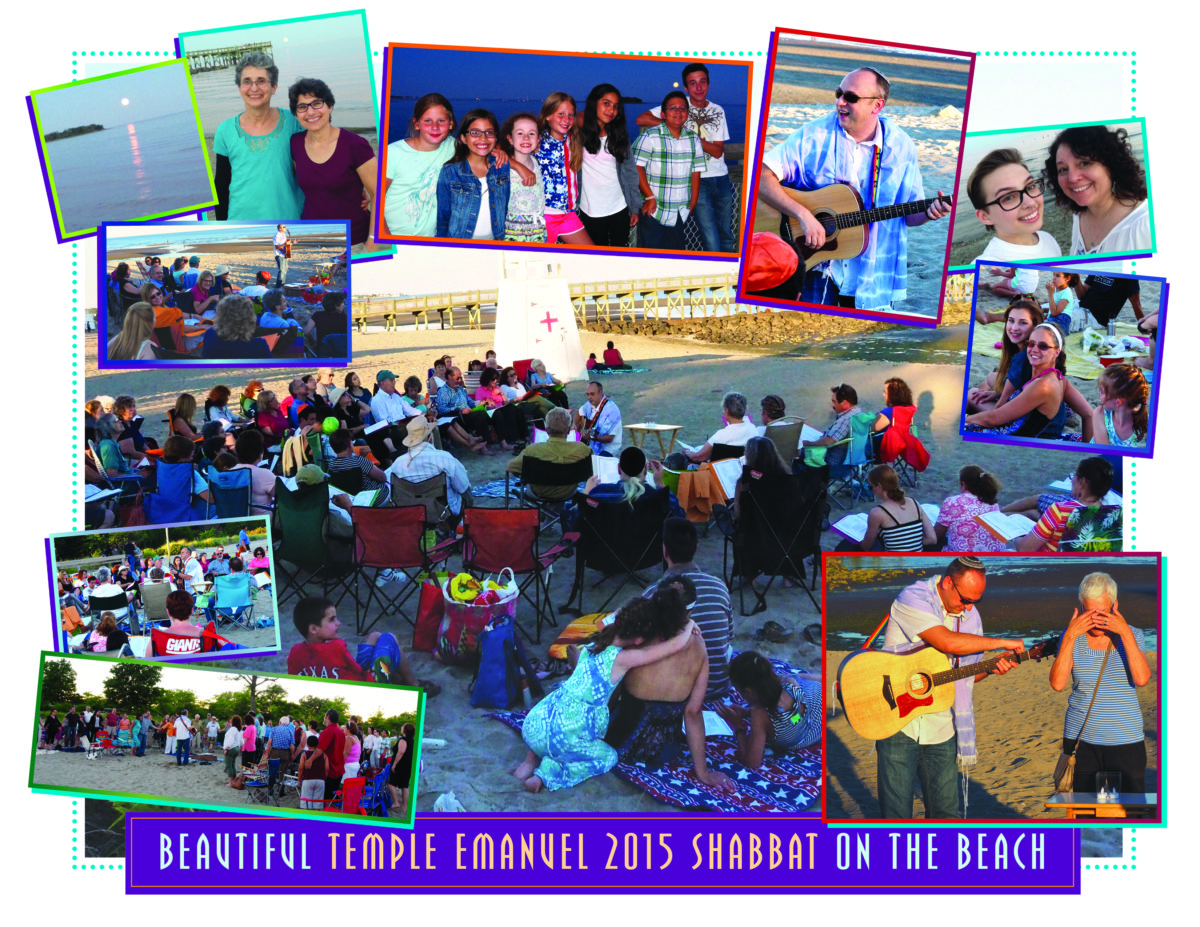
Our ‘Shabbat under the stars’ services are always a great opportunity to enjoy the beautiful TE grounds and be outside. This year, we continue the wonderful new tradition that began a few years ago: Shabbat on the beach! On August 30 at 6pm head over to the Walnut Beach in Milford (113 E Broadway, Milford, CT 06460) – don’t forget a beach blanket or a chair, and bug repellent just in case! We will sing together and greet shabbat by the water. Please spread the word and invite your family and friends to join us!
P.S. If it rains, Shabbat services will be at Temple Emanuel – but we hope for a beautiful night under the stars!

Mazal Tov!

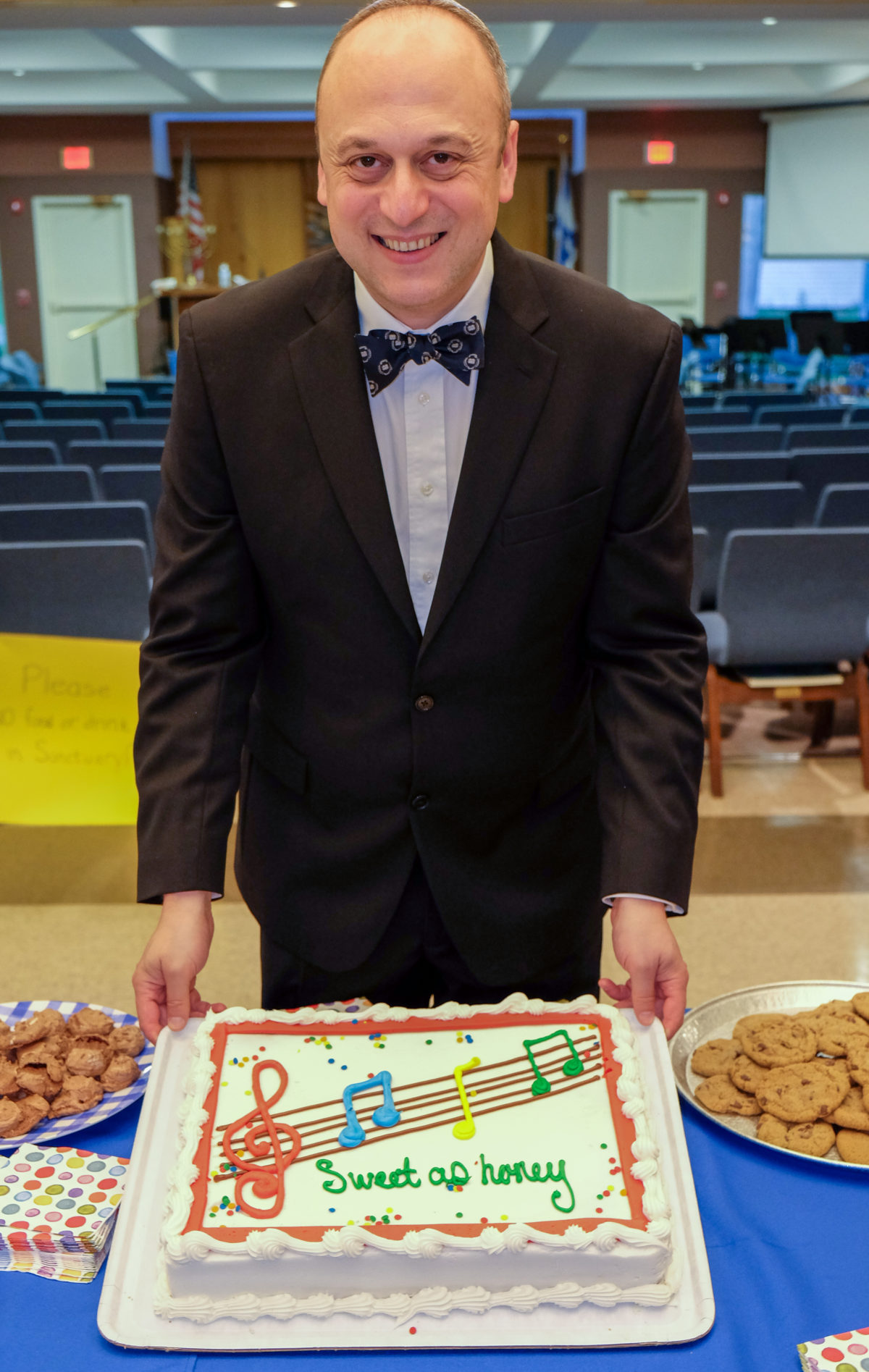
In most synagogues in America and around the world, July 1st is an important day. It is the start of the new fiscal year, when the old budget gives way to a new one, officially marking a transition which would otherwise be left unnoticed. Presidents and synagogue boards begin their new terms. Most Jewish professionals – Rabbis, cantors and educators who work in synagogues – begin their work in new communities, or celebrate the number of years in their current positions.

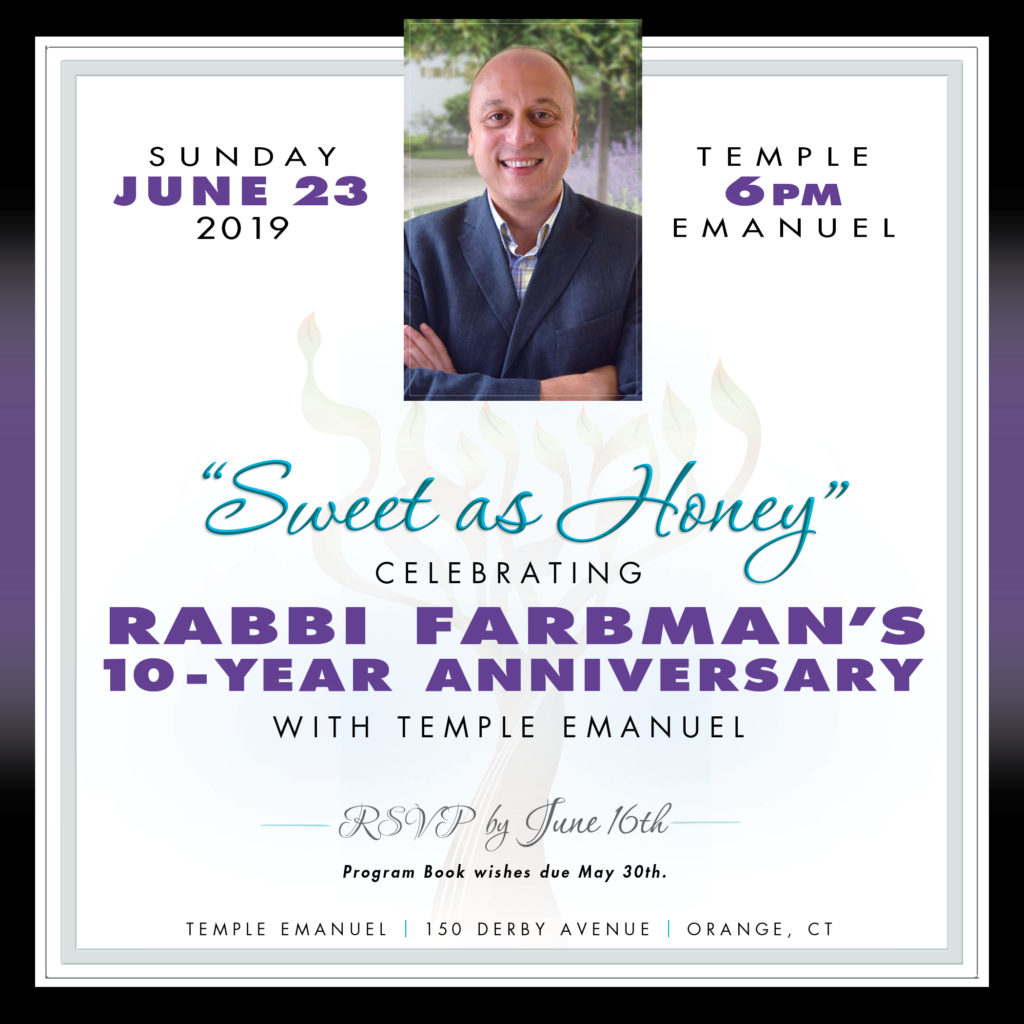
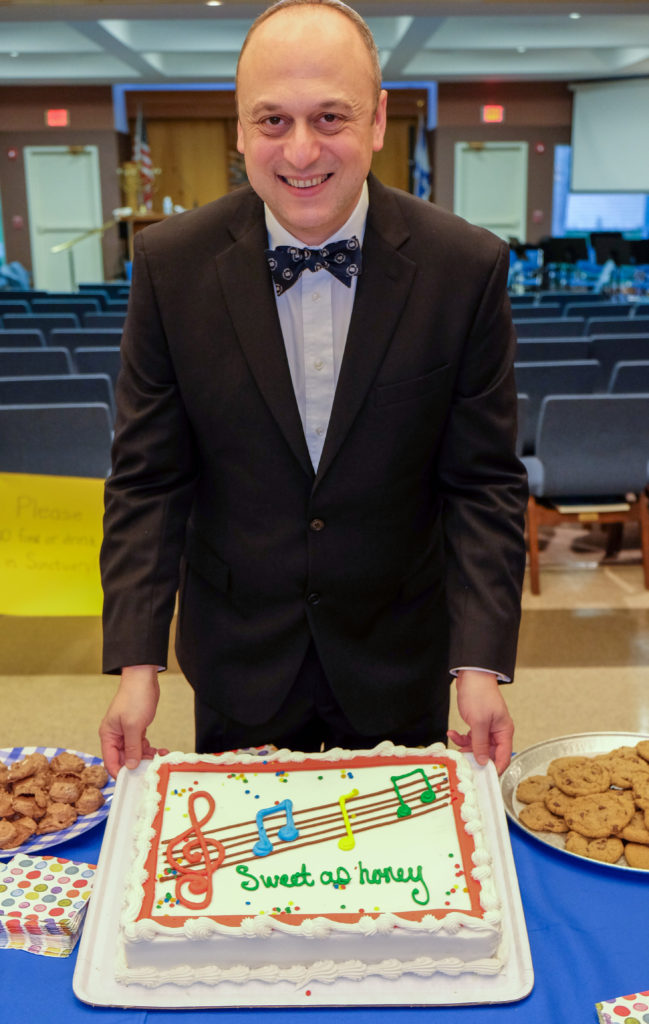
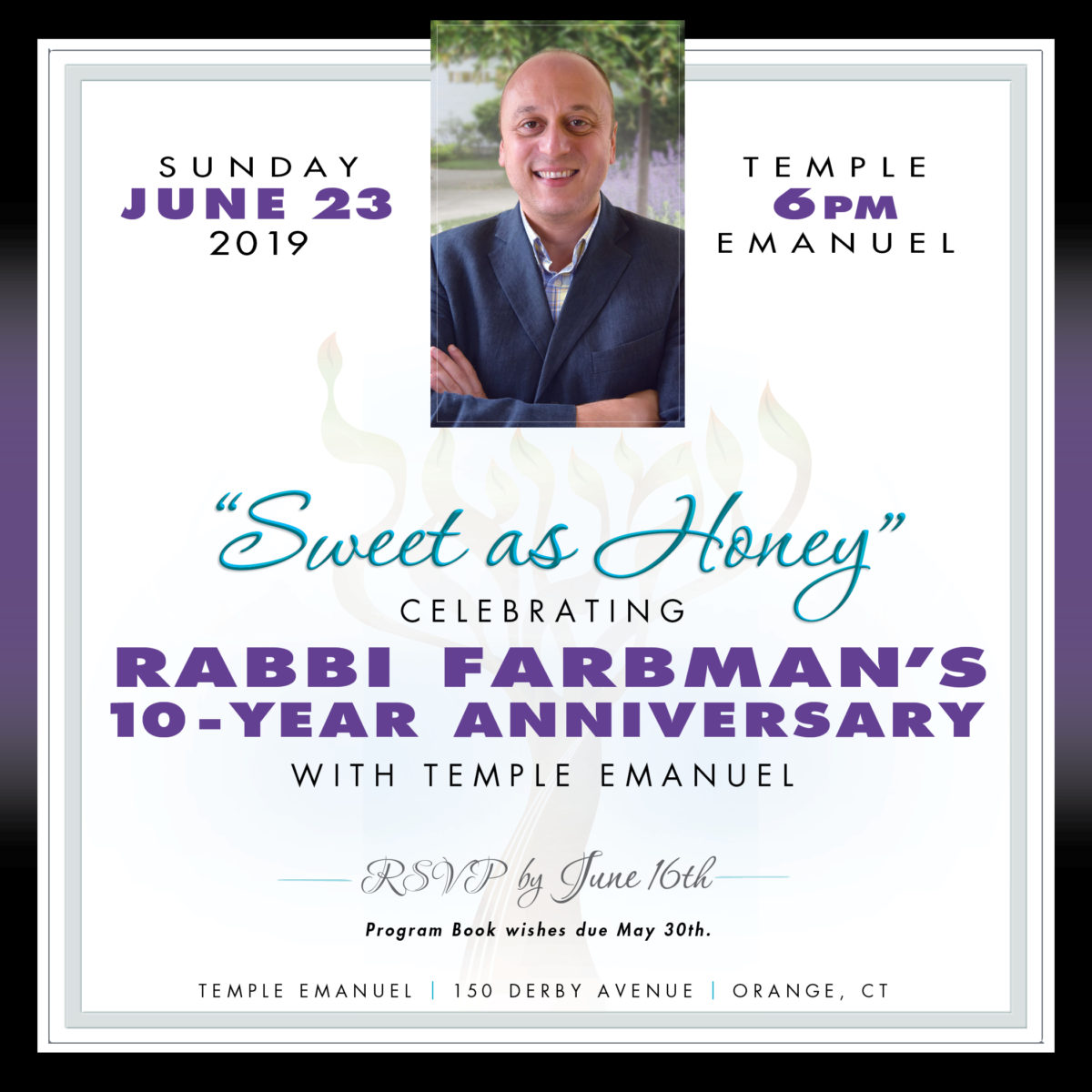
As I am writing these words, and as I begin the 11th year at Temple Emanuel, I am still aglow from the incredible event on June 23, celebrating 10 years together with all of you. I still cannot quite believe that I have had the honor and the privilege of being the Rabbi of Temple Emanuel for 10 years.

There are no words that can describe my gratitude to all of you – the organizers, the worker bees, those who took time to write most moving messages, and of course all those who came to celebrate. Suffice it to say, this was an amazing evening, and Olga and I are still floating on air!

10 years ago it was a leap of faith for us, and it was a leap of faith for Temple Emanuel. We certainly could not have imagined what blessings awaited us in Orange, and what an incredibly rewarding journey we were going to embark on together. We take pride in how much we have achieved in the last 10 years, and we are so grateful for the partnership that makes TE, our mutual home, such a special community to be a part of.

To all the lay leaders, presidents and officers past and present, and to all of you – THANK YOU! What a joy it is to celebrate the mutual love and blessings today! Mazal tov to Robin Levine-Ritterman as she becomes our new President, mazal tov to the new TE Board and Officers, and a huge thank you to Alan Kliger as he becomes an immediate past President!

Thank you all – we are truly honored and humbled by your love. Here’s to the next decade!

President’s column, Summer 2019

I take a deep breath as I begin my term as president of Temple Emanuel. It is an honor to be given the responsibility to lead our congregation and I thank all of you for entrusting this job to me. As I begin my role I have taken some time to ponder why I took on this responsibility and what Temple Emanuel means to me.

I joined Temple Emanuel in 1999, with my wife Barb, our 4 year old daughter Maya and our 2 year old son Joshua. Until that time we attended different congregations, Slifka for the high holidays, BEKI often. We started “shul shopping,” attending services at several congregations around the area. When we made the decision to join TE, I remember thinking that we were joining because of the services and the feel of the congregation. We loved the music and the warmth. But we knew very few people at TE and at the time it did not feel like “our community.” Twenty years later I feel very differently.

What I appreciate most about TE is the community. I can show up by myself on a Friday night and know that I will not feel alone as I sit in services. When my mother died, there was a congregation to support me and come to a shiva service at my home. If we should have an illness or difficult time in our family, I know people from TE would be there to help. This sense of community has grown over time: sharing Shabbat services weekly, setting up numerous Rosh Hashanah luncheons, and sitting for hours at numerous board and committee meetings, have all helped me build strong bonds with so many of you.

TE has become the major focus of my Jewish community, a place that helped provide my children with a Jewish education, a place where I can celebrate Shabbat and Jewish holidays, a place where I can struggle with what prayer and God mean to me, and what it means to be a Jew.

TE is a special place. We have a wonderful community, incredible lay leadership, and a very special Rabbi. I hope to be able to continue the work of the leaders who came before me to keep TE a strong, vibrant congregation, and to help it thrive and grow. I want to see TE become a community where everyone can feel at home. I hope to get to know all of you over the next two years and I am interested to hear your thoughts, ideas and concerns. (president@tegnh.org)

I want to thank our past president Alan Kliger for all the work he has done to strengthen TE, both during his years as president and in the years before. TE is a stronger, more vibrant community because of the work he has done.