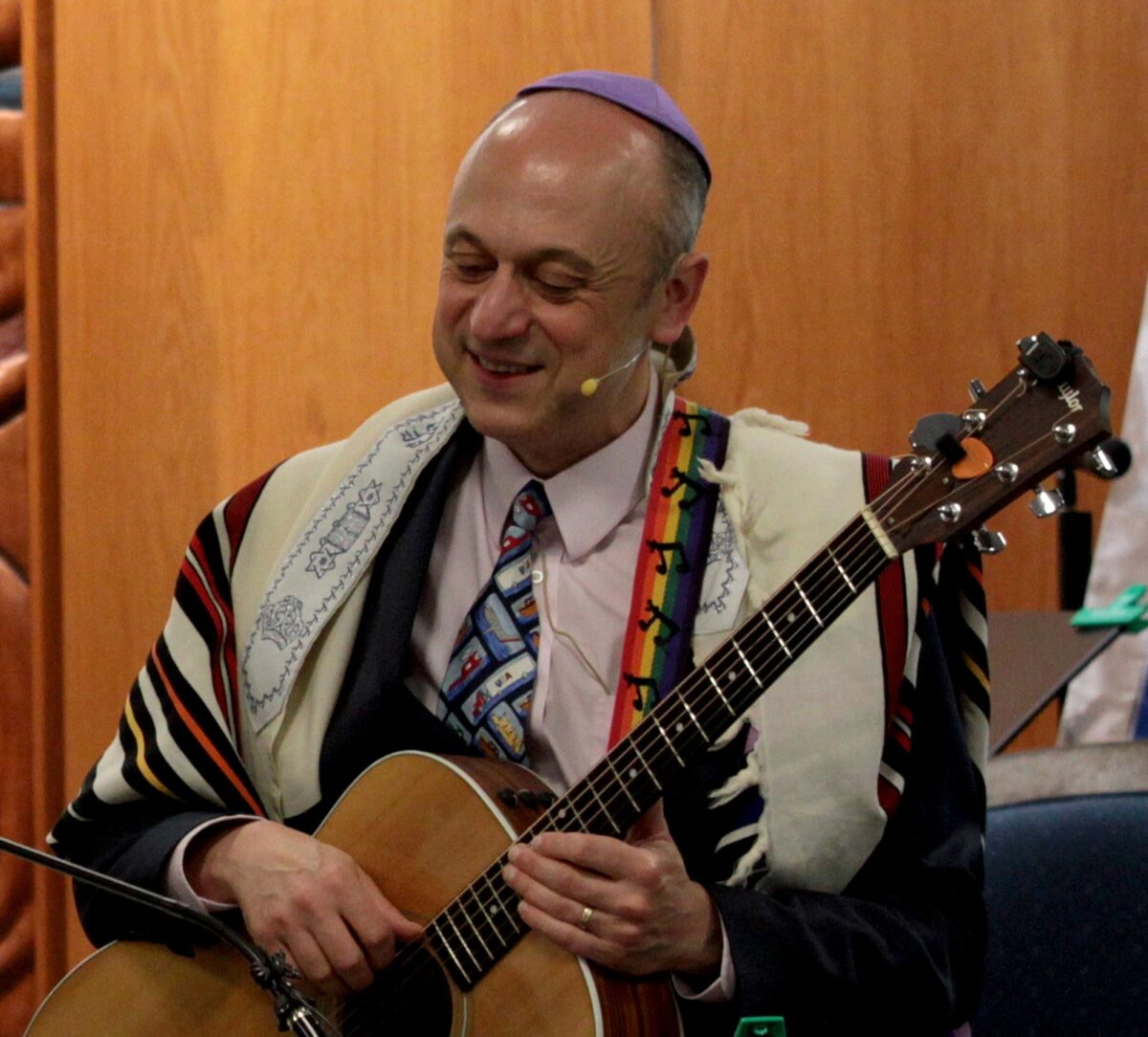
One of the most visible and meaningful ritual garments in Jewish life is the tallit, the prayer shawl that many of us wrap around our shoulders during worship. At first glance, it is a simple object – fabric, fringes, sometimes stripes of blue or silver – but in truth, the tallit carries centuries of memory, identity, and intention.
The Torah instructs us in the Book of Numbers: “You shall make for yourselves fringes (tzitzit) on the corners of your garments… and you shall look upon them and remember all the mitzvot of Adonai and do them.” The tallit, with its four-cornered shape and fringed edges, is our way of literally clothing ourselves in mitzvot. When we wrap in a tallit, we symbolically surround ourselves with sacred purpose before we begin to pray.
Traditionally, the tallit is worn during morning services (Shacharit), and service leader always wears a tallit as a sign of communal responsibility. Out of reverence, a tallit is never taken into the bathroom (our tradition is spiritually grounded, but also very practical!). At TE, there is also the custom to invite anyone who comes up to the bimah for the Torah service – whether for an aliyah, lifting or dressing the Torah, or another honor – to wear a tallit, marking that moment as especially sacred. And while both tallit and kippah are always welcome at TE as meaningful ritual expressions, they are never demanded.
B’nai mitzvah students often receive their own tallit as a visible sign of entering Jewish adulthood. Wrapped in a tallit for the first time as they are called to the Torah, they step into the privileges and responsibilities of a Jewish adult – including being counted in the minyan and standing as full participants in communal prayer. It is a powerful moment when tradition, community, and personal growth are woven together in a single garment.
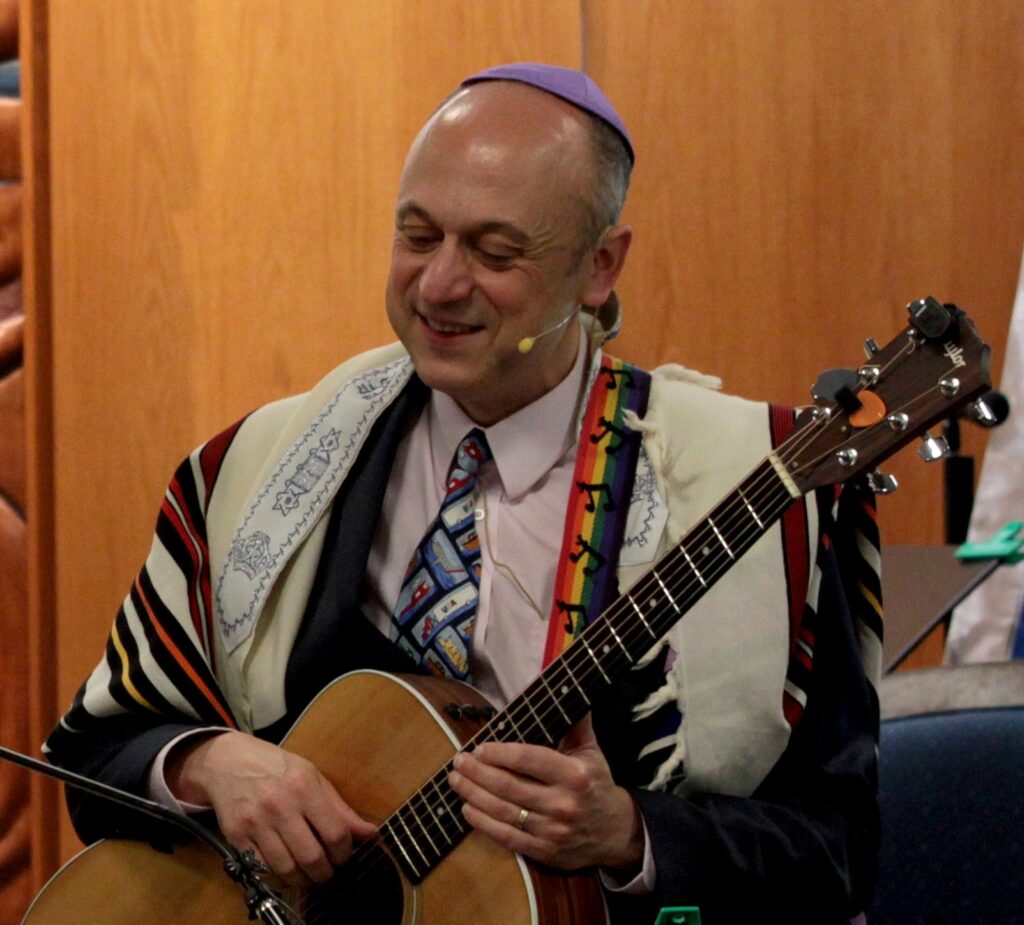
Over generations, the tallit has evolved in both design and meaning. Traditionally worn by men, today in many Reform communities – including our own – people of all genders choose to wear a tallit as an expression of spiritual readiness and personal connection. Some tallitot are family heirlooms passed down through generations; others are chosen at moments of transition – b’nai mitzvah, confirmation, conversion, or weddings. Each tallit tells a story. The multi-colored tallit that I wear throughout the year was an Ordination gift from Rabbi Winer, a garment filled with so much meaning and personal connection…
The tallit also reflects our communal values of inclusion, intention, and shared sacred space. Some prefer a classic white wool shawl with dark stripes; others wear vibrant silks, handwoven fabric, or garments created in Israeli or local artisan studios. Together, this tapestry of tallitot mirrors the diversity of our congregation itself – many paths, one community. Some of us wear a tallit every time we pray; others bring it out only on special Shabbatot or holidays. Some have one tallit for life; others mark different chapters with different shawls. There is no single “right” way – only the invitation to let the tallit become a personal gateway into prayer.
As we gather each month, wrapped in these sacred garments, we are reminded that prayer is not only something we say, but something we step into. The tallit becomes our bridge between the ordinary and the holy, between the weekday self and the soul that reaches upward. May the tallit continue to wrap each of us – and our entire Temple Emanuel community – in warmth, memory, and blessing.