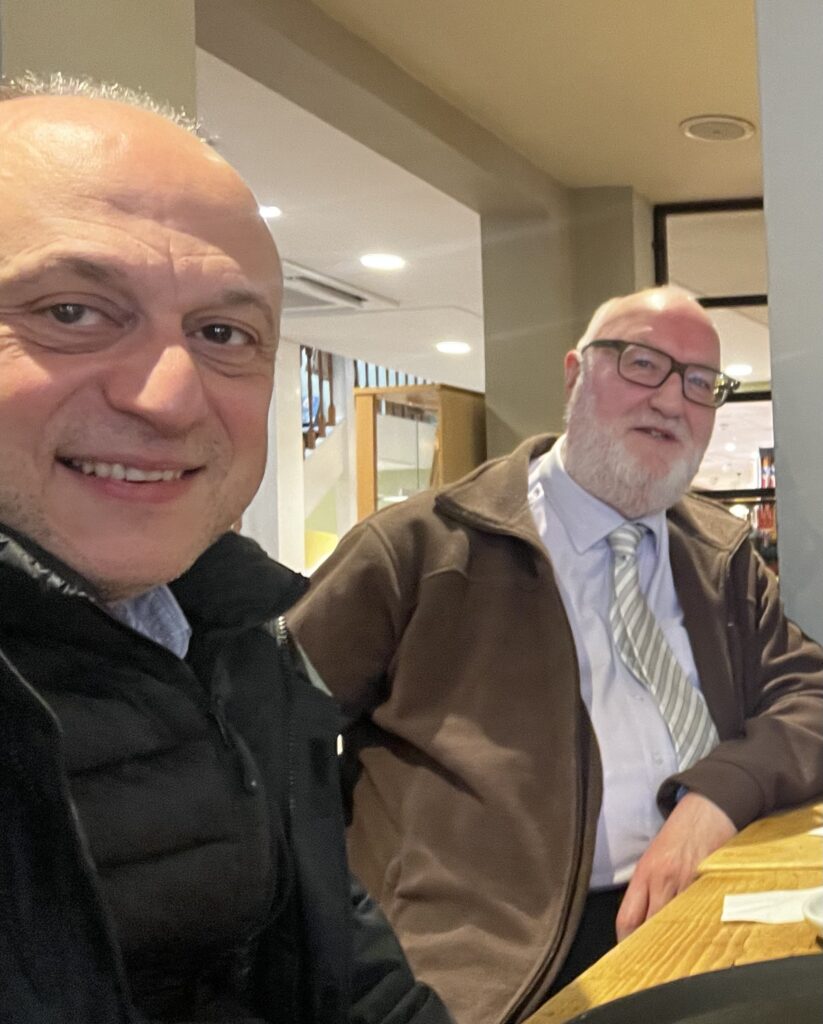
A few weeks ago I lost my chavruta, a study partner with whom I learned together throughout the rabbinical school and beyond. Rabbi Dr. Robert Ash was not just a close friend and a former roommate, he was a partner in thought and in learning. His sudden death following a post-surgery complication is a heavy blow for our family, and we are eternally grateful for the day we got to spend together in December – a day that began with a visit to a bookshop: where else would you meet a friend after a long period of being apart? In addition to his Rabbinic degree, Robert completed not one but TWO separate PhD programs, and was pursuing a law degree in his spare time. ‘Read the book’ was his response to just about any situation in life!
Jewish tradition has never imagined learning as a solitary act. From the beit midrash of late antiquity to the synagogue classrooms of today, Torah has always come alive in relationship – through voices in conversation, questions offered with curiosity, and disagreement held with care.
We are living in a time when conversations about Zionism, Israel, and Jewish identity can quickly become polarized. Positions harden. Debate replaces listening. People feel either defensive or silenced. And yet, these are precisely the moments when communal learning becomes most essential.
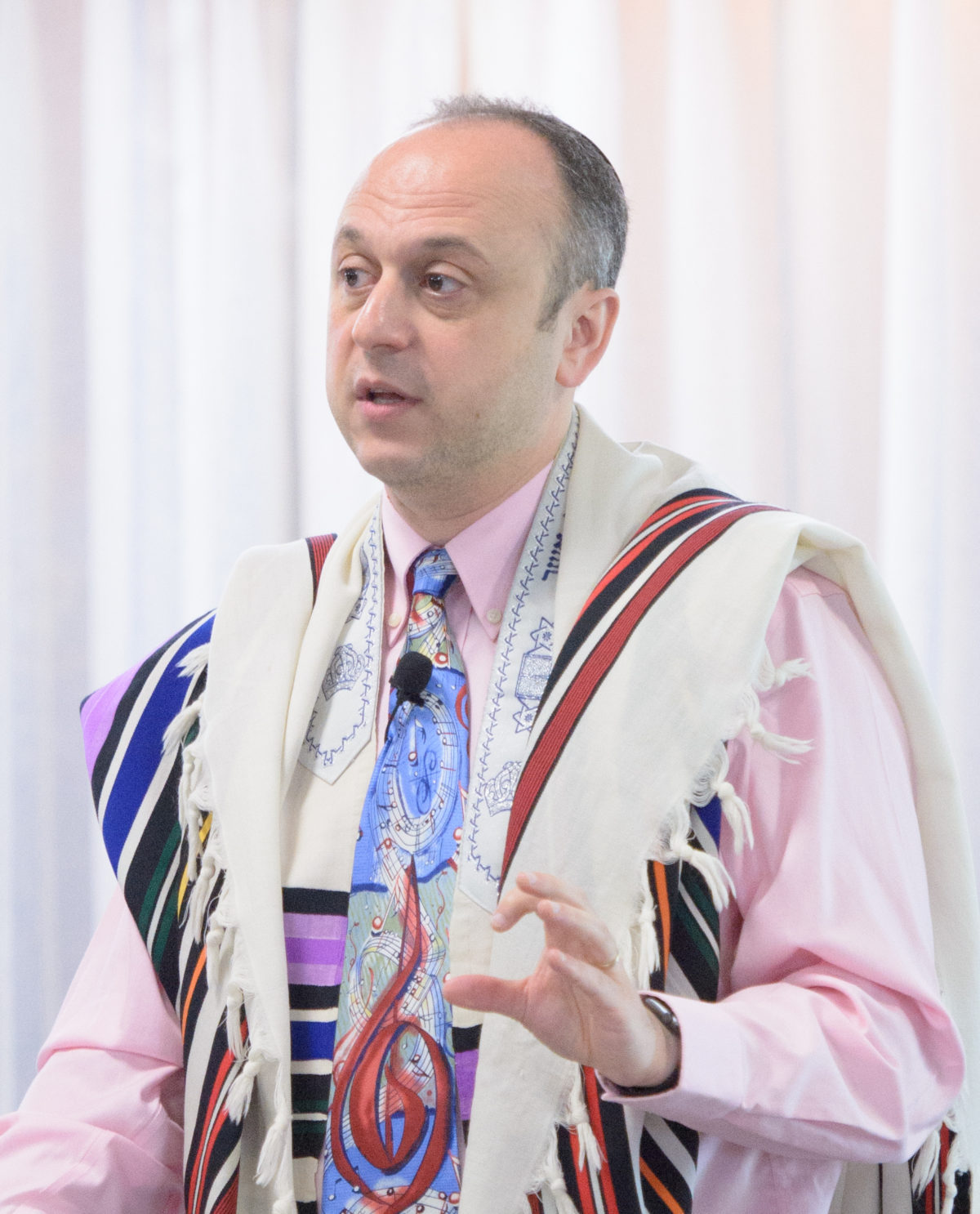
This spring, I will be teaching the Shalom Hartman Institute’s iEngage course, “Zionism in the 21st Century.” The goal of this class is not to win arguments or sharpen talking points. It is not about persuading one another toward uniformity. Rather, it is about deepening our understanding – of history, of ideas, of one another, and of ourselves.
In this eight-unit course, Hartman scholars invite us to explore the core tensions and values of Zionism in the 21st century, responding to the dominant critiques of Israel and Zionism in a post-October 7 reality. Together, we’ll explore frameworks for holding moral complexity, for talking about Israel in a time of war, and for engaging in conversation with courage, compassion, and clarity.
These are not simple questions. They are layered, complex, and at times uncomfortable. That is exactly why they require communal learning. I invite you to join me and fellow TE members on this learning journey — not because you already know what you think, but because you are willing to think more deeply. Not because you are certain, but because you are curious. Not to debate, but to discover.
Let’s learn together. Perhaps we will all form some new and meaningful chavruta relationships.